Best Rain Garden Ideas: 4 Beautiful Ground Cover Alternatives For Eco-Friendly Yards
Alternatives Garden Ideas For Eco-Friendly Yards
Creating a greener yard doesn’t have to mean higher water bills or endless maintenance. More homeowners across the United States are looking for ways to reduce waste, support pollinators, and build landscapes that work with nature instead of against it.
One of the smartest solutions is designing a rain-friendly landscape using low-maintenance ground covers. The best rain garden ideas help capture stormwater, reduce runoff, and create attractive outdoor spaces while lowering long-term maintenance costs.
Whether you’re trying to replace thirsty turf grass or simply want a more sustainable yard, several eco-friendly alternatives can transform your landscape while helping the environment.
Quick Answer: Best Rain Garden Ideas
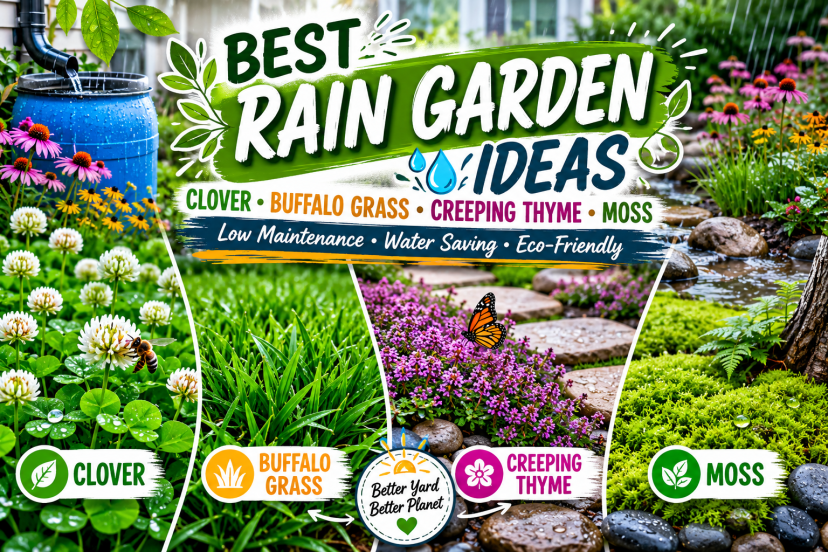
The best rain garden ideas often include low-maintenance ground covers such as clover, buffalo grass, creeping thyme, and moss. Each option offers unique benefits for water conservation, erosion control, pollinator support, and reducing lawn maintenance.
🌿 Why Rain Gardens Are Becoming Popular
Rain gardens are shallow landscaped areas designed to collect rainwater runoff from roofs, driveways, and patios. Instead of allowing water to flow into storm drains, rain gardens help the soil absorb moisture naturally.
Benefits include:
- ✅ Reduced Water Runoff
- ✅ Lower Irrigation Needs
- ✅ Improved Soil Health
- ✅ Better Pollinator Habitat
- ✅ Less Fertilizer Use
- ✅ Reduced Lawn Maintenance
Many states encourage water-wise landscaping because drought conditions and water restrictions are becoming increasingly common.
💧 What Makes The Best Rain Garden Ideas Effective?
Successful rain gardens should:
- Capture rainwater naturally.
- Use plants suited to local climates.
- Reduce erosion.
- Require minimal maintenance.
- Support beneficial insects and wildlife.
Ground cover plants are often overlooked, but they can play a major role in making rain gardens functional and attractive.
Let’s compare four popular eco-friendly options.
🍀 Clover: One Of The Best Rain Garden Ideas For Pollinator-Friendly Yards
Clover has become one of the fastest-growing lawn alternatives in the United States.
Benefits Of Clover
- Fixes nitrogen naturally.
- Requires little fertilizer.
- Supports bees and pollinators.
- Stays green during moderate drought.
- Helps prevent soil erosion.
Best Conditions For Clover
Clover performs best in:
- USDA Zones 3–10
- Partial sun to full sun
- Moderate rainfall regions
Pros
- Affordable seed cost.
- Soft underfoot.
- Eco-friendly lawn replacement.
Cons
- Can attract bees near play areas.
- May struggle during extreme drought.
White Dutch clover is one of the most popular choices for sustainable landscaping and rain garden edges.
🌾 Buffalo Grass: A Native Option For Water Conservation
Buffalo grass is a warm-season native grass that originated on the American prairie.
Because it evolved in dry conditions, buffalo grass requires far less water than traditional Kentucky bluegrass lawns.
Benefits Of Buffalo Grass
- Extremely drought-tolerant.
- Native to many U.S. regions.
- Low mowing requirements.
- Handles heat well.
Best Conditions For Buffalo Grass
Buffalo grass works best in:

- USDA Zones 4–9
- Full sun locations
- Central and western states
Pros
- Can reduce water use significantly.
- Minimal fertilization needed.
- Excellent for large yards.
Cons
- Turns brown during winter dormancy.
- Doesn’t tolerate heavy shade.
For homeowners seeking some of the best rain garden ideas in dry climates, buffalo grass is often a top choice.
🌸 Creeping Thyme: A Beautiful Flowering Ground Cover
If appearance matters most, creeping thyme can create a stunning landscape while remaining eco-friendly.
This fragrant herb produces colorful flowers that attract butterflies and bees.
Benefits Of Creeping Thyme
- Produces beautiful blooms.
- Handles drought well.
- Releases fragrance when walked on.
- Requires little maintenance.
Best Conditions
- USDA Zones 4–9
- Full sun
- Well-draining soil
Pros
- Excellent curb appeal.
- Pollinator-friendly.
- Suppresses weeds naturally.
Cons
- Slower establishment.
- Higher initial cost than grass seed.
Many homeowners include creeping thyme around stepping stones and pathways as part of their best rain garden ideas.
🌳 Moss: A Unique Choice For Shady Areas
Moss lawns are gaining popularity among eco-conscious homeowners.
Unlike grass, moss thrives in moist, shaded environments and requires virtually no mowing.
Benefits Of Moss
- No fertilizer required.
- Extremely low maintenance.
- Excellent for shaded areas.
- Helps absorb rainwater.
Best Conditions
- Consistent moisture.
- Shade or filtered sunlight.
- Acidic soil.
Pros
- No mowing.
- Creates a peaceful woodland appearance.
- Prevents erosion.
Cons
- Doesn’t tolerate foot traffic well.
- Unsuitable for sunny locations.
Moss can become one of the best rain garden ideas for homeowners with heavily shaded backyards.
🌎 Comparison: Which Option Is Best?
| Feature | Clover | Buffalo Grass | Creeping Thyme | Moss |
|---|---|---|---|---|
| Drought Tolerance | Moderate | Excellent | Excellent | Low |
| Shade Tolerance | Moderate | Poor | Moderate | Excellent |
| Pollinator Support | Excellent | Moderate | Excellent | Low |
| Foot Traffic | Good | Good | Moderate | Poor |
| Maintenance | Low | Very Low | Low | Very Low |
| Water Needs | Low | Very Low | Low | Moderate |
🛠️ DIY Steps For Building A Simple Rain Garden
Creating a rain garden doesn’t require professional landscaping experience.
Step 1: Choose The Location
Pick an area where water naturally collects after rain.
Avoid:
- Septic systems.
- Building foundations.
- Underground utilities.
Step 2: Test Drainage
Dig a small hole and fill it with water.
If the water drains within 24–48 hours, the area is suitable.
Step 3: Improve The Soil
Add:
- Compost
- Organic mulch
- Native soil amendments
Healthy soil improves water infiltration and plant growth.
Step 4: Select Plants
Combine:
- Native flowers
- Ground covers
- Deep-rooted perennials
- Low-water grasses
Step 5: Mulch The Surface
Mulch helps:
- Retain moisture.
- Prevent weeds.
- Reduce erosion.
♻️ Eco-Friendly Materials For Rain Gardens
Sustainable landscaping materials include:
- Recycled stone.
- Natural hardwood mulch.
- Compost from kitchen scraps.
- Native plants.
- Rain barrels for supplemental watering.
Many communities now offer rebates or water conservation incentives for eco-friendly landscaping projects.
🌻 Additional Plants That Pair Well With Rain Gardens
The best rain garden ideas often combine ground covers with native plants such as:
- Black-Eyed Susan
- Coneflower
- Joe-Pye Weed
- Blue Flag Iris
- Switchgrass
- Milkweed
These plants support butterflies, bees, and local wildlife.

👷 When To Consult A Professional
Consider hiring a landscaper or eco-contractor if:
- Your property experiences severe flooding.
- You need grading or drainage corrections.
- Underground utilities may be present.
- Large retaining walls are required.
- Local codes or HOA rules affect landscaping projects.
Professional guidance can prevent costly mistakes and improve long-term results.
❓ FAQs: Best Rain Garden Ideas
What Is The Purpose Of A Rain Garden?
Rain gardens capture and filter stormwater runoff while reducing erosion and supporting beneficial wildlife.
What Plants Work Best In Rain Gardens?
Native flowers, grasses, clover, creeping thyme, and moisture-tolerant plants often perform well.
Do Rain Gardens Attract Mosquitoes?
No. Properly designed rain gardens drain within 24 to 48 hours, which prevents mosquito breeding.
Can A Rain Garden Save Money?
Yes. Reduced irrigation, less fertilizer use, and lower maintenance can lower long-term landscaping costs.
How Deep Should A Rain Garden Be?
Most residential rain gardens are between 4 and 8 inches deep.
Are Rain Gardens Good For Pollinators?
Yes. Native plants and flowering ground covers provide valuable habitat for bees and butterflies.

Which Ground Cover Requires The Least Maintenance?
Moss and buffalo grass are among the lowest-maintenance options, depending on climate and sunlight.
🌎 Conclusion: Best Rain Garden Ideas
The best rain garden ideas aren’t just about appearance—they’re about creating landscapes that work smarter. Whether you prefer clover, buffalo grass, creeping thyme, or moss, each option can help reduce water use, support pollinators, and create a healthier environment.

Small changes in your yard can have a lasting impact. By choosing sustainable landscaping solutions, you can save money, reduce waste, and enjoy a beautiful outdoor space that benefits both your family and the planet.
Disclaimer: This article is for informational purposes only. Plant performance varies by climate, soil conditions, and local regulations. Always verify underground utilities and follow regional landscaping guidelines before beginning any DIY project.
 Explore more:
- Container Gardening Vegetables
- Why Are My Basil Leaves Turning Yellow?
- Brown Tips On Houseplant Leaves