Clay Soil Problems: Learn 10 Common Causes And Practical, Eco-friendly Fixes
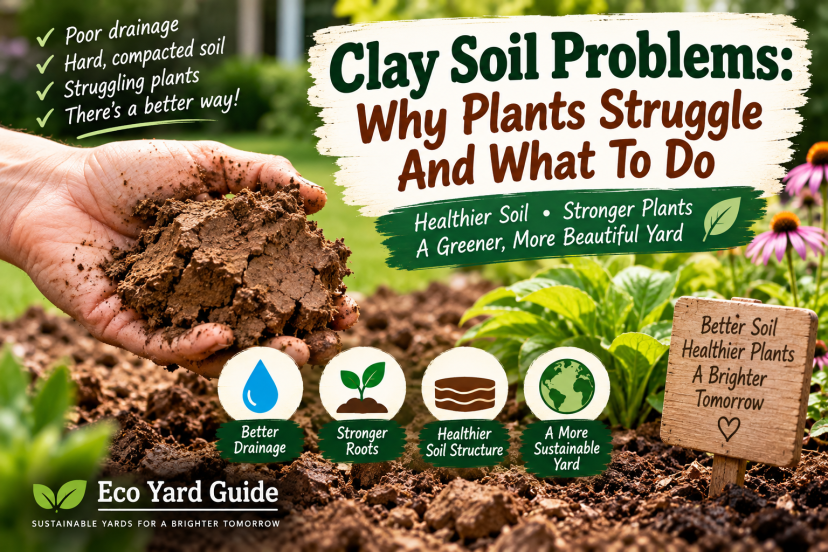
Clay soil can be frustrating. One week your garden is muddy and waterlogged; a few weeks later, the same ground may feel hard enough to crack. These clay soil problems can leave homeowners wondering why plants struggle even when they’re watering, fertilizing, and caring for them properly.
Clay itself isn’t necessarily bad soil. Its tiny mineral particles can hold substantial amounts of water and nutrients. The challenge is soil structure. When clay becomes compacted or poorly managed, water and air may move slowly through the root zone, making it difficult for some plants to establish healthy roots.
The good news is that you usually don’t need to remove your existing soil or spend thousands of dollars replacing it. Adding organic matter, protecting the surface with mulch, reducing compaction, improving drainage where necessary, and selecting plants suited to your conditions can gradually create a healthier, easier-to-maintain garden.
⚡ Quick Answer: Clay Soil Problems
Common clay soil problems include slow drainage, compaction, poor aeration, difficult digging, surface crusting, and periods of waterlogging followed by hard, dry soil. Plants may develop shallow or stressed roots when conditions remain unfavorable. The best long-term approach is usually to improve soil structure with organic matter, protect the surface with mulch, minimize unnecessary traffic, address serious drainage problems, and grow plants adapted to your soil.
Key Takeaways
Most likely cause: Fine clay particles pack closely together, so compacted soil can have limited pore space for air and water movement.
Usually serious? Not necessarily. Many gardens contain clay and can grow healthy plants, but severe compaction or prolonged waterlogging can damage roots.
First thing to check: Watch how quickly water drains after rain and inspect the soil several inches below the surface for compaction and excessive moisture.
Best solution: Most clay soil problems are best managed gradually with organic matter, mulch, reduced soil disturbance, better drainage, and suitable plants.
🔍 Why Clay Soil Problems Happen – How To Identify Them
Soils contain different proportions of sand, silt, and clay particles. Clay particles are extremely small compared with sand.
Because these particles pack closely together, clay-rich soils can have small pore spaces and slow water movement. When compacted, those conditions may become even more challenging.
Wet clay often feels sticky and can be molded in your hand. Dry clay may become extremely firm and sometimes develop visible cracks.
Signs that clay soil may be affecting your garden include:

- Standing water after rainfall
- Soil that stays sticky for long periods
- Hard ground during dry weather
- Plants developing shallow roots
- Slow plant establishment
- Water running off rather than soaking in
- Soil sticking heavily to tools
- Crusting at the surface
- Difficulty digging planting holes
- Plants struggling despite adequate nutrients
Before blaming every struggling plant on clay, remember that similar symptoms can result from overwatering, root disease, incorrect soil pH, poor plant selection, or other drainage problems.
🌱 10 Common Clay Soil Problems That Make Plants Struggle
1. Water Drains Too Slowly
Slow drainage is one of the most noticeable clay soil problems.
Following heavy rainfall, water may remain near the surface because it moves slowly through compacted clay.
Plants need both moisture and oxygen around their roots. When soil pores remain filled with water for extended periods, oxygen availability can decrease.
Some moisture-loving plants tolerate these conditions better than others.
If puddles remain long after surrounding areas have drained, investigate the underlying drainage before planting species that require well-drained soil.
2. The Soil Becomes Compacted
Clay soil is especially vulnerable to compaction when walked on, driven over, or worked while wet.
Compaction reduces pore space and makes it more difficult for water, oxygen, and roots to move through the soil.

Construction activity is a frequent cause in residential yards. Heavy equipment may compact soil well below the visible surface before landscaping is installed.
Avoid unnecessary traffic through garden beds. Permanent paths or stepping stones can help concentrate foot traffic away from plant roots.
3. Roots Have Trouble Spreading
Healthy roots need space to grow.
Dense clay can physically restrict root development, particularly when the soil is severely compacted.
Instead of developing a broad root system, some plants may remain shallow-rooted or fail to establish properly.
This can make plants more vulnerable to environmental stress.
When planting, avoid creating a tiny hole filled entirely with loose material surrounded by hard clay. Follow planting recommendations appropriate to the plant so roots can transition into the surrounding native soil.
4. Wet Soil Has Limited Oxygen
Plant roots don’t simply need water. They also need oxygen.
When poorly drained clay remains saturated, water occupies spaces that would otherwise contain air.
Prolonged saturation can stress roots and contribute to a decline in plants that aren’t adapted to wet conditions.
Symptoms can sometimes look confusing. A plant sitting in wet soil may wilt even though it isn’t experiencing conventional drought.
Always check the soil before adding more water to a wilting plant.

5. Clay Soil Can Become Rock-Hard When Dry
Clay presents the opposite problem during extended dry periods.
As water leaves the soil, clay can shrink and become extremely firm. Cracks may develop across exposed surfaces.
Hard soil can make gardening difficult and may reduce how quickly irrigation penetrates.
Repeated cycles of saturation and extreme drying can be especially challenging for sensitive plants.
Maintaining appropriate organic mulch can reduce direct sun exposure and slow moisture loss from the soil surface.
6. Water Runs Off The Surface
Clay soil doesn’t always absorb irrigation quickly.
If water is applied faster than the ground can accept it, it may flow across the surface rather than reaching plant roots.
This wastes water and can carry soil downhill.

Try applying irrigation more slowly.
In landscapes where runoff occurs, shorter irrigation cycles separated by soaking periods may allow more water to infiltrate than one long, heavy application.
The goal is to water the root zone—not the driveway or storm drain.
7. Working Clay When Wet Damages Its Structure
One of the easiest ways to make clay soil harder to manage is digging or tilling it when it’s excessively wet.
Wet clay can smear and compact, destroying useful pore spaces and creating dense clods that harden later.
Before digging, test the soil.
Pick up a handful and gently squeeze it. If it is sticky and easily forms a dense, wet mass, conditions may be too wet for extensive cultivation.
Waiting for better moisture conditions can save considerable work later.

8. Surface Crusting Can Affect Young Plants
Exposed clay soil can form a hard surface crust after rain or irrigation.
This crust may make it more difficult for small seedlings to emerge and can reduce water infiltration.

Mulch is useful for established garden beds because it protects the soil surface from direct rainfall and intense sunlight.
Seed-starting areas require different management because thick mulch may interfere with germination. Use methods appropriate to the crops or flowers you’re growing.
9. The Wrong Plants Are Being Grown
Sometimes the soil isn’t really the problem—the plant choice is.
Trying to grow plants that demand excellent drainage in a low, wet clay area creates an ongoing maintenance battle.
You may repeatedly amend, drain, water, and replace plants when a better option is choosing species adapted to the existing conditions.
This is particularly important in sustainable landscaping.
Working with your yard rather than constantly trying to force it into different conditions can reduce water use, maintenance, and replacement costs.
10. Organic Matter Is Low
Clay contains mineral particles but may not contain enough organic matter to produce the soil structure gardeners want.
Organic matter can support soil aggregation, biological activity, and improved structure over time.
Compost is one useful source.
Organic mulch can also contribute material gradually as it decomposes at the soil surface.
The goal isn’t to transform clay into sand. Instead, you’re creating a healthier soil system where roots, water, air, minerals, and living organisms interact more effectively.

🧪 How To Confirm You Have Clay Soil
A professional soil test is useful when you need detailed information about soil texture, pH, nutrients, or other characteristics.
For a quick home observation, moisten a small amount of soil and work it between your fingers.
Clay-rich soil generally feels smooth and sticky when wet and can often be formed into a ribbon or shape more easily than sandy soil.
You can also observe drainage.
Dig a small test area appropriate for your site, examine the soil profile, and note how water behaves after rainfall. Don’t assume standing water automatically means clay; grading, compacted subsoil, buried construction material, and high water tables can also cause drainage problems.
Your local cooperative extension office can provide region-specific soil testing and interpretation.
🛠️ How To Fix Clay Soil Naturally
Improving clay soil is usually a gradual process rather than a weekend project.
Add Organic Matter
Compost is one of the most practical amendments for garden beds.
Spread appropriate finished compost over the area and incorporate it according to the needs of the bed and plants. In established landscapes, organic material can often be added at the surface.
Repeated moderate additions are generally more practical than trying to change the soil overnight.

Use Organic Mulch
Apply an appropriate layer of shredded leaves, wood chips, bark, or another suitable organic mulch around established plants.
Mulch protects the surface, conserves moisture, limits crusting, and can contribute organic material as it decomposes.
Keep mulch away from trunks and plant crowns.
Reduce Foot Traffic
Create defined pathways through vegetable and flower beds.
Avoid routinely walking on planting areas, especially when they’re wet.
Raised beds can also be useful where native soil conditions are particularly challenging.
Address Serious Drainage Problems
If water repeatedly stands around buildings or plants for prolonged periods, determine why.
Solutions may involve grading, drainage improvements, or changing the planting design.
Water collecting against a home’s foundation should not be treated as simply a gardening inconvenience.
⚠️ Clay Soil Mistakes To Avoid
Don’t automatically add sand to clay soil.
Adding inappropriate quantities of sand to clay doesn’t necessarily produce beautiful garden loam and can create an extremely dense mixture. Soil amendment decisions should be based on your existing soil and intended use.
Avoid excessive tilling as well.
Repeated cultivation can disrupt soil structure and may encourage compaction below the tilled layer.
Never work saturated clay simply because it’s the day you planned to garden.
Also avoid overwatering.
Because the top inch can appear dry while deeper clay remains wet, checking moisture below the surface is important before turning on irrigation.
Finally, don’t bury trees or shrubs too deeply in an attempt to compensate for drainage. Correct planting depth remains important.
🛡️ How To Prevent Clay Soil Problems
The easiest clay soil to manage is soil you haven’t repeatedly compacted.
Keep vehicles and heavy equipment off garden areas whenever possible.
Use permanent pathways to reduce foot traffic.
Maintain organic mulch over established beds and replenish it as necessary rather than piling on excessive amounts every year.
Add appropriate compost periodically based on the needs of the garden.
Choose plants suited to your drainage, sunlight, climate, and soil conditions.
And adjust irrigation according to actual soil moisture.
Clay may hold water longer than sandy soil, potentially allowing longer intervals between irrigation once you understand how your landscape behaves. That can become an advantage in a water-conscious yard.
❓ Frequently Asked Questions
Is Clay Soil Bad For Plants?
Not necessarily. Clay can retain nutrients and water effectively. Problems arise when it becomes severely compacted, poorly drained, or unsuitable for the specific plants being grown.
What Is The Fastest Way To Improve Clay Soil?
There isn’t a universal overnight fix. Adding appropriate organic matter, mulching, reducing compaction, and improving drainage where necessary can gradually improve growing conditions.
Does Compost Help Clay Soil?
Finished compost can add organic matter and support improved soil structure. Regular, sensible additions are generally more useful than attempting to completely replace the native soil.
Should I Add Sand To Clay Soil?
Don’t add sand blindly. Depending on proportions and soil conditions, an unsuitable mixture can become very dense. Get local soil guidance before attempting major texture modification.
Why Does Clay Soil Crack?
Clay expands when wet and shrinks as it dries. During prolonged dry periods, this shrinkage can create noticeable surface cracks.
How Do You Improve Drainage In Clay Soil?
The solution depends on the cause. Organic matter and reduced compaction may improve garden soil structure, while severe drainage problems may require grading, drains, raised beds, or different plant choices.
What Plants Grow Well In Clay?
Many trees, shrubs, perennials, grasses, and native plants tolerate or even thrive in clay. The best options depend on your USDA hardiness zone, sunlight, rainfall, drainage, and whether the site is usually wet or dry.
Can Mulch Help Clay Soil?
Yes. Organic mulch protects the surface from drying and crusting, reduces evaporation, and gradually contributes organic material as it decomposes.
🌿 Related Garden Problems
Clay soil issues frequently overlap with other common garden problems, including:
- Standing water after heavy rain
- Garden soil staying wet too long
- Plants wilting despite wet soil
- Hard and compacted garden beds
- Poor vegetable growth
- Water running off instead of soaking in
- Bare patches in lawns
- Tree and shrub drainage problems
- Garden soil cracking during summer
- Raised beds draining poorly
Identifying the underlying cause before spending money on products can prevent unnecessary amendments and repeated plant replacement.
📌 Final Thoughts On Clay Soil Problems
Clay soil problems can make gardening more challenging, but clay doesn’t mean you’re stuck with an unhealthy yard.
In fact, clay’s ability to retain moisture and nutrients can become an advantage when the soil is managed appropriately.
Focus on improving conditions gradually. Add organic matter, maintain appropriate mulch, avoid working wet soil, reduce compaction, manage irrigation carefully, and address genuine drainage problems.
Plant selection matters just as much.
Choosing plants adapted to your existing soil and climate can dramatically reduce the amount of water, fertilizer, maintenance, and money your landscape requires.
Instead of trying to completely replace your clay soil, work toward creating better structure and a healthier root environment. Over time, those small improvements can help turn difficult ground into a productive, attractive, and much more sustainable garden.
Gardening Advice: Every garden is different. Soil type, climate, weather, plant variety, and growing conditions can all affect results. If your plants continue to decline despite following the recommendations in this article, or if you suspect a serious plant disease, invasive pest infestation, or a hazardous tree issue, contact your local cooperative extension office, certified arborist, or qualified gardening professional for personalized advice.
Disclaimer: This article is for informational purposes only and is not a substitute for professional horticultural, arboricultural, or agricultural advice. Gardening results vary depending on local growing conditions, soil, weather, and plant variety. Always read and follow the instructions on any fertilizers, pesticides, herbicides, or other garden products before use.
Explore more: