Why Are My Basil Leaves Turning Yellow? 11 Common Causes And Easy Fixes
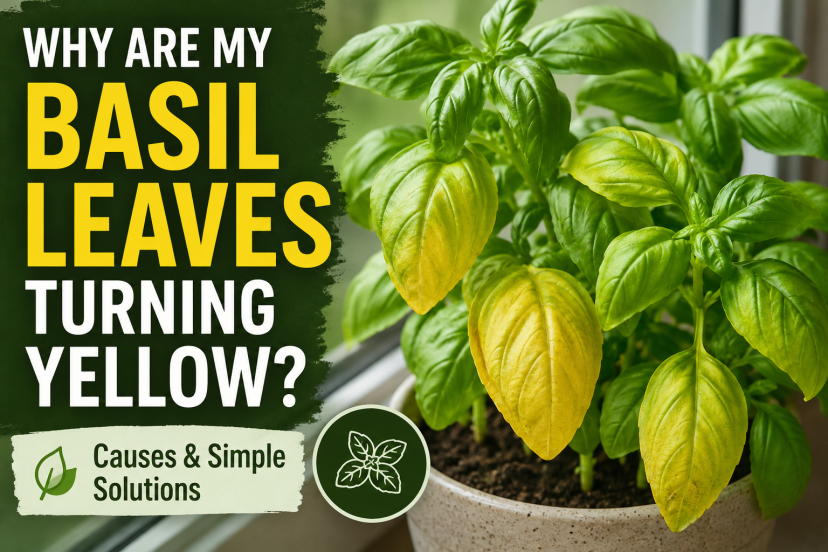
If you’ve been asking why are my basil leaves turning yellow, you’re not alone. Basil is one of the easiest herbs to grow, but it can quickly develop yellow leaves when something isn’t quite right. Fortunately, yellowing leaves are often an early warning sign rather than a sign that your plant is beyond saving. By identifying the cause early, you can usually restore your basil to healthy growth and continue harvesting fresh leaves throughout the season.
Yellow basil leaves can result from overwatering, underwatering, nutrient deficiencies, poor drainage, pests, diseases, or simply natural aging. Since basil grows quickly, even small changes in watering habits or weather conditions can affect its appearance.
This guide explains the most common reasons basil leaves turn yellow, how to identify the problem correctly, and practical eco-friendly solutions that help you grow healthier herbs while conserving water and reducing unnecessary chemical use.
🌿 Quick Answer: Why Are My Basil Leaves Turning Yellow?
If you’re wondering why are my basil leaves turning yellow, the most common causes are overwatering, poor drainage, inconsistent watering, or nutrient deficiencies. Start by checking the soil moisture and inspecting the leaves for insects or disease spots. In most cases, improving drainage, watering consistently, and maintaining healthy soil allows new green growth to develop quickly.
Key Takeaways
Most likely cause: Overwatering or poorly drained soil.
Usually serious? No. Most basil plants recover well once the underlying problem is corrected.
First thing to check: Feel the soil 2–3 inches below the surface and inspect the leaves for pests or disease.
Best solution: Improve drainage, water only when needed, enrich the soil with compost, and remove damaged leaves.
🌱 Why This Happens – How To Identify The Problem
Healthy basil leaves contain large amounts of chlorophyll, the green pigment that powers photosynthesis. When the plant experiences stress, chlorophyll production slows and the leaves gradually turn yellow.
The pattern of yellowing provides useful clues:
- Older lower leaves yellowing first often indicate natural aging or nitrogen deficiency.
- Yellow leaves with brown spots may point to fungal disease.
- Yellow leaves combined with wilting often suggest watering problems.
- New leaves turning pale while older leaves stay green may indicate micronutrient deficiencies.
Instead of treating every yellow leaf the same way, inspect the entire plant, including the stems, soil, and roots.
☀️ The 11 Most Common Causes Of Basil Leaves Turning Yellow
1. Overwatering
Overwatering is the leading cause of yellow basil leaves.

When roots remain constantly wet, they cannot absorb oxygen properly. The stressed roots begin to decline, and the leaves turn yellow.
How To Confirm The Cause
The soil stays wet for several days after watering, and the leaves may feel soft or limp.
2. Poor Drainage
Even careful watering cannot compensate for soil that drains poorly.
Heavy soil or containers without drainage holes keep basil roots saturated.
How To Confirm The Cause
Water pools on the soil surface or drains very slowly.
3. Underwatering
Basil also struggles when the soil becomes excessively dry.
Repeated drought stress causes leaves to yellow before they eventually wilt.
How To Confirm The Cause
The soil feels dry several inches below the surface, and the leaves recover temporarily after watering.

4. Nitrogen Deficiency
Nitrogen is essential for leafy green growth.
When supplies become limited, basil redirects nitrogen from older leaves to younger ones.
How To Confirm The Cause
Older lower leaves turn uniformly pale yellow while new leaves remain greener.
5. Natural Aging
Older basil leaves naturally yellow as the plant matures.
This is especially common near the bottom of the stem.
How To Confirm The Cause
Only a few lower leaves are affected while new growth remains healthy.
6. Root Rot
Root rot develops when roots remain wet for extended periods.
Damaged roots can no longer support healthy leaf growth.
How To Confirm The Cause
Carefully inspect the roots. Healthy roots are white, while rotting roots appear brown, soft, and may have an unpleasant odor.
7. Downy Mildew
Downy mildew is one of the most common basil diseases.
It often causes yellow patches between leaf veins before fuzzy gray growth appears underneath.
How To Confirm The Cause
Turn the leaves over and look for gray or purple fuzzy growth.

8. Aphids Or Whiteflies
These insects feed by sucking plant sap.
Large populations weaken basil plants and cause yellowing.
How To Confirm The Cause
Inspect the undersides of leaves for tiny insects or sticky honeydew.
9. Insufficient Sunlight
Basil grows best with at least six to eight hours of direct sunlight daily.
Too much shade often results in pale, weak growth.
How To Confirm The Cause
The plant receives less than six hours of direct sunlight.
10. Cold Temperatures
Basil is highly sensitive to cold weather.
Temperatures below about 50°F (10°C) can stress the plant and cause yellow leaves.

How To Confirm The Cause
Yellowing began after cool nights or an unexpected cold spell.
11. Nutrient Imbalances
Too much fertilizer or deficiencies in magnesium or iron can also contribute to yellow leaves.
How To Confirm The Cause
Yellowing appears together with unusual leaf patterns or follows recent fertilizer applications.
🛠️ How To Fix Yellow Basil Leaves
Begin by checking the soil before watering. Basil prefers evenly moist soil but does not tolerate standing water. Water only when the top inch of soil begins to dry.
If the plant is growing in a container, ensure it has adequate drainage holes. Repot into fresh, well-draining potting mix if necessary.
Improve garden soil by adding compost before planting or around established plants. Compost improves drainage while supplying slow-release nutrients that encourage healthy growth.
If pests are present, remove them with a strong spray of water or encourage beneficial insects such as ladybugs. Remove heavily diseased leaves promptly to reduce the spread of fungal diseases.
When growing basil indoors, place it in the sunniest available window or supplement with a grow light if natural sunlight is limited.

🚫 Mistakes To Avoid
Avoid these common basil-growing mistakes:
- Watering on a fixed schedule instead of checking soil moisture.
- Using containers without drainage holes.
- Leaving wet leaves overnight.
- Applying excessive fertilizer.
- Crowding plants together.
- Ignoring early signs of disease.
- Growing basil in deep shade.
- Harvesting too many leaves at once.
🌿 How To Prevent Basil Leaves From Turning Yellow
Healthy basil starts with healthy soil and consistent care.

Use well-drained soil enriched with compost before planting. Water deeply when needed rather than watering lightly every day. Mulch around outdoor plants to reduce evaporation and maintain even soil moisture.
Harvest basil regularly by pinching stems above leaf pairs. This encourages bushier growth and improves airflow through the plant.
Inspect plants every week for insects, yellowing, or disease symptoms. Early detection makes problems much easier to manage naturally.
Whenever possible, water early in the morning so leaves dry quickly, and fungal diseases are less likely to develop.
❓ Frequently Asked Questions
Should I remove yellow basil leaves?
Yes. Remove leaves that are completely yellow, diseased, or damaged to encourage healthy new growth.
Can yellow basil leaves turn green again?
Completely yellow leaves usually do not recover, but healthy new leaves often grow once the underlying problem is corrected.
Can too much water kill basil?
Yes. Constantly wet soil can lead to root rot, which is one of the most common reasons basil plants die.
How often should basil be watered?
Water whenever the top inch of soil feels dry rather than following a fixed schedule.
Can basil recover from downy mildew?
Unfortunately, downy mildew is difficult to cure. Removing infected plants may help prevent it from spreading to healthy basil.
🌼 Related Garden Problems
If your basil leaves are turning yellow, you may also encounter these common herb garden problems:
- Basil leaves curling
- Basil leaves turning brown
- White spots on basil leaves
- Basil wilting after transplanting
- Basil growing slowly
- Basil flowering too early
- Black spots on basil stems
- Holes in basil leaves
- Root rot in herbs
- Aphids on basil plants
Recognizing these symptoms early helps keep your herb garden healthy throughout the growing season.
🌻 Conclusion: Why Are My Basil Leaves Turning Yellow
If you’re asking why are my basil leaves turning yellow, remember that the answer is usually something simple like watering, drainage, or nutrition. Basil grows quickly and often responds well once stressful conditions are corrected.

Begin by checking soil moisture, inspecting the leaves carefully, and reviewing recent weather or watering habits. Small improvements such as better drainage, compost, consistent watering, and good airflow often restore vigorous green growth without relying on unnecessary chemicals.
With healthy soil and regular observation, your basil can remain productive for months while providing a steady harvest of flavorful leaves for your kitchen.
Gardening Advice
Every garden is different. Soil type, climate, weather, plant variety, and growing conditions can all affect results. If your plants continue to decline despite following the recommendations in this article, or if you suspect a serious plant disease, invasive pest infestation, or a hazardous tree issue, contact your local cooperative extension office, certified arborist, or qualified gardening professional for personalized advice.
Disclaimer
This article is for informational purposes only and is not a substitute for professional horticultural, arboricultural, or agricultural advice. Gardening results vary depending on local growing conditions, soil, weather, and plant variety. Always read and follow the instructions on any fertilizers, pesticides, herbicides, or other garden products before use.
 Explore more: