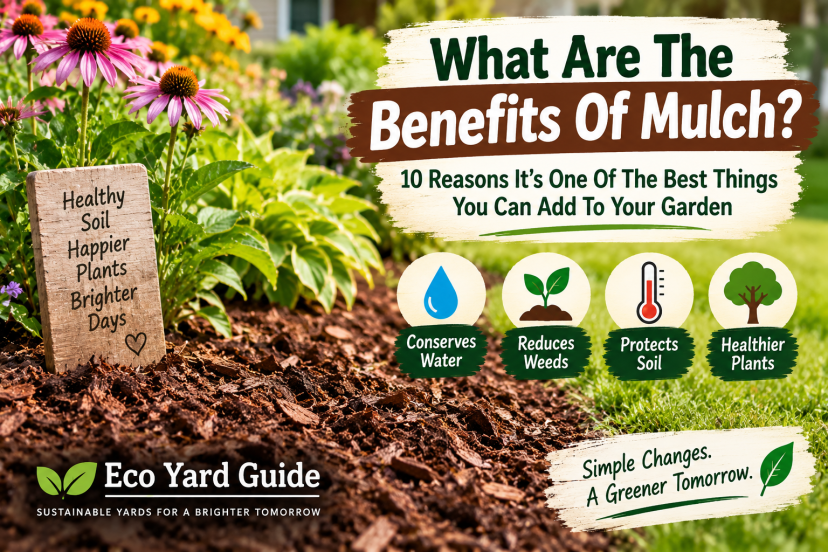
What Are The Benefits Of Mulch? Why Mulch Is One Of The Best Things You Can Add To Your Garden
A layer of mulch may look like a simple finishing touch, but it can be one of the hardest-working features in your entire landscape. If you’ve ever wondered what are the benefits of mulch, the answer goes far beyond making flower beds look neat. Properly applied mulch can slow moisture loss, suppress weeds, moderate soil temperatures, protect soil from erosion, and—in the case of organic materials—gradually contribute organic matter as they decompose.
Those benefits can translate into less watering, less weeding, and a more manageable yard.
Mulching is especially valuable for homeowners trying to create an eco-friendly landscape without constantly buying new products or spending every weekend maintaining garden beds. The key is choosing an appropriate material and applying it correctly. Too much mulch, or mulch piled against trunks and stems, can create new problems instead of solving them.
Here’s how to get the benefits while avoiding the common mistakes.
⚡ Quick Answer: What Are The Benefits Of Mulch?
Mulch helps conserve soil moisture, reduce weed growth, moderate soil-temperature fluctuations, limit erosion, and protect soil from heavy rain. Organic mulches such as shredded leaves, wood chips, and bark can also contribute organic matter as they gradually break down. For many homeowners, proper mulching means fewer weeds, more efficient watering, healthier soil conditions, and a cleaner, lower-maintenance landscape.
Key Takeaways
Most likely cause: Bare garden soil loses moisture more readily, experiences greater temperature swings, and provides open space where weeds can establish.
Usually serious? Not always, but exposed soil can increase watering and maintenance needs and may contribute to erosion and plant stress.
First thing to check: Look for bare soil, recurring weeds, rapid drying, erosion, or existing mulch that has become excessively deep or compacted.
Best solution: If you’re asking what the benefits of mulch are, a properly applied layer can conserve water, suppress weeds, protect soil, and make garden beds easier to maintain.
🔍 Why Mulch Makes Such A Difference
In nature, healthy soil is rarely left completely exposed.
Leaves, fallen twigs, dead plant material, and living vegetation often cover the ground. This layer helps protect the soil surface from direct sunlight, rainfall, wind, and temperature fluctuations.
Residential landscapes frequently remove that natural protection. Leaves are raked away, weeds are pulled, and beds are left with exposed soil.

Mulch essentially restores some of that protective covering in a controlled way.
Signs your landscape may benefit from mulch include:
- Soil drying rapidly after watering
- Frequent weed growth
- Crusted or compacted soil surfaces
- Soil splashing onto plants during rain
- Erosion on exposed beds
- Plant roots near the surface
- Large areas of bare soil
- Garden beds requiring frequent maintenance
Mulch isn’t a cure for every garden problem. Poor drainage, unsuitable plants, compacted subsoil, or incorrect watering still need to be addressed separately. But mulch can improve the growing environment around many established landscape plants.
🌿 10 Benefits Of Adding Mulch To Your Garden
1. Mulch Helps Soil Retain Moisture
Water conservation is one of the biggest reasons to mulch.
Direct sunlight and moving air encourage water to evaporate from exposed soil. A mulch layer shades the surface and reduces direct exposure, helping moisture remain available longer.
That doesn’t mean mulched gardens never need irrigation. Plant requirements still depend on climate, soil, rainfall, root development, and species.
However, reducing unnecessary evaporation can make watering more efficient.
Check soil moisture beneath the mulch before irrigating instead of assuming the surface appearance tells you whether plants need water.

2. Mulch Suppresses Many Weeds
Weeds need the right conditions to germinate and grow.
A suitable mulch layer makes establishment more difficult by limiting the light reaching many weed seeds and physically covering the soil.
Some weeds will still appear. Seeds can blow onto the mulch, and aggressive perennial weeds may push through it.
But a properly mulched garden often requires substantially less routine weeding than bare soil.
Pull weeds that do appear before they flower and produce additional seed.
3. Mulch Moderates Soil Temperature
Plant roots can experience stressful temperature changes when soil is completely exposed.
Mulch acts as insulation, helping reduce rapid fluctuations at the soil surface.
During hot weather, it can shade the ground and reduce direct solar heating. During colder periods, mulch may help buffer the soil against abrupt temperature changes.
This doesn’t make plants immune to heat or freezing weather, but a more stable root-zone environment can be beneficial.
4. Organic Mulch Adds Organic Matter Over Time
Organic mulches gradually decompose.
Materials such as shredded leaves, wood chips, and other plant-based mulches eventually become part of the soil’s organic material.
This process is gradual rather than an instant fertilizer treatment.

As appropriate organic mulch decomposes, it can contribute to improved soil structure and biological activity.
Instead of removing all decomposed mulch every year, homeowners can often replenish the surface only as needed.
5. Mulch Helps Protect Soil From Erosion
Bare soil is vulnerable to wind and moving water.
Heavy rain can dislodge soil particles, while runoff may carry them away from garden beds.
Mulch absorbs some of the impact of raindrops and helps protect the soil surface.
This can be particularly useful around downslopes and exposed planting beds, although severe drainage or erosion problems may require more comprehensive solutions.
If water is cutting channels through your landscape, mulch alone probably won’t correct the underlying drainage issue.
6. Mulch Reduces Soil Splash
Watch what happens when heavy rain hits bare garden soil.

Drops strike the surface and splash soil onto nearby leaves, stems, siding, paths, and vegetables.
A mulch layer provides a barrier between rainfall and the soil.
Reducing soil splash can keep plants and garden produce cleaner. It can also reduce movement of soil particles onto low foliage.
Mulch should complement—not replace—good plant spacing, sanitation, and appropriate watering practices.
7. Mulch Can Improve The Appearance Of Garden Beds
Practical landscaping doesn’t have to look unfinished.
Mulch creates visual separation between lawns, paths, shrubs, trees, and flower beds. A consistent surface can make even a relatively simple landscape appear more intentional.
This is particularly helpful in low-maintenance designs.
Instead of filling every square foot with plants that require watering and maintenance, homeowners can use thoughtfully mulched areas around appropriately spaced vegetation.

The result can be attractive without becoming labor-intensive.
8. Mulch Can Reduce Yard Maintenance
Mulch can’t eliminate garden maintenance, but it can reduce several repetitive chores.

Less weed growth means less pulling.
Slower moisture loss can reduce unnecessary irrigation.
Protected soil may experience less surface crusting and erosion.
Organic mulch can also recycle materials already available in your yard.
Shredded autumn leaves, for example, can become a useful garden resource rather than automatically becoming waste that must be hauled away.
9. Mulch Can Protect Shallow Roots
Many trees and shrubs have important roots relatively close to the soil surface.
Bare ground around these plants may become compacted from foot traffic, exposed to heat, or damaged by lawn equipment.
Creating an appropriately mulched zone around a tree can separate its root area from lawn maintenance.
This also helps prevent string trimmers and mower decks from repeatedly damaging trunks.
However, keep mulch away from direct contact with the trunk.
A tree should look like a tree growing from the ground—not a telephone pole emerging from a mountain of mulch.
10. Mulch Supports A More Sustainable Yard
A sustainable landscape isn’t simply about adding environmentally marketed products. It is about using resources efficiently.

Mulch can help homeowners:
- Reduce unnecessary watering
- Reuse suitable yard materials
- Limit weed competition
- Protect soil
- Reduce routine maintenance
- Create better-defined planting areas
These advantages make mulch especially useful when converting a high-maintenance landscape into a more practical eco-friendly yard.
🧪 How To Confirm Your Garden Needs Mulch
Start by inspecting the soil around your plants.
If large areas are bare, determine how quickly they dry after rain or irrigation.
Check again a few inches below the surface rather than judging only by the top layer.
Look for recurring weeds, signs of soil washing downhill, crusting after rain, and areas where lawn equipment gets dangerously close to trees.
Existing mulch should also be inspected.
Dig gently through it to determine its actual depth. Old mulch can become difficult to judge visually because new layers are sometimes added year after year without checking what remains underneath.
If mulch is already excessively deep, adding more isn’t the solution.
🛠️ How To Add Mulch Correctly
Good mulching is more about proper placement than simply dumping material onto the ground.

First, remove problematic weeds from the bed.
If the soil is extremely dry, watering appropriately before mulching may make sense. Don’t use mulch to hide a serious drainage or soil problem.
Spread mulch evenly across the planting area.
For many landscape situations, a layer of roughly 2–4 inches is commonly used, although the appropriate depth varies with material, plants, site conditions, and existing mulch.
Keep mulch away from direct contact with tree trunks and plant crowns.
Around trees, extend mulch outward where practical rather than piling it upward against the trunk.
Check existing depth before adding fresh material later. You may only need to loosen or lightly replenish the surface rather than adding another full layer.
⚠️ Mulching Mistakes To Avoid
One of the biggest mistakes is believing that if some mulch is good, more must be better.
Excessively deep mulch can interfere with the movement of water and air and may create unfavorable conditions around plants.
Another common mistake is the infamous mulch volcano.
This happens when mulch is piled high against a tree trunk. Keeping bark constantly covered and moist is not the goal.
Pull mulch back so the trunk and root flare aren’t buried.
Don’t automatically apply fresh mulch every spring just because the color of the old material has faded. Check its depth first.
Also avoid using questionable materials simply because they’re free. Mulch should be appropriate for the intended garden area and free of contaminants.
🛡️ How To Prevent Mulch Problems
Think of mulch as something to manage rather than a product that must constantly be replaced.
Check beds once or twice during the growing season.
If mulch has become compacted, gently loosen the surface where appropriate.
If it has decomposed and become thin, add only enough material to restore an appropriate layer.
Keep mulch pulled back from trunks, stems, and sensitive plant crowns.
Monitor soil moisture underneath it as well. Because mulch slows evaporation, your old watering schedule may provide more water than the landscape now needs.
This is an opportunity to conserve water.
Rather than irrigating according to habit, check actual soil conditions and adjust watering to plant needs, rainfall, and weather.
❓ Frequently Asked Questions
What Are The Main Benefits Of Mulch?
The primary benefits include conserving soil moisture, suppressing many weeds, moderating soil temperatures, reducing erosion, protecting the soil surface, and lowering some routine maintenance. Organic mulch can also contribute organic matter as it decomposes.
How Deep Should Mulch Be?
A layer around 2–4 inches is common for many landscape applications, but appropriate depth depends on the mulch material and site. Always account for mulch already present before adding more.
Should You Remove Old Mulch Before Adding New Mulch?
Usually, you don’t need to remove properly decomposing organic mulch simply because it looks old. Measure what’s already there. If adequate mulch remains, adding another thick layer may be unnecessary.
Is Mulch Good For Vegetable Gardens?
Suitable mulch can be useful in vegetable gardens by conserving moisture, suppressing weeds, and covering bare soil. Choose materials appropriate for edible gardening and the crops you’re growing.
Does Mulch Attract Termites?
Wood mulch doesn’t automatically create a termite infestation, but homeowners should avoid creating persistently damp, wood-rich conditions directly against structural components. Keep landscaping materials appropriately separated from the house and follow local recommendations where termites are a concern.
Can You Put Mulch Directly Against Plants?
Avoid piling mulch tightly against trunks, stems, and plant crowns. Leave appropriate breathing space around plants while covering the surrounding soil.
Is Wood Chip Mulch Good For Gardens?
Wood chips can be an effective organic mulch for many trees, shrubs, and perennial landscape beds. Suitability depends on the garden and how the material is used.
What Is The Cheapest Mulch?
Locally available arborist wood chips and shredded leaves can sometimes be inexpensive or free. Availability varies, and homeowners should know the source and suitability of any material before spreading it.
🌱 Related Garden Problems
Understanding mulch can also help when you’re dealing with:
- Garden soil drying out too fast
- Weeds taking over flower beds
- Plants wilting despite frequent watering
- Soil erosion after heavy rain
- Tree roots appearing near the surface
- Garden soil becoming compacted
- Slugs hiding around plants
- Poor drainage in garden beds
- Plants struggling during hot weather
Remember that mulch changes conditions at the soil surface. If a garden already stays excessively wet, simply adding a thick mulch layer without addressing drainage may make management more difficult.
🌎 Final Thoughts On What Are The Benefits Of Mulch?
So, what are the benefits of mulch? For many homeowners, the biggest advantages are straightforward: mulch can conserve moisture, reduce weed pressure, protect soil, moderate temperature changes, and make garden beds easier to maintain.
Organic mulch can also turn materials such as suitable leaves and wood chips into useful landscape resources instead of waste.
But proper application matters. Don’t bury plants, don’t build mulch volcanoes around trees, and don’t automatically add a thick new layer every year. Check what your garden actually needs first.
Used thoughtfully, mulch is one of the simplest and most affordable upgrades you can make to an eco-friendly landscape. It can help you spend less time watering and weeding while creating healthier soil conditions and a cleaner, more attractive yard.
Gardening Advice: Every garden is different. Soil type, climate, weather, plant variety, and growing conditions can all affect results. If your plants continue to decline despite following the recommendations in this article, or if you suspect a serious plant disease, invasive pest infestation, or a hazardous tree issue, contact your local cooperative extension office, certified arborist, or qualified gardening professional for personalized advice.
Disclaimer: This article is for informational purposes only and is not a substitute for professional horticultural, arboricultural, or agricultural advice. Gardening results vary depending on local growing conditions, soil, weather, and plant variety. Always read and follow the instructions on any fertilizers, pesticides, herbicides, or other garden products before use.
 Explore more:
- Family-Friendly Yard Ideas For Safe Outdoor Play
- Overwatered Plants: What To Do?
- Recycled Materials Patio Ideas