Brown Tips On Houseplant Leaves: 10 Common Causes And Easy Fixes
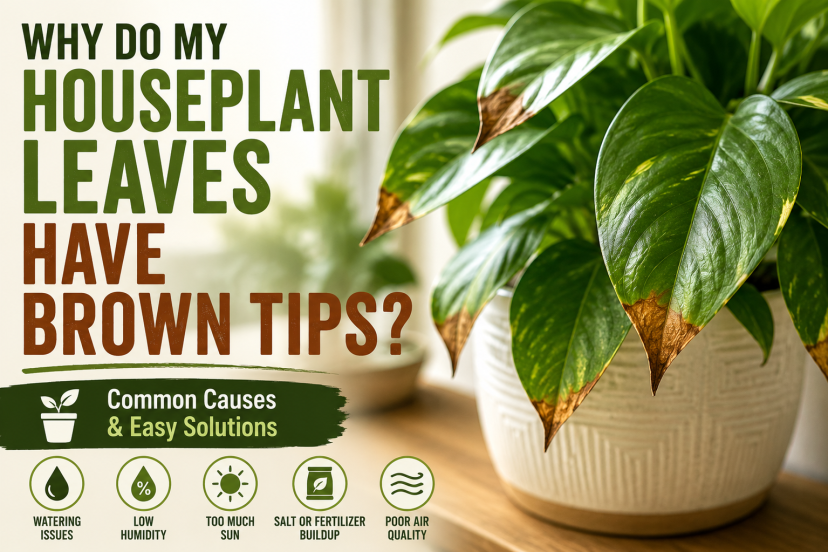
Why Do My Houseplant Leaves Have Brown Tips?
If you’ve noticed brown tips on houseplant leaves, you’re not alone. Crispy brown leaf tips are one of the most common issues indoor gardeners encounter. While they can make even a healthy plant look unattractive, they rarely mean the plant is beyond saving. In most cases, brown tips are your houseplant’s way of telling you that something in its environment needs to change.
Unlike outdoor plants, houseplants rely entirely on the conditions we provide. Watering habits, indoor humidity, light levels, fertilizer use, and even the quality of tap water can all affect leaf health. A small problem that goes unnoticed for several weeks may first appear as dry, brown edges or tips before the rest of the plant shows signs of stress.
Fortunately, most causes are easy to identify and fix. This guide explains why brown leaf tips develop, how to diagnose the problem correctly, and practical eco-friendly solutions that help you conserve water while keeping your indoor plants healthy and thriving.
⭐ Quick Answer: Brown Tips On Houseplant Leaves
Brown tips on houseplant leaves are most often caused by inconsistent watering, low indoor humidity, fertilizer buildup, poor water quality, or natural aging. Start by checking the soil moisture, reviewing your watering routine, and considering your home’s humidity levels. Once the underlying cause is corrected, healthy new leaves should develop normally, although existing brown tips usually remain brown.
Key Takeaways
Most likely cause: Low humidity or inconsistent watering.
Usually serious? No. Brown tips are usually cosmetic and rarely kill healthy houseplants.
First thing to check: Feel the soil moisture and consider whether your home’s air is unusually dry.
Best solution: Water consistently, improve humidity, flush excess fertilizer salts, and provide proper growing conditions.
🌿 Why This Happens – How To Identify The Problem
Healthy leaves continuously move water from the roots to the tips through a process called transpiration. The leaf tips are often the first areas affected when the plant cannot move enough moisture.
When water movement slows because of dry soil, low humidity, damaged roots, or excess fertilizer salts, the tips begin drying out. As cells die, they turn brown and become crispy.
The pattern of damage often provides valuable clues:
- Only the tips turning brown usually indicate moisture or humidity problems.
- Brown edges around the entire leaf may suggest fertilizer burn.
- Brown tips with yellow leaves often point to watering issues.
- Brown tips on older leaves only may simply reflect natural aging.
Look at the entire plant rather than focusing on one damaged leaf before deciding how to treat the problem.

☀️ The 10 Most Common Causes Of Brown Tips On Houseplant Leaves
1. Inconsistent Watering
Allowing soil to become extremely dry before watering—or keeping it constantly wet—places stress on the roots.
The plant cannot supply moisture evenly to the leaves, causing the tips to dry out first.
How To Confirm The Cause
The soil alternates between being bone dry and soaking wet, or watering schedules vary significantly.
2. Low Indoor Humidity
Many tropical houseplants naturally grow in humid forests.
Dry indoor air, especially during winter heating or summer air conditioning, often causes leaf tips to brown.
How To Confirm The Cause
Brown tips appear primarily during winter or in rooms with very dry air.
3. Fertilizer Salt Buildup
Over time, fertilizer salts accumulate in the soil.
These salts interfere with water uptake and may burn delicate leaf tissue.

How To Confirm The Cause
A white crust forms on the soil surface or around the pot, and the plant has been fertilized frequently.
4. Poor Water Quality
Tap water containing high levels of minerals, chlorine, or fluoride may damage sensitive houseplants such as spider plants, peace lilies, and dracaenas.
How To Confirm The Cause
Only sensitive species develop brown tips despite otherwise good care.
5. Underwatering
When plants remain dry for too long, the leaf tips lose moisture first.
Repeated drought stress gradually causes more extensive browning.
How To Confirm The Cause
The soil feels dry several inches below the surface, and leaves may droop before watering.
6. Overwatering And Root Damage
Waterlogged roots cannot absorb water efficiently, even though plenty of moisture surrounds them.
Ironically, overwatered plants often show symptoms similar to underwatered plants.
How To Confirm The Cause
The soil stays wet for several days, and leaves may yellow along with brown tips.
7. Too Much Direct Sunlight
Some indoor plants tolerate only bright indirect light.
Direct afternoon sun can scorch leaf tips and edges.
How To Confirm The Cause
Brown tips develop only on leaves facing the window.

8. Root-Bound Plants
When roots completely fill the container, they compete for limited water and nutrients.
Moisture disappears quickly after watering.
How To Confirm The Cause
Roots circle tightly around the pot, or grow through drainage holes.
9. Natural Aging
Older leaves eventually decline as plants direct energy toward newer growth.
Small brown tips on aging leaves are completely normal.
How To Confirm The Cause
Only older lower leaves are affected while new growth remains healthy.
10. Temperature Stress
Cold drafts, heating vents, fireplaces, or sudden temperature swings can dry leaf tissue.
How To Confirm The Cause
The affected leaves are closest to heating vents, air conditioners, or drafty windows.

🛠️ How To Fix Brown Tips On Houseplant Leaves
Begin by reviewing your watering routine. Instead of watering on a fixed schedule, check the soil regularly and water when the appropriate depth has dried for your particular plant species.
Increase humidity naturally by grouping plants together, placing them on pebble trays filled with water, or using a humidifier for tropical plants.
Flush the soil every few months by watering thoroughly until excess water drains from the bottom of the pot. This helps remove accumulated fertilizer salts.
If your tap water is particularly hard or heavily treated, consider using rainwater, distilled water, or filtered water for sensitive plants.
Repot root-bound plants into slightly larger containers using fresh, well-draining potting mix.
Finally, trim brown tips with clean scissors if desired. Removing the damaged tissue improves appearance, although it will not solve the underlying problem.
🚫 Mistakes To Avoid
Avoid these common houseplant care mistakes:
- Watering on a strict calendar instead of checking soil moisture.
- Applying fertilizer too frequently.
- Ignoring humidity needs.
- Leaving plants beside heating or cooling vents.
- Allowing water to sit in saucers.
- Repotting into containers that are much too large.
- Using garden soil indoors.
- Moving plants frequently between very different environments.
🌱 How To Prevent Brown Tips On Houseplant Leaves
Healthy houseplants begin with consistent care.

Choose well-draining potting soil, water according to the plant’s needs, and empty drainage saucers after watering. Match each plant to its preferred lighting conditions and maintain stable indoor temperatures.
Clean leaves occasionally with a damp cloth to remove dust, allowing them to photosynthesize efficiently.

Use fertilizer sparingly during the active growing season, and flush the soil periodically to prevent salt buildup.
Most importantly, observe your plants every week. Small changes in leaf color or texture often reveal problems long before serious damage develops.
❓ Frequently Asked Questions
Should I cut off brown leaf tips?
Yes. You can trim brown tips with clean scissors for a neater appearance. Leave a thin margin of brown tissue to avoid cutting into healthy leaf cells.
Can brown leaf tips turn green again?
No. Damaged tissue does not recover, but healthy new leaves should grow once the underlying problem is corrected.
Is misting enough to increase humidity?
Usually not. Misting provides only temporary humidity. Pebble trays or humidifiers generally offer more consistent results.
Can tap water cause brown tips?
Yes. Sensitive houseplants may develop brown tips because of fluoride, chlorine, or high mineral content in tap water.
Are brown tips a sign my plant is dying?
Not usually. Brown tips are typically an early warning sign rather than evidence that the plant is dying.
🌼 Related Garden Problems
If you’re dealing with brown tips on houseplant leaves, you may also notice these common indoor plant problems:
- Yellow houseplant leaves
- Drooping houseplants
- Brown leaf edges
- Houseplants losing leaves
- Root rot
- Moldy potting soil
- White crust on soil
- Fungus gnats
- Curling leaves
- Houseplants growing slowly
Looking at multiple symptoms together often makes diagnosing the problem much easier.
🎯 Final Thoughts On Brown Tips On Houseplant Leaves
Seeing brown tips on houseplant leaves can be frustrating, but the problem is usually easy to correct. Inconsistent watering, low humidity, fertilizer buildup, poor-quality water, and environmental stress account for most cases.
Start by checking the soil moisture, evaluating humidity, and reviewing your recent care routine. Small adjustments—such as watering more consistently, increasing humidity, flushing excess salts, or improving drainage—often prevent further damage and encourage healthy new growth.
With regular observation and sustainable plant care practices, your houseplants can remain lush, vibrant, and attractive for many years.

Gardening Advice
Every garden is different. Soil type, climate, weather, plant variety, and growing conditions can all affect results. If your plants continue to decline despite following the recommendations in this article, or if you suspect a serious plant disease, invasive pest infestation, or a hazardous tree issue, contact your local cooperative extension office, certified arborist, or qualified gardening professional for personalized advice.
Disclaimer
This article is for informational purposes only and is not a substitute for professional horticultural, arboricultural, or agricultural advice. Gardening results vary depending on local growing conditions, soil, weather, and plant variety. Always read and follow the instructions on any fertilizers, pesticides, herbicides, or other garden products before use.
 Explore more: