Cucumber Leaves Turning Yellow? 11 Common Causes And Easy Fixes
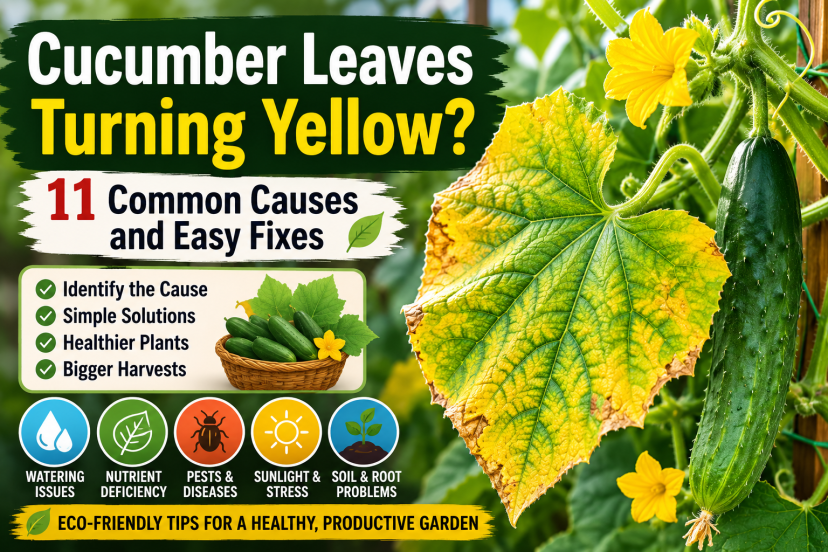
If you’ve noticed cucumber leaves turning yellow, don’t panic. Yellowing leaves are one of the most common problems home gardeners experience, and in many cases, the issue can be corrected before it affects your harvest. Sometimes the cause is as simple as inconsistent watering, while other times it may be linked to nutrient deficiencies, pests, diseases, or natural aging.
Because cucumbers grow quickly and produce large amounts of foliage, they rely on healthy roots, balanced nutrients, and consistent moisture throughout the growing season. Even small changes in weather or watering habits can cause the leaves to lose their healthy green color.
The good news is that most cases of yellow cucumber leaves are treatable when caught early. In this guide, you’ll learn how to identify the underlying cause, confirm the problem, and use practical, eco-friendly solutions to help your cucumber plants stay productive while conserving water and reducing unnecessary chemical use.
🥒 Quick Answer: Cucumber Leaves Turning Yellow
Cucumber leaves turning yellow are most commonly caused by inconsistent watering, nutrient deficiencies, natural aging, pests, or fungal diseases. Start by checking soil moisture, inspecting the leaves for insects or spots, and determining whether only older leaves are affected. Most healthy plants recover once the underlying problem is corrected with proper watering, improved soil health, and good garden care.
Key Takeaways
Most likely cause: Inconsistent watering or a nitrogen deficiency.
Usually serious? No. Most yellow leaves can be corrected if the cause is identified early.
First thing to check: Inspect the oldest leaves first and check soil moisture a few inches below the surface.
Best solution: Water consistently, improve soil with compost, correct nutrient deficiencies, and inspect regularly for pests and disease.
🌱 Why This Happens – How To Identify The Problem
Yellow leaves develop when chlorophyll, the green pigment responsible for photosynthesis, begins to break down. This happens whenever the plant is stressed or unable to produce enough energy.
The location of the yellow leaves provides valuable clues:
- Older lower leaves turning yellow often indicate nutrient deficiencies or natural aging.
- New upper leaves turning yellow may point to iron deficiency, root problems, or disease.
- Yellow leaves with brown spots often suggest fungal infections.
- Yellow leaves covered with insects usually indicate pest damage.
Before treating the plant, inspect the entire cucumber vine rather than focusing on one leaf.
☀️ The 11 Most Common Causes Of Cucumber Leaves Turning Yellow
1. Inconsistent Watering
Cucumbers need evenly moist soil throughout the growing season.

Allowing the soil to repeatedly become dry and then soaking it heavily stresses the roots and causes yellowing.
How To Confirm The Cause
Check the soil two to three inches deep. If it alternates between very dry and soggy, watering is likely the problem.
2. Nitrogen Deficiency
Nitrogen supports leafy green growth.
When levels become too low, the plant pulls nitrogen from older leaves, causing them to yellow first.
How To Confirm The Cause
Older lower leaves turn pale yellow while newer leaves remain green.
3. Natural Aging
As cucumber plants mature, older leaves naturally yellow and die.
This allows the plant to direct energy toward producing flowers and fruit.
How To Confirm The Cause
Only the oldest leaves near the bottom of the vine are affected, while new growth remains healthy.

4. Overwatering
Too much water deprives roots of oxygen.
Without healthy roots, leaves begin turning yellow before eventually wilting.
How To Confirm The Cause
The soil stays wet for several days, and leaves may become soft or limp.
5. Poor Soil Drainage
Even careful watering cannot compensate for poorly drained soil.
Heavy clay or compacted soil keeps roots constantly wet.
How To Confirm The Cause
Water pools around the plant after irrigation or rainfall.
6. Cucumber Diseases
Several fungal and bacterial diseases cause yellow leaves.
Common problems include downy mildew, powdery mildew, angular leaf spot, and bacterial wilt.
How To Confirm The Cause
Look for yellow patches, fuzzy growth, leaf spots, or rapidly spreading symptoms.
7. Spider Mites Or Aphids
These insects feed by sucking plant juices.
Large populations weaken leaves and eventually cause yellowing.
How To Confirm The Cause
Inspect the undersides of leaves for tiny insects, sticky residue, or fine webbing.

8. Magnesium Or Potassium Deficiency
These nutrients help leaves remain green and healthy.
Deficiencies often develop in sandy soils or after heavy rainfall.
How To Confirm The Cause
Yellowing appears between leaf veins while veins remain green.
9. Lack Of Sunlight
Cucumbers require full sun for vigorous growth.
Plants growing in excessive shade often produce pale leaves and fewer cucumbers.
How To Confirm The Cause
The garden receives less than six hours of direct sunlight daily.
10. Root Damage
Cultivating too close to cucumber plants or transplant shock can damage roots.
Reduced water uptake quickly causes yellow foliage.

How To Confirm The Cause
Yellowing begins shortly after digging, transplanting, or disturbing the soil.
11. Viral Infections
Certain cucumber viruses cause yellowing, mottled leaves, and poor fruit production.
These infections are often spread by aphids.
How To Confirm The Cause
Leaves develop unusual mosaic patterns, curling, and distorted growth that continues to worsen.
🛠️ How To Fix It
The best solution depends on the underlying cause.
For watering problems, water deeply once or twice each week instead of applying small amounts daily. Adding two to three inches of organic mulch helps conserve soil moisture and reduces evaporation.
If nutrient deficiencies are suspected, incorporate compost into the soil and apply a balanced fertilizer according to the manufacturer’s instructions. Avoid adding excessive nitrogen, which may encourage leafy growth at the expense of fruit production.
Improve drainage by adding compost or growing cucumbers in raised beds if your soil remains wet after rain.

Inspect plants weekly for aphids, spider mites, cucumber beetles, and disease symptoms. Removing damaged leaves, encouraging beneficial insects, and improving airflow between plants often helps prevent problems from spreading.
When disease is severe, remove heavily infected plants to protect the rest of your garden.

🚫 Mistakes To Avoid
Avoid these common gardening mistakes:
- Watering lightly every day instead of deeply.
- Allowing soil to become completely dry.
- Overfertilizing with nitrogen.
- Planting cucumbers too closely together.
- Wetting leaves during evening watering.
- Ignoring early signs of pests.
- Reusing diseased plant debris.
- Growing cucumbers in the same location every year.
🌿 How To Prevent Cucumber Leaves From Turning Yellow
Healthy cucumbers begin with healthy soil.
Work compost into the garden before planting to improve both drainage and water retention. Apply mulch after the soil warms to reduce evaporation and suppress weeds.
Rotate cucumber crops every year to reduce disease pressure. Choose disease-resistant varieties whenever possible and provide strong airflow by spacing plants properly.
Water early in the morning so leaves dry quickly. Inspect plants weekly for insects, discoloration, and unusual growth. Early detection almost always results in easier, less expensive solutions.
Regular care not only keeps leaves green but also increases cucumber production throughout the season.
❓ Frequently Asked Questions
Should I remove yellow cucumber leaves?
Yes, if they are badly damaged, diseased, or completely yellow. Healthy green leaves should remain because they produce energy for the plant.
Can yellow cucumber leaves turn green again?
Leaves that are slightly yellow from temporary stress sometimes improve, but completely yellow leaves rarely regain their original color.
Does too much water cause yellow cucumber leaves?
Yes. Constantly wet soil can suffocate roots, leading to yellow leaves, poor growth, and root rot.
Can cucumbers recover from nutrient deficiencies?
Usually, yes. Correcting the deficiency early often allows new growth to develop normally.
Can cucumber plants still produce fruit with yellow leaves?
Yes. Mild yellowing usually has little effect on production, but widespread yellowing can reduce both fruit size and overall yield.
🌼 Related Garden Problems
If your cucumber leaves are turning yellow, you may also notice other common garden problems:

- Cucumber leaves curling
- White powder on cucumber leaves
- Cucumber flowers falling off
- Bitter cucumbers
- Cucumber vines wilting
- Holes in cucumber leaves
- Cucumber fruit turning yellow
- Blossom end problems
- Powdery mildew
- Downy mildew
Learning to identify these symptoms early helps keep cucumber plants productive all season.
🌻 Conclusion: Cucumber Leaves Turning Yellow?
Seeing cucumber leaves turning yellow can be worrying, but it is often your plant’s way of signaling that something needs attention. Inconsistent watering, nutrient deficiencies, pests, and diseases account for most cases, and many can be corrected before serious damage occurs.
Start by checking soil moisture, examining the oldest leaves, and looking closely for insects or disease symptoms. Small adjustments such as watering consistently, adding compost, improving drainage, and maintaining good airflow often restore healthy growth without relying heavily on chemical treatments.
Healthy soil, careful observation, and sustainable gardening practices remain the best long-term strategy for growing vigorous cucumber plants that produce an abundant harvest year after year.
Gardening Advice
Every garden is different. Soil type, climate, weather, plant variety, and growing conditions can all affect results. If your plants continue to decline despite following the recommendations in this article, or if you suspect a serious plant disease, invasive pest infestation, or a hazardous tree issue, contact your local cooperative extension office, certified arborist, or qualified gardening professional for personalized advice.
Disclaimer
This article is for informational purposes only and is not a substitute for professional horticultural, arboricultural, or agricultural advice. Gardening results vary depending on local growing conditions, soil, weather, and plant variety. Always read and follow the instructions on any fertilizers, pesticides, herbicides, or other garden products before use.
 Explore more:
- Why Are My Tomato Leaves Curling?
- Recycle Yard Waste: 12 Smart Ways
- Why Is My Hydrangea Not Blooming?