Why Are My Tomato Leaves Curling? 12 Common Causes And Fixes
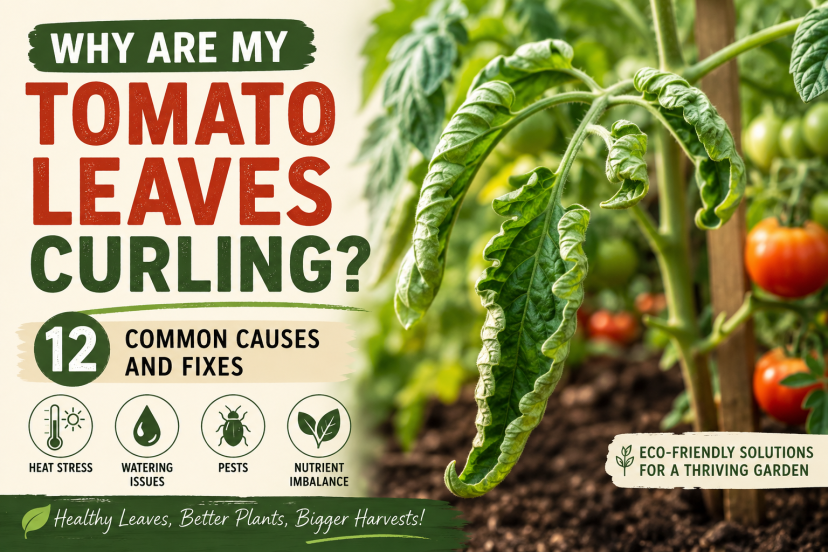
Tomatoes are one of the most rewarding plants to grow, but they can also be frustrating when something goes wrong. If you’ve been asking why are my tomato leaves curling, you’re not alone. Curled leaves are one of the most common problems gardeners notice during the growing season, and the good news is that they don’t always indicate a serious issue.
Leaf curling can happen because of heat stress, inconsistent watering, nutrient imbalances, pests, herbicide exposure, or even natural plant responses to environmental conditions. Identifying the underlying cause is the key to restoring healthy growth.
In this guide, you’ll learn how to recognize the most common reasons tomato leaves curl, how to confirm the cause, and what practical, eco-friendly solutions can help your plants recover while using less water and fewer chemicals.
⭐ Quick Answer: Why Are My Tomato Leaves Curling?
If you’re wondering why are my tomato leaves curling, the most likely causes are heat stress, irregular watering, or environmental stress. Mild leaf curl is often temporary and doesn’t usually reduce harvests significantly. Check soil moisture first, inspect leaves for insects, and look for signs of herbicide damage or disease. In most cases, consistent watering, mulch, and proper plant care help tomatoes recover naturally.
Key Takeaways
Most likely cause: Heat stress combined with inconsistent watering.
Usually serious? No. Most curling is caused by environmental stress and can improve.
First thing to check: Feel the soil 2–3 inches below the surface for moisture and inspect leaves for pests.
Best solution: Water consistently, mulch around plants, reduce plant stress, and correct any nutrient or pest problems.
🌱 Why This Happens – How To Identify The Problem
Tomato leaves curl because the plant is trying to reduce stress. Rolling or curling limits water loss by reducing the leaf surface exposed to sunlight and wind.
The pattern of curling provides useful clues:
- Older lower leaves curling upward often point to environmental stress.
- New growth that’s twisted or distorted may suggest herbicide damage or viral disease.
- Leaves with yellowing, spots, or insects often indicate pests or disease.
- Plants that otherwise look healthy may simply be responding to temporary weather changes.
Before treating the problem, inspect the entire plant rather than focusing on a single leaf.
☀️ The 12 Most Common Causes Of Tomato Leaves Curling
1. Heat Stress
High temperatures are the leading cause of tomato leaf curl.

During hot afternoons, leaves naturally roll upward to reduce moisture loss. This is especially common when daytime temperatures remain above 90°F (32°C).
Signs:
- Leaves curl upward
- No discoloration
- Plant otherwise healthy
- Occurs during hot weather
How To Confirm The Cause
The curling appears during heat waves and improves when temperatures cool.
2. Inconsistent Watering
Alternating between very dry and overly wet soil stresses tomato roots.
Roots struggle to supply water evenly, causing leaves to curl as the plant conserves moisture.
Signs:
- Dry soil
- Wilting during the day
- Curling on older leaves
How To Confirm The Cause

Check soil moisture several inches deep. If it swings between dry and soggy, watering is likely the problem.
3. Overwatering
Too much water deprives roots of oxygen.
Without healthy roots, leaves cannot maintain proper moisture balance.
Signs:
- Wet soil
- Yellowing leaves
- Slow growth
- Curling combined with drooping
How To Confirm The Cause
The soil remains wet for several days after watering.
4. Physiological Leaf Roll
Sometimes tomato plants curl their leaves even when they’re perfectly healthy.
This harmless condition is known as physiological leaf roll.
Signs:
- Older leaves curl upward
- Thick, leathery leaves
- Good fruit production
- No yellowing
How To Confirm The Cause
Plants continue growing and producing tomatoes normally.
5. Herbicide Drift
Even tiny amounts of lawn weed killer drifting onto tomatoes can distort leaves.

Tomatoes are extremely sensitive to common herbicides.
Signs:
- Twisted new growth
- Narrow leaves
- Distorted stems
- Sudden curling after nearby spraying
How To Confirm The Cause
Think about whether weed killers were recently used nearby.
6. Aphids
Large aphid populations feed on plant sap.
This weakens leaves and causes curling, especially on new growth.
Signs:
- Tiny green, black, or yellow insects
- Sticky honeydew
- Ants climbing the plant
- Curled new leaves
How To Confirm The Cause

Inspect the undersides of leaves.
7. Broad Mites Or Spider Mites
These tiny pests are difficult to see without magnification.
They damage tender leaves, causing curling and distorted growth.
Signs:
- Tiny webbing (spider mites)
- Bronze leaves
- Curling at growing tips
How To Confirm The Cause
Use a magnifying glass to inspect leaf undersides.
8. Nutrient Imbalance
Too much nitrogen encourages rapid leafy growth that may curl.
Deficiencies in calcium, potassium, or magnesium can also affect leaf development.

Signs:
- Excessive green growth
- Weak stems
- Curling with discoloration
How To Confirm The Cause

Review recent fertilizer applications and compare symptoms with nutrient deficiency guides.
9. Root Damage
Cultivating too close to tomato plants can damage roots.
Damaged roots reduce water uptake, leading to curled leaves.
Signs:
- Curling after digging
- Slow recovery
- Temporary wilting
How To Confirm The Cause
Consider whether roots were recently disturbed while weeding or transplanting.
10. Transplant Shock
Newly planted tomatoes often curl leaves while adjusting.
The stress usually disappears within one to two weeks.
Signs:
- Curling shortly after planting
- Slight wilting
- Otherwise healthy appearance
How To Confirm The Cause
Symptoms began soon after transplanting.
11. Viral Diseases
Some viruses cause severe leaf curling and distorted growth.

Unfortunately, viral infections cannot usually be cured.
Signs:
- Yellow mosaic patterns
- Thick curled leaves
- Stunted plants
- Poor fruit production
How To Confirm The Cause
Symptoms continue worsening despite proper care.
12. Natural Aging
Older lower leaves naturally curl and decline as the season progresses.
This is part of normal plant development.
Signs:
- Only lower leaves affected
- Healthy new growth
- Good fruit production
How To Confirm The Cause
The upper portion of the plant remains vigorous.
🛠️ How To Fix It
Once you’ve identified the likely cause, these eco-friendly practices usually help:

- Water deeply once or twice per week instead of shallow daily watering.
- Add 2–3 inches of organic mulch to conserve soil moisture.
- Water early in the morning.
- Remove heavily damaged leaves if necessary.
- Avoid excessive nitrogen fertilizer.
- Encourage beneficial insects that naturally control aphids.
- Improve soil with compost instead of relying solely on synthetic fertilizers.
- Avoid spraying herbicides anywhere near tomatoes.
- Provide temporary afternoon shade during extreme heat.
- Rotate crops each year to reduce disease pressure.
Most environmentally caused leaf curl improves within one to three weeks after correcting the underlying problem.
🚫 Mistakes To Avoid
Avoid these common gardening mistakes:
- Watering a little every day instead of deeply.
- Fertilizing stressed plants excessively.
- Spraying pesticides before identifying pests.
- Removing too many leaves at once.
- Planting tomatoes too close together.
- Allowing weeds to compete for moisture.
- Using lawn herbicides on windy days.
- Ignoring soil drainage problems.
🌿 How To Prevent It
Preventing tomato leaf curl is much easier than fixing it.
Some of the best long-term strategies include:
- Improve soil with compost every season.
- Install drip irrigation or soaker hoses.
- Apply mulch after planting.
- Choose disease-resistant tomato varieties.
- Rotate tomato locations every year.
- Space plants for good airflow.
- Inspect plants weekly for insects.
- Water consistently during hot weather.
- Avoid unnecessary pruning during heat waves.
- Feed plants with balanced fertilizer according to label directions.
Healthy soil and consistent care greatly reduce the chances of leaf curl.
❓ Frequently Asked Questions
Should I cut off curled tomato leaves?
Only remove leaves that are badly damaged, diseased, or touching the ground. Mildly curled leaves often continue producing energy for the plant.
Can curled tomato leaves recover?
Yes. If environmental stress caused the curling, new growth often returns to normal after conditions improve.
Does leaf curl reduce tomato production?
Mild physiological leaf roll usually has little effect on harvests. Severe disease or herbicide injury may reduce yields.
Can too much fertilizer cause leaf curl?
Yes. Excess nitrogen often causes rapid leafy growth that curls more easily.
Is tomato leaf curl contagious?
Environmental leaf curl is not contagious. Viral diseases, however, can spread through insects such as whiteflies.
🌼 Related Garden Problems
If your tomatoes have curling leaves, you may also encounter these common gardening issues:
- Tomato leaves turning yellow
- Blossom end rot
- Tomatoes splitting after rain
- Tomato flowers dropping
- White spots on tomato leaves
- Wilting tomato plants
- Brown leaf edges
- Cracked tomatoes
- Powdery mildew
- Early blight
Learning to recognize these symptoms early helps prevent larger problems later in the season.
🌻 Final Thoughts
If you’ve been wondering why are my tomato leaves curling, don’t panic. In many cases, the problem is simply your tomato plant responding to temporary environmental stress rather than a serious disease. Heat, inconsistent watering, and physiological leaf roll account for most cases seen in home gardens.
Start by checking soil moisture, inspecting leaves for pests, and reviewing any recent fertilizer or herbicide use. Small adjustments like watering consistently, adding mulch, improving soil health, and avoiding unnecessary stress often restore healthy growth without expensive products or harsh chemicals.
Healthy tomatoes begin with healthy soil, careful observation, and sustainable gardening practices that support strong plants all season long.
Gardening Advice
Every garden is different. Soil type, climate, weather, plant variety, and growing conditions can all affect results. If your plants continue to decline despite following the recommendations in this article, or if you suspect a serious plant disease, invasive pest infestation, or a hazardous tree issue, contact your local cooperative extension office, certified arborist, or qualified gardening professional for personalized advice.
Disclaimer
This article is for informational purposes only and is not a substitute for professional horticultural, arboricultural, or agricultural advice. Gardening results vary depending on local growing conditions, soil, weather, and plant variety. Always read and follow the instructions on any fertilizers, pesticides, herbicides, or other garden products before use.
 Explore more:
- Best Plants For Indoor Gardening
- Sustainable Outdoor Furniture
- Eco-Friendly Lawn Alternatives for Pollinators