Why Is My Hydrangea Not Blooming? 11 Common Reasons And Solutions
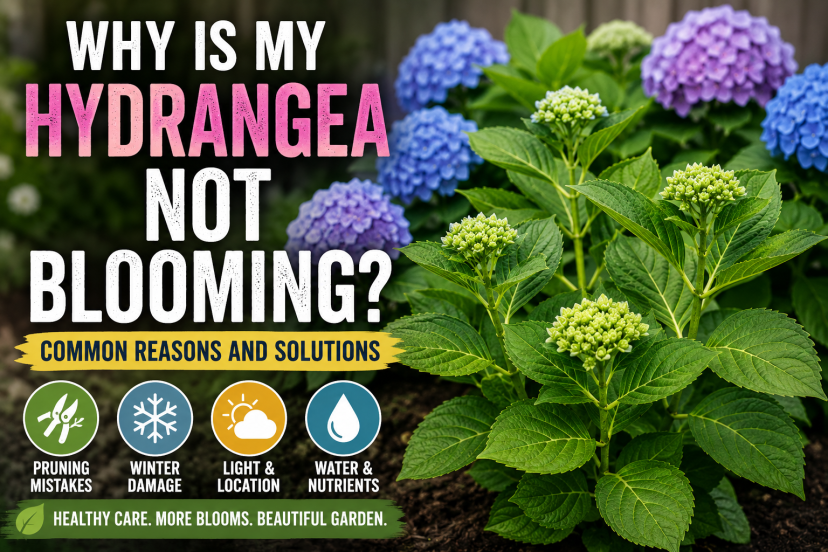
If you are wondering why is my hydrangea not blooming, the problem is often related to pruning, winter damage, sunlight, or the type of hydrangea growing in your yard. A shrub can appear green, healthy, and full of leaves yet produce few flowers—or none at all—because its flower buds were removed or damaged months earlier.
The timing of hydrangea care matters because different varieties form flowers in different ways. Some bloom on stems grown the previous year, while others develop flowers on new growth produced during the current season. Treating every hydrangea the same can accidentally reduce flowering.
Fortunately, a non-blooming hydrangea is not usually a lost cause. By identifying the variety, examining the stems, reviewing your pruning habits, and improving the plant’s growing conditions, you can often encourage better flowering without replacing the shrub or relying on excessive fertilizer.
⭐ Quick Answer: Why Is My Hydrangea Not Blooming?
The most common answer to why is my hydrangea not blooming is incorrect pruning or winter damage to flower buds. Too much shade, excessive nitrogen fertilizer, drought stress, and an immature plant can also prevent flowers. First, identify whether your hydrangea blooms on old wood, new wood, or both. Then avoid unnecessary pruning, provide suitable sunlight, maintain consistent soil moisture, and protect vulnerable buds during harsh winter weather.
Key Takeaways
Most likely cause: Flower buds were removed during pruning or damaged by cold winter temperatures.
Usually serious? No. Most healthy hydrangeas can bloom again once the care problem is corrected.
First thing to check: Identify your hydrangea variety and determine whether it flowers on old wood, new wood, or both.
Best solution: Adjust pruning timing, provide appropriate sunlight, conserve soil moisture with mulch, and avoid excessive nitrogen fertilizer.
🔍 Why Hydrangeas Stop Blooming
Hydrangeas produce flowers from buds that form either on older stems, new seasonal growth, or a combination of both. When those buds are cut off, frozen, shaded, or weakened by stress, the plant may continue producing leaves without developing flowers.
The condition of the foliage provides useful clues. A large hydrangea with dark green leaves but no flowers may be receiving too much nitrogen. A plant with dead stem tips may have suffered winter injury. A shrub growing beneath dense trees may not receive enough light to support strong flowering.
Before changing your watering or fertilizer routine, identify the hydrangea type. Common varieties include bigleaf, mountain, oakleaf, smooth, and panicle hydrangeas. Their pruning and sunlight requirements can differ considerably.
🌿 The 11 Most Common Reasons A Hydrangea Is Not Blooming
1. The Hydrangea Was Pruned At The Wrong Time
Incorrect pruning is one of the most common reasons hydrangeas fail to flower.

Bigleaf, mountain, and many oakleaf hydrangeas generally develop flower buds on older stems. Pruning these plants in fall, winter, or early spring can remove the buds before they open.
Smooth and panicle hydrangeas usually flower on new seasonal growth, so they are more tolerant of late-winter or early-spring pruning.
How To Confirm The Cause
Think about when the shrub was last pruned. If an old-wood hydrangea was cut back after summer, its flower buds may have been removed.
2. Winter Cold Damaged The Flower Buds
Cold temperatures can kill flower buds while leaving the roots and lower stems alive. The shrub may leaf out normally in spring but produce no blooms.
Late frosts are especially damaging when warm weather causes buds to swell early. A sudden freeze can injure those developing buds.
How To Confirm The Cause
Look for dead stem tips, blackened buds, or new growth emerging only from the lower portion of the plant.
3. The Hydrangea Receives Too Much Shade
Hydrangeas are often described as shade-tolerant, but deep shade can limit flowering. Most varieties need several hours of light to produce abundant blooms.
Morning sun with afternoon shade is ideal for many hydrangeas, especially in hot climates. Dense shade beneath trees, structures, or large shrubs may produce lush leaves but few flowers.

How To Confirm The Cause
Observe the plant throughout the day. If it receives little direct light or only weak filtered light, insufficient sun may be the problem.
4. The Plant Receives Too Much Hot Afternoon Sun
Although hydrangeas need light, intense afternoon sun can create heat and moisture stress. Leaves may wilt, scorch, or curl, and flowering can decline if the plant repeatedly dries out.
This is more common in hot southern or western climates, where reflected heat from walls, fences, or pavement increases stress.
How To Confirm The Cause
Watch for afternoon wilting, browned leaf edges, dry soil, or flowers that fade unusually quickly.
5. Excess Nitrogen Is Producing Leaves Instead Of Flowers
High-nitrogen fertilizer encourages fast, leafy growth. The plant may look large and healthy but direct most of its energy toward stems and foliage rather than flowers.
Nitrogen can also reach hydrangeas from lawn fertilizer applied nearby. Runoff or overspread granules may unintentionally feed the shrub.
How To Confirm The Cause
Look for unusually dark green leaves, long soft stems, rapid growth, and little or no flowering.
6. The Hydrangea Is Too Young
Recently planted hydrangeas may need time to establish roots before producing a full display of flowers. Some nursery plants also bloom heavily during their first season because they were grown under carefully controlled conditions, then bloom less while adjusting to the landscape.
How To Confirm The Cause
The shrub was planted within the last one or two growing seasons and appears healthy but relatively small.
7. Drought Stress Reduced Flowering
Hydrangeas have broad leaves that lose moisture quickly. Irregular watering or prolonged dry soil can stress the roots and interfere with bud formation.
Repeated wilting may weaken the plant even if it recovers each evening. Severe drought during late summer can also affect flower buds forming for the following year on old-wood varieties.
How To Confirm The Cause
Check the soil several inches below the surface. If it is consistently dry or the plant wilts frequently, moisture stress is likely contributing.

8. The Soil Drains Poorly
Hydrangeas like consistently moist soil, but they do not perform well in waterlogged ground. Saturated soil limits oxygen around the roots and can lead to weak growth or root decline.
A struggling root system may be unable to support flowering even when the leaves remain temporarily green.
How To Confirm The Cause
After rain or irrigation, check whether water remains around the plant for long periods. Yellowing leaves, soft growth, or an unpleasant soil odor may also indicate poor drainage.
9. The Hydrangea Was Transplanted Or Disturbed
Moving a hydrangea can damage roots and temporarily interrupt flowering. Construction, digging, or aggressive cultivation near the base can have a similar effect.
The plant often directs energy toward rebuilding roots rather than producing blooms during the recovery period.
How To Confirm The Cause
The shrub was recently moved, divided, replanted, or disturbed by landscaping work.
10. Deer Or Rabbits Ate The Flower Buds
Wildlife may browse tender hydrangea stems during winter or early spring. When animals eat the upper buds from old-wood hydrangeas, the plant may still leaf out from lower buds but fail to flower.
How To Confirm The Cause
Inspect stems for clipped ends, ragged chewing, animal tracks, or repeated damage around the outside of the shrub.

11. The Plant Is Not The Variety You Expected
Not all hydrangeas bloom at the same time or under the same conditions. A plant may have been mislabeled, or its mature flowering habit may differ from what you expected.
Some varieties bloom later in summer, while others flower mainly in early summer. Reblooming types may also perform differently depending on climate and winter conditions.
How To Confirm The Cause
Compare the plant’s leaf shape, stem structure, flower remnants, and growth habit with reliable variety descriptions or ask a local nursery or extension office for help with identification.
🛠️ How To Fix A Hydrangea That Is Not Blooming
Begin by identifying the type of hydrangea. This single step determines when and how the plant should be pruned.
For old-wood varieties, avoid routine fall or spring pruning. Remove only clearly dead stems, and make major shaping cuts soon after flowering ends. For new-wood varieties, prune in late winter or early spring before active growth begins.
Evaluate sunlight next. If the shrub grows in deep shade, selectively thin nearby branches or consider relocating the plant during dormancy. In hot climates, avoid moving it into intense all-day sun. Morning light and afternoon protection often provide a good balance.
Improve moisture consistency by adding two to three inches of organic mulch around the root zone. Keep mulch a few inches away from the stems to reduce moisture buildup against the plant. Mulch conserves water, moderates soil temperature, suppresses weeds, and reduces the need for frequent irrigation.
Water deeply when the upper soil begins to dry rather than applying small amounts every day. Slow watering encourages deeper roots and reduces water waste.

If fertilizer has been applied heavily, stop feeding the plant and allow the soil to rebalance. A soil test is more reliable than guessing. When nutrients are genuinely needed, choose a balanced product and follow the label carefully.
🚫 Mistakes To Avoid
Avoid cutting every hydrangea back in early spring. This may work for smooth and panicle types but can remove the flowers from old-wood varieties.

Do not apply extra fertilizer simply because the plant is not flowering. If nitrogen is already high, more fertilizer can make the problem worse.
Avoid watering only the soil surface. Shallow irrigation encourages shallow roots that dry out quickly during hot weather.
Do not repeatedly move a hydrangea from one location to another. Each transplant causes stress and may delay flowering.
Avoid removing stems that appear bare too early in spring. Some hydrangeas leaf out slowly, and live buds may still be present.
🌱 How To Prevent Future Blooming Problems
Label your hydrangeas when planting so you know which varieties bloom on old or new wood. Keeping a simple garden record can prevent accidental pruning mistakes.
Choose the planting site carefully. Provide enough sunlight for flowering, protection from extreme afternoon heat, and well-drained soil enriched with compost.
Use organic mulch to conserve water and protect shallow roots. During extended dry periods, check the soil rather than waiting for severe wilting.
In colder regions, protect vulnerable old-wood hydrangeas with a breathable wrap or a loose layer of leaves around the stems. Remove protection gradually after the danger of hard frost has passed.
Keep lawn fertilizer away from the root zone, and base additional feeding on soil conditions rather than plant size alone.
Inspect stems in winter and early spring for wildlife damage. Temporary fencing or protective barriers may help preserve developing flower buds.
❓ Frequently Asked Questions
Will A Hydrangea Bloom Again After Being Pruned Too Late?
Usually, yes. If the plant is healthy, it can develop new flower buds for a future season. Old-wood varieties may not bloom until the following year because the current season’s buds were removed.
Can Coffee Grounds Make Hydrangeas Bloom?
Coffee grounds are not a dependable solution for poor flowering. They may contribute a small amount of organic matter, but they do not correct pruning mistakes, winter damage, deep shade, or excessive nitrogen.

Does Soil Acidity Affect Whether Hydrangeas Bloom?
Soil acidity can influence flower color in some bigleaf and mountain hydrangeas, but it is not usually the main reason a plant fails to flower. Pruning, light, weather, and plant health are more important.
Should I Cut Dead Hydrangea Flowers Off?
Removing faded flowers is optional and is mainly done for appearance. Cut carefully above a healthy pair of buds, especially on varieties that bloom on old wood.
How Long Does A New Hydrangea Take To Bloom?
Some plants flower during their first season, while others need one or two years to become established. Growing conditions, variety, plant size, and transplant stress all influence flowering time.
Can Too Much Water Stop A Hydrangea From Blooming?
Yes. Constantly saturated soil can damage roots and reduce flowering. The goal is evenly moist, well-drained soil rather than permanently wet ground.
🌼 Related Garden Problems
A hydrangea that is not blooming may also show other symptoms that help identify the cause. Related garden problems include:
- Hydrangea leaves turning yellow
- Hydrangea leaves developing brown edges
- Hydrangea wilting in the afternoon
- Hydrangea flowers turning green
- Hydrangea stems dying over winter
- Hydrangea leaves curling
- Hydrangea flowers fading quickly
- Hydrangea growing leaves but no flowers
- Hydrangea suffering from root rot
- Hydrangea damaged by deer
Looking at the entire plant—not just the missing flowers—can help you reach a more accurate diagnosis.
🌺 Final Thoughts
When asking why is my hydrangea not blooming, start with pruning history, winter weather, sunlight, and the plant’s variety. These factors explain many flowering problems and are often easier to correct than gardeners expect.
A healthy green shrub usually does not need to be removed. Give it time, protect its buds, avoid unnecessary pruning, and maintain steady soil moisture with efficient watering and organic mulch.
The most sustainable approach is to correct the growing conditions rather than repeatedly applying fertilizer or replacing the plant. Once you understand whether your hydrangea blooms on old wood or new wood, its care becomes much simpler—and the chances of seeing a strong display of flowers improve significantly.
Gardening Advice
Every garden is different. Soil type, climate, weather, plant variety, and growing conditions can all affect results. If your plants continue to decline despite following the recommendations in this article, or if you suspect a serious plant disease, invasive pest infestation, or a hazardous tree issue, contact your local cooperative extension office, certified arborist, or qualified gardening professional for personalized advice.

Disclaimer
This article is for informational purposes only and is not a substitute for professional horticultural, arboricultural, or agricultural advice. Gardening results vary depending on local growing conditions, soil, weather, and plant variety. Always read and follow the instructions on any fertilizers, pesticides, herbicides, or other garden products before use.
 Explore more:
- Why Are My Tomato Leaves Curling?
- Sustainable Outdoor Furniture
- Eco-Friendly Lawn Alternatives for Pollinators