Best Logs For Hugelkultur Raised Bed Foundation: What Works

The Goal Is Not To Build A Rigid Structural Foundation
The best logs for hugelkultur raised bed foundation layers are clean, untreated, manageable pieces of wood that fit beneath a generous depth of quality growing soil. Maple, birch, poplar, and suitable fruit-tree logs are practical options, while partially decomposed wood can also work when its source is known and uncontaminated.
For compact raised beds, smaller logs approximately 2–4 inches in diameter are often easier to arrange than large tree trunks. They leave more room for growing soil and make it easier to fill gaps that could otherwise cause uneven settling.
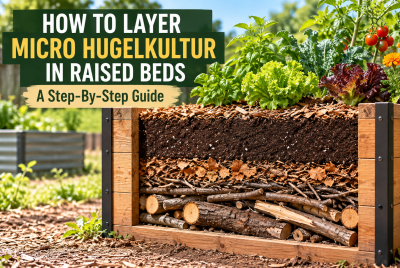
The goal is not to build a rigid structural foundation. Hugelkultur logs are buried organic materials that gradually decompose, changing the soil profile over time.
Choosing the right size, condition, and arrangement helps gardeners reuse yard waste while reducing common problems such as air pockets, restricted root depth, and soil sinking.
What Are The Best Logs For A Hugelkultur Foundation?
For a small hugelkultur raised bed, choose untreated hardwood logs or branches from a known, uncontaminated source.
Maple, birch, poplar, and suitable fruit-tree wood are reasonable choices. Oak can also work, although dense pieces may persist longer.
For a raised bed approximately 18–24 inches deep, logs around 2–4 inches in diameter are a practical starting point. Smaller branches can fill gaps.
Avoid pressure-treated lumber, painted wood, railroad ties, and unidentified construction scraps.

Always maintain sufficient growing soil above the logs, especially when growing vegetables.
Best Logs For Hugelkultur Raised Bed Foundation: Comparison Table
| Log Type | Suitability | Main Advantage | Important Consideration |
|---|---|---|---|
| Maple | Good | Readily available in many regions | Decomposition varies |
| Birch | Good | Small logs are easy to arrange | Thin pieces may deteriorate sooner |
| Poplar | Good | Often less decay-resistant | Can contribute to settling |
| Apple or pear | Good | Reuses orchard pruning waste | Avoid serious disease concerns |
| Oak | Suitable | Durable hardwood | Large logs may persist for years |
| Pine | Suitable | Common in many areas | Decomposition varies by species |
| Cedar | Less suitable for rapid decomposition | Naturally durable | Can remain intact for a long time |
| Black walnut | Use caution | Can be reused in some settings | Juglone concerns for sensitive plants |
| Treated or painted wood | Avoid | No recommended benefit | Potential contamination |
There is no scientifically established ranking proving that one tree species produces the highest vegetable yields in micro hugelkultur beds.
Log size, condition, source, and soil depth often matter more than choosing a particular hardwood species.
What Makes A Good Hugelkultur Foundation Log?
A useful hugelkultur log should be safe to bury, reasonably easy to arrange, and appropriate for the available bed depth.
1. Untreated Wood From A Known Source
Wood from routine pruning or tree removal is often a practical choice.
However, avoid material from contaminated sites or trees exposed to questionable chemical treatments.
For vegetable gardens, known and untreated materials are preferable to salvaged lumber of uncertain origin.
2. Manageable Log Diameter
Large logs occupy valuable space in compact beds.

For example, a 6-inch-diameter log uses half the depth of a 12-inch raised bed before any soil is added.
Smaller logs are easier to arrange without sacrificing most of the growing zone.
Practical starting dimensions:
-
18-inch-deep bed: Small branches are generally more suitable than substantial logs.
-
24-inch-deep bed: Logs approximately 2–4 inches in diameter may fit beneath a generous soil layer.
-
30-inch-deep bed: Moderately larger logs may be practical if enough growing soil remains.
These are illustrative construction guidelines, not experimentally established ideal dimensions.
3. Suitable Decomposition Characteristics
Wood species differ in density and natural resistance to decay.
Dense, durable logs may remain recognizable for many years.
Less decay-resistant wood can break down sooner, although moisture, oxygen, temperature, and microbial activity also influence decomposition.
Faster decomposition is not automatically better because it can contribute to soil settling.
4. Minimal Contamination And Disease Concerns
Inspect logs before burial.
Avoid wood with paint, adhesives, chemical residues, or unidentified contamination.
If pruning material shows signs of serious plant disease, consult local Cooperative Extension recommendations before reusing it.
Best Log Sizes For Different Raised Beds
Choosing logs based on bed depth helps preserve root space.

| Raised Bed Depth | Suggested Woody Material | Practical Approach |
|---|---|---|
| 8–12 inches | None preferred | Fill with suitable growing soil |
| 12–15 inches | Small twigs, if any | Preserve root depth |
| 18 inches | Branches around 1–2 inches | Keep woody layer minimal |
| 24 inches | Logs around 2–4 inches | Fill gaps and maintain deep soil |
| 30 inches or more | Small to moderate logs | More flexibility for layering |
For an open-bottom bed sitting on healthy soil, roots may extend into the underlying ground.
However, beds placed on concrete, compacted subsoil, or other restrictive surfaces require more careful attention to usable root depth and drainage.
How To Arrange Logs In A Hugelkultur Raised Bed Foundation
Correct placement helps reduce empty spaces and uneven settling.
Step 1 – Prepare The Bed Base
Place the raised bed on a stable, level surface.
For an open-bottom bed, remove debris and persistent weeds.
Make sure water can drain into the underlying ground without collecting around nearby foundations.
Do not use buried logs to support or stabilize a weak raised-bed frame.
Step 2 – Select And Cut Suitable Logs
Choose clean, untreated logs from a known source.

Cut them into manageable lengths that fit comfortably inside the bed.
For a 4×4-foot raised bed, pieces approximately 12–36 inches long can be convenient, depending on their shape and diameter.
Wear appropriate gloves and eye protection when cutting wood, and use powered cutting equipment only according to its safety instructions.
Step 3 – Position The Largest Logs At The Bottom
Place the largest suitable pieces near the bottom of the bed.
Arrange them horizontally rather than creating a tall, unstable stack.
Avoid forcing logs against metal panels or unsupported wooden walls.
Important: Leave enough space above the logs for a substantial growing layer.
Step 4 – Fill Spaces Between Logs
Add smaller branches, suitable soil, and finished compost around the larger pieces.

This step reduces large voids that might otherwise cause sudden depressions.
Shredded leaves can be included in modest amounts, but avoid building a thick layer of loose leaves that may compact substantially.

Step 5 – Add A Soil And Compost Transition Layer
Cover the logs with suitable soil mixed with mature compost.
In a deeper raised bed, approximately 2–3 inches can serve as an illustrative transition layer.
The purpose is to fill remaining spaces and separate the woody materials from the main planting zone.
Avoid mixing large amounts of fresh sawdust or fine wood chips into the growing soil, where microbial decomposition can temporarily immobilize nitrogen.
Step 6 – Fill With Quality Growing Soil
Add enough suitable soil for the crops you intend to grow.
Approximately 10–12 inches of growing medium above the buried wood is a useful starting point for many vegetables, with more depth needed for some crops.
Water gently to help reveal hidden gaps.
Add soil where the surface settles, and finish with an appropriate organic mulch.
Common Mistakes When Choosing Foundation Logs
1. Using Logs That Are Too Large
Oversized logs reduce the available growing depth and make it harder to fill gaps.
Better approach: Use smaller logs in compact raised beds. Reserve large pieces for deeper hugelkultur projects where they can be completely covered.
2. Leaving Large Spaces Between Logs
Soil can gradually move into empty spaces, creating uneven settling or sudden depressions.
Better approach: Fill spaces with smaller branches, soil, and mature compost during construction.

3. Choosing Wood Based Only On Decomposition Speed
Fast-decaying wood is not automatically the best option.
As woody materials break down, their volume changes, which may contribute to sinking.
Better approach: Balance manageable log size, safe sourcing, and adequate growing depth rather than selecting wood solely because it decomposes quickly.
4. Using Questionable Salvaged Lumber
Old construction materials may contain preservatives, paint, or other contaminants.
Better approach: Choose clean, untreated logs from known trees. Avoid railroad ties and unidentified treated wood.
5. Expecting Logs To Provide Immediate Nutrients
Fresh logs are not a substitute for fertile growing soil.
Microorganisms decomposing carbon-rich material may temporarily immobilize nitrogen, especially where fine wood particles contact the root zone.
Better approach: Keep the main planting layer separate from large quantities of fresh wood and manage nutrients according to crop requirements and soil testing.
Better Alternatives To Large Foundation Logs
Large logs are not essential for every hugelkultur raised bed.
Small Branches And Twigs
Small branches fit more easily into compact beds and are useful for filling spaces.

They are especially practical when the bed is approximately 18 inches deep and growing soil must remain the priority.
Partially Decomposed Wood
Partially decomposed, uncontaminated wood can be easier to arrange than large, rigid fresh logs.
However, it will continue changing over time and may contribute to settling.
Finished Compost And Growing Soil
For shallow beds, a conventional soil-and-compost approach may be more reliable.
It preserves growing depth and avoids the large voids associated with buried logs.
Surface Mulch
Organic mulch can help reduce evaporation and protect the soil surface without occupying valuable root space.
For many vegetable gardens, a modest layer of shredded leaves or another suitable mulch is a practical alternative to adding more buried wood.
Frequently Asked Questions
Are Rotten Logs Better Than Fresh Logs For Hugelkultur?
Partially decomposed logs can be useful because the breakdown process has already started. They may be softer and easier to arrange around other materials. However, rotten logs are not automatically superior. Their suitability depends on the wood species, condition, contamination history, and available growing depth. Both fresh and partially decomposed wood can contribute to settling.
Should Hugelkultur Foundation Logs Touch The Ground?
In an open-bottom raised bed, placing logs directly on suitable ground is generally acceptable. However, logs should not serve as structural supports for the raised-bed frame. Ensure the site drains adequately and avoid creating large unsupported spaces beneath the growing soil. Beds on concrete or other solid surfaces require a different drainage and growing-medium design.
How Many Logs Do I Need For A 4×4-Foot Hugelkultur Raised Bed?
There is no universal number because log diameter, length, shape, and bed depth vary. For a 24-inch-deep bed, a modest woody layer around 3–6 inches deep is one practical starting design. Arrange enough small logs to form a loose base without sacrificing the main growing zone, and fill the spaces with soil and suitable organic materials.
Final Thoughts
The best logs for hugelkultur raised bed foundation layers are clean, untreated, appropriately sized pieces of wood that fit comfortably beneath quality growing soil.
Maple, birch, poplar, and suitable fruit-tree logs are practical choices, but no single species guarantees better gardening results.
For most compact beds, prioritize manageable log diameters, careful gap filling, and adequate root depth. Avoid contaminated wood and expect some settling as buried organic materials decompose.
Start by measuring your raised bed and selecting suitable locally available logs. A modest woody layer is generally more practical than filling a shallow bed with large tree trunks.
Explore more:
For additional guidance, see these related Eco Yard Guide articles:
- Micro-Hugelkultur For Raised Beds — Pillar Hub
- How To Layer Micro Hugelkultur In Raised Beds
- Why Hugelkultur Raised Beds Sink Over Time