Overwatered Plants: What To Do? Learn The Warning Signs And How To Save Struggling Plants
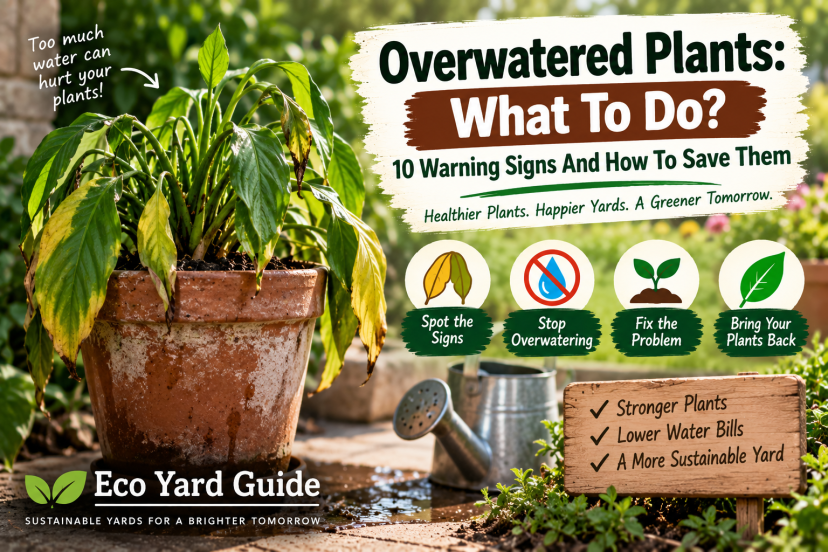
Wilting leaves usually make gardeners reach for the hose, but sometimes more water is exactly what a struggling plant doesn’t need. If you’re searching for overwatered plants what to do, the first step is to check the soil before assuming your plant is thirsty. Excessive watering can keep the root zone saturated, reduce available oxygen, and create conditions that favor root problems.
Overwatering isn’t always caused by using the hose too often. Heavy clay soil, poor drainage, containers without adequate drainage holes, excessive rainfall, and irrigation systems running on fixed schedules can all keep roots wetter than intended.
The encouraging news is that many plants can recover when the problem is recognized early. By reducing unnecessary watering, improving drainage, and allowing the root zone to return to appropriate moisture levels, you may be able to save the plant while also conserving water and creating a lower-maintenance garden.
⚡ Quick Answer: Overwatered Plants What To Do
If you suspect overwatering, stop adding water and check the soil several inches below the surface. Allow excess moisture to drain and the root zone to dry appropriately for the plant before watering again. Check for poor drainage, blocked container holes, or irrigation problems. If roots are severely damaged or rotting, more extensive intervention may be necessary. Avoid fertilizing a severely stressed plant until the underlying moisture problem has been corrected.
Key Takeaways
Most likely cause: The root zone is staying wet longer than the plant can tolerate because of frequent watering, poor drainage, heavy soil, rainfall, or an irrigation problem.
Usually serious? Occasional excess watering may cause little lasting harm, but prolonged saturation can damage roots and contribute to plant decline.
First thing to check: Check soil moisture several inches below the surface before adding any more water.
Best solution: For overwatered plants, what to do depends on severity, but it usually starts with reducing irrigation, improving drainage, and allowing the soil to dry appropriately.
🔍 Why Overwatering Happens – How To Identify The Problem
Plants need both water and oxygen around their roots.
Healthy soil contains pore spaces that can hold water or air. After irrigation or rainfall, some water drains away, and oxygen gradually returns to these spaces.
When soil remains saturated for too long, oxygen availability can decrease. Roots may become stressed and less able to function normally.
This creates one of gardening’s most confusing situations: an overwatered plant can sometimes look thirsty.

Possible warning signs include:
- Yellowing leaves
- Wilting despite wet soil
- Soft or limp foliage
- Persistently soggy soil
- Slow or stalled growth
- Leaf drop
- Mushy stems near the soil line
- Unpleasant-smelling soil
- Fungus or algae on constantly wet surfaces
- Dark, soft, or unhealthy roots
No single symptom proves overwatering. Nutrient deficiencies, diseases, heat stress, transplant shock, and underwatering can produce similar symptoms, which is why checking soil moisture is so important.
💧 10 Common Signs And Causes Of Overwatered Plants
1. The Soil Is Constantly Wet
The simplest warning sign is soil that never seems to dry.
Check below the surface instead of judging by appearance alone. The top inch may look dry while deeper soil remains saturated.
Push your finger into smaller containers or use a trowel to inspect outdoor beds carefully.
If the root zone is still very wet, don’t automatically add more water simply because it’s your normal watering day.
2. Leaves Are Turning Yellow
Yellow leaves can have many causes, but persistent yellowing combined with saturated soil can point toward excessive moisture.
Older leaves may be affected first in some plants, while others show more widespread discoloration.

Before reaching for fertilizer, check drainage and soil moisture.
Adding fertilizer doesn’t solve an oxygen-starved root zone and can unnecessarily increase the amount of nutrients in already stressed soil.
3. The Plant Wilts While The Soil Is Moist
This is one of the easiest symptoms to misinterpret.
Gardeners see a wilted plant and assume it needs water. They irrigate again, the plant continues wilting, and the cycle repeats.
Instead, physically check the soil.
If it is already wet several inches down, give the plant time and investigate drainage before watering again.
4. Leaves Feel Soft Or Swollen
Some plants may develop soft, water-soaked, or swollen-looking tissue when moisture conditions are excessive.
Leaves can also develop blister-like symptoms under certain conditions.
Because these symptoms vary significantly among species, don’t diagnose overwatering from leaf appearance alone.
Combine what you’re seeing above ground with soil moisture and drainage observations.
5. Leaves Begin Dropping
Both excessively dry and excessively wet conditions can trigger leaf drop.
That’s another reason watering based solely on foliage can lead to mistakes.

Look at the entire situation.
Has the garden received heavy rain recently? Is the irrigation system still running? Does the soil remain soggy? Is the plant located in a low spot?
The answers can reveal whether excess moisture is likely.
6. Growth Slows Down
A plant sitting in wet soil doesn’t necessarily grow faster just because plenty of water is available.
Roots under prolonged stress may not function efficiently, and overall growth can slow.
If a plant appears stalled despite adequate sunlight and otherwise reasonable care, inspect the root environment.
Don’t automatically increase fertilizer.
Correct water and drainage problems first.

7. The Soil Develops An Unpleasant Smell
Healthy soil often smells earthy.
A strong stagnant or rotten odor can indicate that conditions have remained excessively wet and oxygen-poor.
In containers, gently inspect the root system if the plant is clearly declining and other evidence points toward root problems.
Healthy roots vary by species, but extremely soft, dark, foul-smelling roots deserve attention.
8. The Container Has Poor Drainage
Potted plants are especially vulnerable when water has nowhere to escape.
Decorative pots sometimes lack drainage holes, while others have holes blocked by compacted material or roots.
Water can also remain trapped inside decorative outer pots or saucers.
After watering a container, make sure excess water can drain freely.

Don’t leave plants continuously sitting in collected water unless the species specifically requires those conditions.
9. Your Irrigation Schedule Ignores The Weather
Automatic irrigation is convenient, but a fixed schedule can become wasteful.

Plants don’t necessarily need the same amount of water every week.
Rainfall, temperature, wind, humidity, season, plant maturity, and soil type all affect water demand.
If your irrigation system runs immediately after several days of rain, you’re potentially wasting water while increasing the risk of saturated soil.
Use weather-responsive controls when appropriate or adjust schedules seasonally.
10. Your Soil Drains Too Slowly
Sometimes the problem isn’t how much water you apply—it’s how long the water remains.
Heavy clay, compacted soil, poor grading, and low areas can all slow drainage.
A normal irrigation amount may become excessive when roots remain saturated afterward.
Observe your garden following rainfall.
Areas that consistently stay wet much longer than the surrounding landscape may need soil improvement, different plants, raised beds, grading changes, or another drainage solution.
🧪 How To Confirm Overwatering Is The Cause
Don’t diagnose an overwatered plant from yellow leaves alone.
Start with the soil.
Check moisture several inches below the surface and, where appropriate, at different points around the root zone.

For containers, compare the pot’s weight when wet versus when it has dried appropriately. Experienced container gardeners often use this difference as an additional clue.
Look at drainage holes and saucers for trapped water.
Outdoors, examine whether water pools around the plant after rain or irrigation.
You should also consider recent weather. A plant may be receiving excessive moisture from rainfall even though you haven’t personally watered it.
If plants repeatedly decline and the cause remains unclear, a soil test or advice from your local cooperative extension service may help rule out nutrient, pH, disease, and soil-related problems.
🛠️ How To Save An Overwatered Plant
The appropriate response depends on the plant and severity of the problem.
Stop Unnecessary Watering
Don’t add more water until the root zone reaches an appropriate moisture level for that particular plant.
This doesn’t mean intentionally dehydrating it.
The goal is restoring the normal wet-to-drier cycle the plant requires.
Improve Drainage
For containers, confirm that drainage holes are open and excess water can escape.

Empty water from saucers and decorative outer containers when appropriate.
In garden beds, investigate persistent standing water rather than simply reducing irrigation indefinitely.
Move Containers When Appropriate
If outdoor pots have been saturated by prolonged rainfall, moving them temporarily to a protected location may help prevent additional water from entering the soil.
Keep the plant’s light requirements in mind.
Inspect Severely Affected Roots
For a seriously declining container plant, careful root inspection may be warranted.
If roots are clearly decayed, repotting into a clean container with fresh, appropriate growing medium may be necessary.
Avoid unnecessary root disturbance when a plant is only mildly stressed.
Pause Fertilizing
A severely stressed plant doesn’t need to be “rescued” with large amounts of fertilizer.
Correct the moisture problem first.
Resume appropriate fertilization only after the plant begins recovering and according to its normal care requirements.
⚠️ Mistakes To Avoid With Overwatered Plants
The biggest mistake is watering again because the plant is wilted.
Always check the soil first.
Don’t place an already saturated container into another container that prevents drainage.
Avoid dramatically increasing sunlight to “dry the plant faster.” A stressed shade-loving plant can develop additional problems if suddenly placed in intense sun.
Don’t automatically replace all garden soil because one plant struggled.
And don’t assume that adding gravel to the bottom of a container substitutes for appropriate drainage holes and a suitable growing medium.
Most importantly, avoid complicated rescue treatments before identifying the actual cause.
Sometimes the best first intervention is simply stopping unnecessary irrigation.
🛡️ How To Prevent Overwatering
Water according to plant needs rather than habit.
Before irrigating, check moisture in the root zone. This simple practice can save water and reduce plant stress.
Group plants with similar water requirements together so one irrigation zone isn’t trying to satisfy drought-tolerant and moisture-loving plants simultaneously.
Use drip irrigation where appropriate to deliver water directly to roots.
Improve compacted garden soil gradually with suitable organic matter and protect the surface with mulch.
However, remember that mulch slows evaporation. A heavily mulched bed may need a different watering schedule than bare soil.
Check automatic irrigation regularly for broken emitters, leaks, overspray, and outdated schedules.
The goal is not to water as frequently as possible. It’s to provide the right amount of moisture when plants actually need it.
❓ Frequently Asked Questions
Can Overwatered Plants Recover?
Yes, many plants can recover when overwatering is identified before severe root damage occurs. Recovery depends on the plant species, duration of saturation, root health, temperature, and other growing conditions.
How Long Does An Overwatered Plant Take To Recover?
There is no universal recovery time. Mildly affected plants may improve relatively quickly once proper conditions return, while plants with substantial root damage may require weeks or may not recover.
Should I Let An Overwatered Plant Dry Out Completely?
Not necessarily. The goal is to let the soil reach an appropriate moisture level for the species, not intentionally create severe drought stress.
Should I Repot An Overwatered Plant?
Repotting may be useful when a container has unsuitable soil, inadequate drainage, or severe root deterioration. Mild overwatering doesn’t always justify disturbing the roots.
Can Overwatering Cause Yellow Leaves?
Yes, prolonged excessive moisture can contribute to yellowing. However, yellow leaves have many possible causes, so check soil conditions before diagnosing the problem.
Can A Plant Be Overwatered From Rain?
Absolutely. Extended rainfall can saturate garden beds and containers even when irrigation is turned off.
Is Overwatering Worse In Clay Soil?
Heavy or compacted clay can drain slowly, increasing the time roots remain saturated. Watering frequency should reflect the actual soil conditions.
Can Mulch Cause Overwatering?
Mulch doesn’t directly overwater plants, but it slows evaporation. If you continue watering a mulched bed as frequently as exposed soil, moisture may remain higher than necessary.
🌿 Related Garden Problems
Overwatering symptoms can overlap with several other common garden problems:
- Poorly draining garden soil
- Clay soil problems
- Yellow leaves
- Plants wilting after watering
- Root problems
- Standing water after rain
- Garden soil staying wet too long
- Container plants losing leaves
- Plants growing slowly
- Mulch staying constantly damp
Correct diagnosis can save both plants and money. Before purchasing fertilizer, pesticides, or replacement plants, inspect the soil and drainage first.
🌎 Final Thoughts
When it comes to overwatered plants, what to do starts with one surprisingly simple action: check the soil before adding more water.
Yellow leaves and wilting don’t always indicate drought. When roots remain saturated, plants can struggle even though they’re surrounded by moisture.
Reduce unnecessary irrigation, allow the root zone to return to an appropriate moisture level, improve drainage where necessary, and monitor the plant’s response.
Then prevent the problem from returning.
Adjust irrigation for rainfall and seasonal weather, group plants by water needs, maintain drainage, and check soil moisture rather than watering automatically.
These habits aren’t just better for your plants. They can significantly reduce wasted water and help create the kind of healthy, resilient, low-maintenance landscape that sustainable gardening is all about.
Gardening Advice: Every garden is different. Soil type, climate, weather, plant variety, and growing conditions can all affect results. If your plants continue to decline despite following the recommendations in this article, or if you suspect a serious plant disease, invasive pest infestation, or a hazardous tree issue, contact your local cooperative extension office, certified arborist, or qualified gardening professional for personalized advice.
Disclaimer: This article is for informational purposes only and is not a substitute for professional horticultural, arboricultural, or agricultural advice. Gardening results vary depending on local growing conditions, soil, weather, and plant variety. Always read and follow the instructions on any fertilizers, pesticides, herbicides, or other garden products before use.
 Explore more:
- Sandy Soil Gardening: Is Sandy Soil Bad For Plants?
- Reduce Water Waste Yard: 15 Easy Ways
- Recycled Materials Patio Ideas