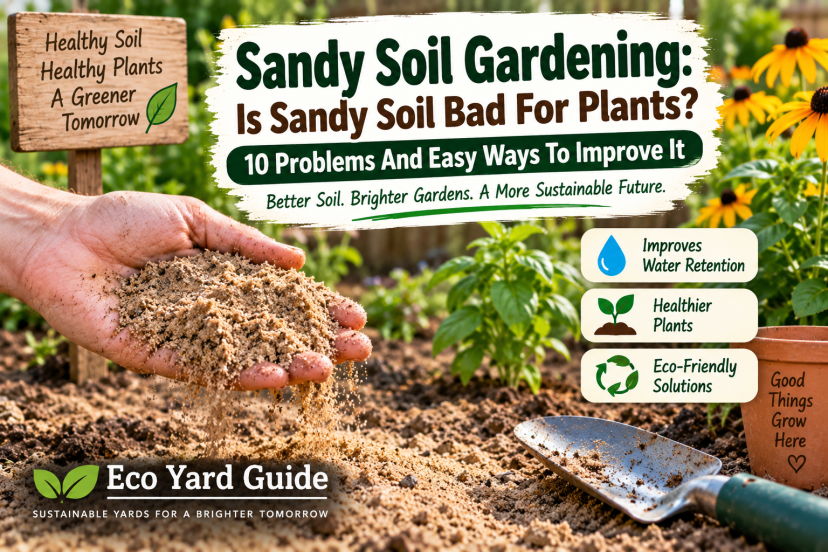
Sandy Soil Gardening: Is Sandy Soil Bad For Plants? Learn Why Plants Struggle And How To Improve It
If water seems to disappear almost as soon as you irrigate and your plants wilt quickly on hot days, you may be dealing with sandy soil. Sandy soil gardening has some real challenges, especially when it comes to retaining moisture and nutrients, but sandy soil isn’t automatically bad for plants. In fact, its excellent drainage and easy-to-work texture can be major advantages when managed correctly.
The key is understanding what sandy soil lacks and improving it without trying to completely replace it. Regular additions of compost, appropriate organic mulch, efficient irrigation, and plants suited to fast-draining conditions can gradually create a more productive garden.
For homeowners interested in sustainable landscaping, this approach can also reduce wasted water, fertilizer use, plant replacements, and maintenance costs. Instead of fighting your natural soil, you can improve its ability to support healthy roots while taking advantage of the drainage sandy soil already provides.
⚡ Quick Answer: Is Sandy Soil Bad For Plants?
Sandy soil isn’t inherently bad for plants. It provides excellent drainage, good aeration, and is generally easy for roots to penetrate. However, it can dry quickly and may not retain nutrients as effectively as soils containing more clay, silt, and organic matter. Adding compost and organic mulch, adjusting irrigation, and choosing plants suited to fast-draining conditions can make sandy soil much easier to garden successfully.
Key Takeaways
Most likely cause: Large sand particles create relatively large pore spaces, allowing water to move through the soil quickly and increasing the potential for nutrients to move beyond shallow root zones.
Usually serious? No. Sandy soil can support a beautiful, productive garden when plants, watering, and soil management are matched to its characteristics.
First thing to check: Check how quickly the soil dries after deep watering and consider a soil test if plants repeatedly show poor growth despite appropriate care.
Best solution: Successful sandy soil gardening usually involves adding organic matter, maintaining mulch, watering efficiently, and choosing plants adapted to well-drained soil.
🔍 Why Sandy Soil Causes Problems – How To Identify It
Soil is made from varying proportions of sand, silt, clay, organic matter, water, and air.
Sand particles are relatively large. This creates larger spaces between particles, allowing water and air to move through sandy soils rapidly.
That can be helpful after heavy rain because waterlogging is generally less likely than in dense, poorly drained clay. But rapid drainage can become a disadvantage during dry or hot weather.
Common signs of sandy soil include:

- Water disappearing quickly after irrigation
- Soil drying rapidly during warm weather
- A gritty texture when rubbed between your fingers
- Difficulty forming moist soil into a firm ball
- Plants wilting soon after watering
- Frequent need for irrigation
- Fertilizer seeming to provide short-lived results
- Organic material disappearing relatively quickly
- Soil that is loose and easy to dig
Before assuming sand is responsible for struggling plants, consider sunlight, plant selection, irrigation coverage, soil pH, pests, disease, and nutrient deficiencies as well.
🌱 10 Common Sandy Soil Gardening Problems
1. Water Drains Very Quickly
Fast drainage is the characteristic most gardeners associate with sandy soil.
Water can move downward rapidly instead of remaining near shallow plant roots.
That’s excellent for plants that dislike wet feet, but it can create challenges for vegetables, annual flowers, and other plants that prefer consistent moisture.
Don’t try to solve this simply by keeping the soil constantly wet.
Instead, improve its water-holding ability gradually with organic matter and use irrigation methods that target the root zone efficiently.
2. The Soil Dries Out Fast
A sandy garden may feel moist after watering in the morning and noticeably drier later, particularly during hot, windy weather.
The exposed soil surface can lose moisture through evaporation while water also drains downward.

Organic mulch can help significantly.
A suitable layer of mulch shades the soil and reduces direct evaporation. Materials such as shredded leaves, wood chips, or other appropriate organic mulches can also contribute organic material as they decompose.
3. Nutrients Can Leach More Easily
Water doesn’t always travel through soil alone.
In fast-draining conditions, some soluble nutrients may move downward with water, potentially beyond the roots of shallow-growing plants.
This is one reason applying excessive fertilizer to sandy soil can be both wasteful and environmentally undesirable.
Instead of guessing, consider a soil test.
Apply fertilizers only when appropriate for your plants and according to soil-test recommendations or reliable regional guidance.
4. Sandy Soil May Contain Little Organic Matter
Some sandy soils contain relatively low amounts of organic matter.
Organic matter plays an important role in soil structure, water retention, nutrient cycling, and biological activity.
Finished compost can help.
Rather than adding a massive amount once and expecting a permanent transformation, make appropriate additions over time.
Organic matter continues decomposing, so soil improvement is an ongoing process rather than a one-time project.

5. Plants Can Wilt Quickly During Hot Weather
Plants growing in sandy soil can experience moisture stress surprisingly fast.
This is especially noticeable with shallow-rooted plants and new transplants whose roots haven’t spread deeply.
Check moisture below the surface rather than waiting until plants are severely wilted.
New plants may need closer monitoring while becoming established, even when mature specimens of the same species are relatively drought tolerant.
6. Frequent Watering Can Waste Water
When homeowners realize their soil drains quickly, the natural reaction is often to water constantly.
That isn’t necessarily the most efficient solution.
Excessive irrigation can push water below the active root zone and potentially carry nutrients with it.
A better approach is to understand how deeply each irrigation cycle wets the soil.

Drip irrigation can be especially useful because it delivers water directly around plants at a controlled rate.
The ideal frequency depends on your plants, climate, season, rainfall, and root depth.
7. Mulch Can Break Down Quickly
Warm, biologically active garden conditions can gradually decompose organic mulch.
That’s not necessarily bad—the material is becoming part of the soil system—but it means sandy beds may benefit from periodic replenishment.
Don’t automatically add another thick layer every year.
Measure what remains first.
Maintain an appropriate layer without burying stems, crowns, or tree trunks.
8. Some Plants Simply Dislike Fast-Draining Soil
Not every plant wants the same growing conditions.

Plants adapted to consistently moist soil may require significant irrigation when planted in an extremely sandy location.
Instead of fighting the site, choose species compatible with your conditions whenever practical.

Drought-tolerant and regionally appropriate plants can reduce irrigation and maintenance requirements.
Native plants adapted to local sandy soils may be particularly useful, although “native” doesn’t automatically mean every species will thrive in every part of your yard.
9. Sandy Soil Can Heat Up Quickly
Loose, exposed sandy soil can experience rapid temperature changes near the surface.
During summer, hot surface conditions can increase stress on shallow roots and accelerate moisture loss.
Mulch helps buffer these temperature swings.
Groundcovers and appropriate plant spacing can also shade portions of the soil once plants mature.
Avoid leaving large areas of vulnerable soil unnecessarily exposed.
10. Gardeners Try To Change The Soil Too Quickly
One of the biggest sandy soil gardening mistakes is expecting an instant transformation.
Dumping huge quantities of amendments into the garden can be expensive and may not produce the intended result.
Think of soil improvement as gradual.
Regular compost additions, organic mulch, appropriate plants, and efficient irrigation can improve growing conditions season after season without requiring you to replace your native soil.
🧪 How To Confirm You Have Sandy Soil
Start with a simple hand test.

Take a handful of moist—but not soaking wet—soil and rub it between your fingers.
Soil with a high sand content typically feels gritty. It tends to fall apart easily rather than forming the smooth, flexible ribbon associated with clay-rich soil.
Next, observe drainage.
After watering thoroughly, check moisture at several depths. If water infiltrates rapidly and the soil dries much faster than nearby garden areas, that provides another clue.
For a more accurate understanding, consider having your soil tested through a reputable laboratory or your local cooperative extension program.
A soil test may provide useful information about pH, nutrients, organic matter, and other characteristics, depending on the testing service.
🛠️ How To Improve Sandy Soil
You don’t need to turn sand into clay.
The goal is to help sandy soil retain enough moisture and nutrients for the plants you’re growing while preserving its valuable drainage.
Add Finished Compost
Compost is one of the most useful amendments for many sandy gardens.
It contributes organic matter and can improve moisture and nutrient retention.

In new vegetable or flower beds, appropriate amounts can be incorporated into the root zone. Around established plants, compost may be applied carefully at the surface.
Apply Organic Mulch
Cover bare soil around established plants with an appropriate organic mulch.
Mulch reduces evaporation and protects the surface from extreme temperatures.
Keep it away from trunks and crowns.
Use Efficient Irrigation
Drip irrigation or soaker hoses can deliver water directly to the root zone.
Check how deeply the water penetrates and adjust duration accordingly.
Avoid watering based solely on a timer without considering rainfall and actual soil moisture.
Choose Plants Wisely
Plant selection can dramatically reduce the amount of work required.
Look for plants suited to your climate and well-drained soil.
Your local cooperative extension office or reputable native plant organization can provide recommendations specific to your region.
⚠️ Sandy Soil Gardening Mistakes To Avoid
Don’t assume sandy soil needs daily watering.
Check the root zone first.
Avoid excessive fertilizer applications. More fertilizer doesn’t automatically mean better growth, and nutrients that aren’t used by plants can be lost from the root zone.
Don’t leave the soil completely bare if mulch is appropriate for the planting.
Avoid piling organic material against plant stems or tree trunks.
And don’t assume every struggling plant needs more fertilizer. Wilting, yellowing, and weak growth can have many causes.
Diagnose the problem before buying another garden product.
🛡️ How To Prevent Sandy Soil Problems
Building resilient sandy soil requires consistency rather than expensive treatments.
Recycle appropriate yard materials into compost or mulch when practical.
Maintain organic mulch around established plants to conserve water.
Add suitable compost periodically rather than waiting until the soil becomes extremely poor.
Monitor irrigation carefully during summer and after installing new plants.
As plants establish deeper roots, adjust watering instead of maintaining the same schedule indefinitely.
Most importantly, design your landscape around your soil.
Grouping plants with similar water requirements makes irrigation more efficient and prevents drought-tolerant plants from receiving the same amount of water as moisture-loving species.
❓ Frequently Asked Questions
Is Sandy Soil Good Or Bad For Gardening?
It can be either. Sandy soil provides excellent drainage and aeration but may dry quickly and retain fewer nutrients than some other soils. Appropriate management can make it productive.
What Is The Best Thing To Add To Sandy Soil?
Finished compost and other appropriate sources of organic matter are commonly useful because they can improve moisture retention, nutrient-holding capacity, and soil biology.
Does Mulch Help Sandy Soil?
Yes. Mulch can reduce evaporation, moderate soil temperatures, suppress weeds, and gradually contribute organic material when organic mulch is used.
How Often Should You Water Plants In Sandy Soil?
There is no universal schedule. Frequency depends on the plant, weather, rainfall, root depth, and how quickly your particular soil dries. Check moisture in the root zone before watering.
Can Vegetables Grow In Sandy Soil?
Yes. Many vegetables can grow successfully in sandy soil when moisture and fertility are properly managed. Compost and efficient irrigation can make vegetable gardening easier.
Does Sandy Soil Need More Fertilizer?
Not automatically. Because nutrients can move through sandy soil more readily, excessive fertilizer may simply increase waste. Use soil testing and plant-specific recommendations to guide applications.
What Plants Grow Well In Sandy Soil?
Many drought-tolerant perennials, herbs, grasses, shrubs, and native plants perform well in freely draining soils. The best species depend on your climate, sunlight, rainfall, and USDA hardiness zone.
Can You Turn Sandy Soil Into Good Garden Soil?
You can significantly improve its growing characteristics, but you don’t need to completely change its texture. Increasing organic matter and protecting the surface can make sandy soil much more productive.
🌿 Related Garden Problems
Sandy soil can contribute to or resemble several other common garden problems:
- Garden soil drying out too fast
- Plants wilting during hot weather
- Frequent watering requirements
- Weak vegetable growth
- Nutrient deficiencies
- Mulch decomposing quickly
- Water draining too rapidly
- Newly planted shrubs struggling
- Lawn developing dry patches
- Soil containing very little organic matter
Understanding your soil before buying fertilizers, amendments, or replacement plants can save considerable money.
📌 Final Thoughts On Sandy Soil Gardening
Sandy soil gardening doesn’t have to mean endless watering and struggling plants.
Sandy soil actually offers some valuable advantages. It’s generally well aerated, easy to work, and less likely to remain waterlogged than heavy, compacted soils.
Its biggest weaknesses—rapid drying and limited nutrient retention—can often be improved through relatively simple practices.
Add appropriate compost, protect the surface with organic mulch, irrigate efficiently, monitor actual soil moisture, and select plants that appreciate good drainage.
Most importantly, work with your soil rather than trying to completely replace it.
Over time, these small improvements can create healthier soil, stronger plants, lower water use, and a more attractive landscape that requires less money and maintenance to keep looking good.
Gardening Advice: Every garden is different. Soil type, climate, weather, plant variety, and growing conditions can all affect results. If your plants continue to decline despite following the recommendations in this article, or if you suspect a serious plant disease, invasive pest infestation, or a hazardous tree issue, contact your local cooperative extension office, certified arborist, or qualified gardening professional for personalized advice.
Disclaimer: This article is for informational purposes only and is not a substitute for professional horticultural, arboricultural, or agricultural advice. Gardening results vary depending on local growing conditions, soil, weather, and plant variety. Always read and follow the instructions on any fertilizers, pesticides, herbicides, or other garden products before use.
 Explore more:
- Solar Fountains For Gardens: 11 Beautiful Ideas
- Reduce Water Waste Yard: 15 Easy Ways
- Underwatered Plants Signs