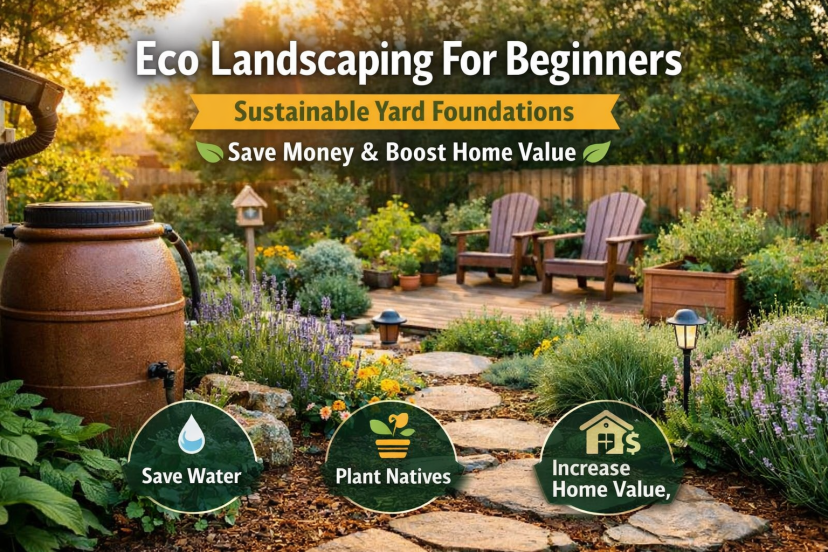
Eco Landscaping For Beginners: Smart, Sustainable Yard Foundations That Save Money And Boost Home Value
🏡 Why More U.S. Homeowners Are Switching To Eco Landscaping
If you’re like most families today, you’re looking for ways to:
-
Lower monthly utility bills
-
Increase property value
-
Create a safer outdoor space for kids and pets
-
Reduce environmental impact
-
Future-proof your home against drought and rising costs
The good news? Eco landscaping for beginners doesn’t require a total yard makeover. It starts with smart foundation choices that make everything else easier and cheaper long-term.
Across the U.S., water costs, fertilizer costs, and lawn maintenance costs are rising. Sustainable yard foundations help homeowners reduce maintenance while supporting native plants & biodiversity and improving soil health & organic fertilization naturally.
⚡ Quick Answer: What Is Eco Landscaping For Beginners?
Eco landscaping for beginners means designing your yard to use less water, fewer chemicals, and more natural systems while still looking beautiful and functional.
It typically includes:
-
Native or drought-tolerant plants
-
Efficient irrigation or rainwater use
-
Organic soil building and composting
-
Reduced lawn areas
-
Wildlife-friendly plant choices
-
Recycled or sustainable hardscape materials
🌎 What Drives The Need For Eco Landscaping In The U.S.?
Rising Costs + Climate Pressure
Many U.S. regions face:
-
Longer drought seasons
-
Water restrictions
-
Fertilizer runoff regulations
-
Higher landscaping labor costs
Traditional lawns often require:
-
30–60% of household water use (EPA estimates vary by region)
-
Weekly mowing fuel or electricity
-
Chemical fertilizers and pesticides
Eco landscaping for beginners focuses on water conservation & irrigation efficiency and climate & sustainability education to reduce these pressures.
🌱 Eco Landscaping For Beginners: Sustainable Yard Foundation Basics
1️⃣ Start With Soil Health First
Healthy soil reduces:
-
Water usage
-
Fertilizer needs
-
Plant disease risk
Focus on:
-
Compost integration
-
Organic mulch layers
-
Natural microbial activity
This supports sustainable gardening & composting and improves root growth long term.
2️⃣ Reduce High-Maintenance Lawn Space
Instead of full turf coverage:
-
Mix lawn with planting zones
-
Add ground cover plants
-
Use permeable pathways
This supports eco-friendly landscaping & lawn care while lowering mowing time.
3️⃣ Choose Native And Adaptive Plants
Native plants:
-
Require less water
-
Support local pollinators
-
Resist local pests naturally
This strengthens wildlife & environmental support and improves ecosystem balance.
4️⃣ Install Smart Water Systems
Consider:

-
Drip irrigation
-
Rain barrels
-
Smart irrigation controllers
This directly supports water conservation landscaping goals.
🧩 Real-Life Scenario: Beginner Eco Yard Transformation
Family Example: Suburban Texas Home
Problem:
-
$180/month summer water bill
-
Patchy lawn from heat stress
-
Constant fertilizer costs
Eco landscaping for beginners solution:
Step 1: Soil compost layering
Step 2: Replace 30% lawn with native grasses
Step 3: Install drip irrigation
Results after 1 year:
-
Water bill reduced by ~35%
-
Less mowing time
-
Improved curb appeal
This is why many U.S. homeowners now combine eco home & outdoor living upgrades with landscaping.
🧠 Self Assessment Checklist: Is Your Yard Eco-Ready?
Check what applies:
-
Soil dries out within 1 day after watering
-
The lawn needs frequent fertilizing
-
Water bill spikes in summer
-
Standing water runoff after rain
-
Pollinators rarely visit your yard
-
The yard requires weekly chemical treatments
If you checked 2 or more, eco landscaping for beginners could significantly improve your yard performance and costs.
⚖️ Expectation Vs Reality: Eco Landscaping For Beginners
| Expectation | Reality |
|---|---|
| Eco yards look wild or messy | Modern eco design is clean and structured |
| Costs more upfront | Many projects pay back in 1–3 years |
| Requires expert knowledge | Many DIY eco projects are beginner-friendly |
| Only works in certain climates | Works in all U.S. zones with local plant selection |
🔧 Practical Next Steps (Beginner Friendly)
🧩 Week 1: Yard Foundation Audit
-
Test soil texture and drainage
-
Map sun vs shade zones
-
Track watering patterns
🌿 Week 2: Start Soil Improvement
-
Add compost to planting zones
-
Apply organic mulch
-
Reduce bare soil areas
🧩 Week 3: Water Efficiency Upgrade
-
Adjust sprinkler timing
-
Install a rain barrel
-
Convert small zones to drip irrigation
🌿 Week 4: Introduce Native Plant Zones
-
Start with borders and edges
-
Replace struggling lawn patches
-
Add pollinator-friendly plants
🌞 Bonus Upgrade: Solar And Energy-Efficient Yard Solutions
Some homeowners combine eco landscaping for beginners with:
-
Solar garden lighting
-
Solar-powered water features
-
Energy-efficient outdoor living spaces
These support solar & energy-efficient yard solutions and reduce outdoor energy costs.
♻️ DIY Eco Projects Using Recycled Materials
Beginner-friendly ideas:
-
Rain barrel from a food-safe drum
-
Gravel + reclaimed brick pathways
-
Compost bin from pallets
This supports DIY eco projects & recycled materials strategies while lowering project cost.
🌎 U.S.-Specific Eco Landscaping Tips
Northeast
Focus on:
-
Native pollinator plants
-
Rain garden drainage systems
Southwest
Focus on:
-
Xeriscaping
-
Shade tree placement
Midwest
Focus on:
-
Soil organic matter improvement
-
Native prairie plant mixes
Southeast
Focus on:
-
Drainage management
-
Humidity-resistant native plants
❓ FAQs: Eco Landscaping For Beginners
1. Is eco landscaping expensive to start?
Not always. Many beginners start by improving soil and reducing lawn size, which costs very little but delivers big long-term savings.
2. How much water can eco landscaping save?
Many U.S. homes reduce outdoor water use by 20–50%, depending on climate and lawn size.
3. Do eco yards look less attractive?
No. Modern eco landscaping combines structured design with natural plants, creating clean and high-end curb appeal.
4. What is the easiest eco landscaping step for beginners?
Start with compost and mulch. This alone can reduce watering needs and improve plant survival.
5. Can eco landscaping increase home value?
Yes. Sustainable landscaping is increasingly attractive to buyers due to lower maintenance and lower utility costs.
🧭 Conclusion: Start Small, Build Sustainable, Save Big
Eco landscaping for beginners is about smart foundations, not perfection.
Even small changes like:
-
Improving soil
-
Reducing lawn area
-
Adding native plants
-
Improving irrigation efficiency
…can dramatically reduce costs and improve yard health.
The best approach is to start with one zone, learn what works, and expand over time. Many homeowners are surprised by how quickly sustainable landscaping begins paying for itself.
A greener yard isn’t just better for the planet — it’s often better for your wallet and property value too.
⚠️ Disclaimer
This article is for educational and informational purposes only. Results from eco-landscaping projects may vary based on climate, soil conditions, property design, and local regulations. Always check local water rules, HOA guidelines, and building codes before starting major yard modifications.

 Explore more: