Why Is Moss Growing In My Lawn? 13 Common Causes and Practical Ways to Grow Healthier Grass
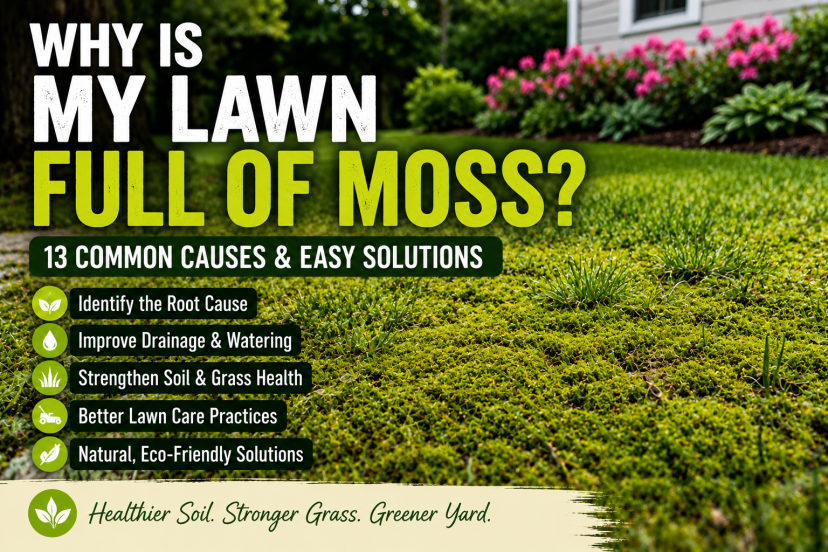
If you’ve noticed soft green patches spreading between your grass blades, you may be asking, Why is moss growing in my lawn? Moss usually isn’t attacking or killing healthy grass. Instead, it tends to establish where growing conditions give it an advantage over turfgrass.
Shade, excessive moisture, compacted soil, poor drainage, low soil fertility, incorrect mowing, and thin turf can all contribute to moss becoming established. This is why simply removing or treating the moss often provides only temporary results. Unless you correct the conditions that weakened the grass, moss—or another opportunistic plant—may return.
The good news is that moss can be a useful indicator of what’s happening in your yard. By investigating moisture, sunlight, soil conditions, and lawn-care practices first, you can often improve the lawn while reducing unnecessary water, fertilizer, and treatments.
Here are 13 common causes of lawn moss and practical ways to address the underlying problem.
⚡ Quick Answer: Why Is Moss Growing In My Lawn?
Moss commonly grows where turfgrass is thin, and conditions are cool, shady, damp, compacted, poorly drained, or otherwise unfavorable for healthy grass.
Moss itself is usually more of a symptom than the original cause of lawn decline. Check sunlight, soil moisture, drainage, compaction, mowing height, and soil conditions before treating it. Improving the environment for turfgrass is generally more effective long-term than repeatedly removing moss without correcting the underlying problem.
Key Takeaways
Most likely cause: If you’re wondering why is moss growing in my lawn, start by looking for thin turf combined with shade, excess moisture, compacted soil, or poor drainage.
Usually serious? Usually not. Moss generally takes advantage of conditions where grass is already struggling rather than directly causing the lawn to fail.
First thing to check: Examine how much sunlight the area receives, check soil moisture and drainage, and look for compacted or thinning turf.
Best solution: Improve the conditions limiting grass growth. Correcting moisture, soil, shade, mowing, or turf-selection problems can provide a more lasting solution than simply removing the moss.
🔍 Why Moss Grows In Lawns And How To Identify The Problem
Moss and turfgrass have very different growing habits.
Grass develops roots and typically performs best when its particular requirements for sunlight, soil, water, nutrients, and temperature are met. Moss lacks true roots like turfgrass and can thrive on moist surfaces where conventional grass struggles.

That’s why moss often appears beneath trees, beside buildings, on compacted soil, and in damp low spots.
It is tempting to assume that moss is choking out your lawn. More often, the turf became thin first, creating open space where moss could establish.
Look carefully at where moss is growing.
If it’s concentrated beneath a large tree, sunlight may be the limiting factor. Moss in low, soggy areas suggests drainage problems. Moss along heavily traveled areas can point toward soil compaction.
Rather than viewing moss solely as something to eliminate, use it as a clue to diagnose the conditions in that part of your yard.
🌱 13 Common Causes Of Moss Growing In Your Lawn
1. Too Much Shade
Shade is one of the most common conditions associated with lawn moss.
Grass varieties differ in their shade tolerance, but even shade-tolerant turf needs enough light to produce energy and maintain healthy growth.
Moss, meanwhile, can thrive in areas where grass becomes thin.

Large trees, fences, buildings, shrubs, and other structures may reduce sunlight for much of the day.
If turf repeatedly fails in deep shade, consider whether grass is the right plant for that location. Native shade plants, suitable groundcovers, or mulch may create a healthier, lower-maintenance landscape.
2. Excessive Lawn Moisture
Moss favors consistently damp conditions.
Frequent irrigation can keep the soil surface wetter than necessary, particularly in cool or shaded areas that dry slowly.
Before watering, check soil moisture rather than relying entirely on an automatic schedule.
Different sections of the yard may also have different needs. A shaded lawn zone may require less frequent irrigation than an exposed sunny area.
Reducing unnecessary watering can discourage moss while conserving water and lowering lawn-care costs.
3. Poor Drainage
Some lawns stay wet even when irrigation is reasonable.
Heavy clay soil, compacted ground, improper grading, runoff, and low areas can prevent water from draining efficiently.
Observe your lawn after rainfall.
If water collects where moss is growing or the soil remains saturated long after other areas have dried, drainage may be part of the problem.
Minor compaction may respond to core aeration. Significant grading or drainage issues may require professional assessment.

4. Compacted Soil
Turfgrass roots need pore space containing both air and water.
Repeated foot traffic, lawn equipment, vehicles, pets, and activity on wet soil can gradually compress the ground.
Grass struggles to establish deep roots under these conditions, while moss can spread across the surface.
Push a screwdriver several inches into moist soil. Compare the mossy area with healthy turf nearby. If penetration is considerably more difficult, compaction may be contributing.
Appropriate core aeration can help relieve significant soil compaction.
5. Thin Or Weak Grass
Moss has a much easier time establishing when turf is already sparse.
Thin grass allows more exposed soil surface and reduces competition for growing space.
Turf can become thin because of drought, shade, disease, insects, traffic, unsuitable soil, or poor maintenance.

Don’t simply spread additional seed over the moss.
First determine why the existing grass became thin. Otherwise, the replacement grass may fail for exactly the same reason.
6. Soil pH Problems
Moss is often associated with acidic soil, which has led to a common assumption that moss automatically means a lawn needs lime.
That isn’t necessarily true.
Moss can grow across a range of conditions, and its presence alone doesn’t tell you the soil pH.
If you’re concerned about acidity, have the soil tested.
Apply lime only when a reliable soil test and recommendations for your turf indicate that it is appropriate. Unnecessary lime can create new soil chemistry problems instead of solving the original issue.
7. Low Soil Fertility
Grass that doesn’t have access to sufficient nutrients may grow slowly and become thin, creating opportunities for moss.

However, appearance alone isn’t enough to diagnose nutrient deficiency.
A soil test can help determine nutrient status and reduce guesswork.

This is especially valuable for eco-friendly lawn management because unnecessary fertilizer wastes money and can contribute to nutrient runoff.
Feed the lawn based on actual plant and soil needs rather than using fertilizer as an automatic response to moss.
8. Mowing The Lawn Too Short
Repeatedly mowing turf below the recommended height can weaken it.
Grass needs leaf surface for photosynthesis. Removing too much at once can reduce root growth and increase environmental stress.
Weak, short turf may provide less competition against moss and weeds.
Use a mowing height appropriate for your grass species and generally avoid removing more than about one-third of the blade in a single mowing.
Also keep mower blades sharp to reduce tearing.
9. Heavy Foot Traffic
If moss appears along a common walking route, soil compaction and grass damage may be working together.
Repeated traffic crushes grass blades while compressing the soil underneath.
Instead of continually trying to regrow grass where people naturally walk, consider creating a pathway.
Stepping stones, permeable pavers, gravel, or mulch can reduce lawn damage while making the yard easier to navigate.
10. Excessive Thatch
Thatch is the layer of living and dead plant material located between the grass blades and soil surface.

A modest layer isn’t necessarily harmful, but excessive thatch can interfere with water movement and contribute to surface moisture.
Before dethatching, measure the layer and determine whether it is actually excessive for your turf.
Aggressive dethatching when it isn’t needed can damage the lawn.
When excess thatch is confirmed, appropriate dethatching or core aeration may help improve growing conditions.
11. Grass Variety Isn’t Suited To The Site
Not every grass performs well in every yard.
Turf species vary in their tolerance for shade, drought, heat, cold, moisture, and traffic.
If the grass in a mossy area is poorly suited to its environment, repeatedly fertilizing or reseeding may accomplish little.
When repairing the area, choose turf recommended for your climate and site conditions.
In locations fundamentally unsuitable for grass, alternative landscaping may provide better results with less maintenance.
12. Cool, Wet Weather
Sometimes moss becomes more noticeable because the weather temporarily favors it.

Extended periods of cool, wet conditions can reduce turf growth while encouraging moss.
If your lawn is otherwise healthy and moss appears primarily during a particularly damp season, conditions may improve naturally when warmer, drier weather returns.
Avoid making major lawn changes based on a short-term weather pattern unless the problem persists.
13. Tree Root Competition
Large trees can create multiple challenges for turfgrass.
Their canopies reduce sunlight, while extensive root systems compete with grass for water and nutrients. Some tree-covered areas can be simultaneously shady and surprisingly dry beneath the surface.
Trying to maintain dense turf directly beneath a mature tree can therefore require considerable water and maintenance.
A mulched area or shade-tolerant planting bed may be more sustainable, but avoid piling mulch against the tree trunk.
🔎 How To Confirm Why Moss Is Growing In Your Lawn
Begin with sunlight.
Observe the mossy section during different parts of the day. Determine whether it receives adequate light for your grass variety.
Next, check moisture several inches below the surface. If the soil stays wet long after rain or irrigation, investigate watering and drainage.
Test for compaction by pushing a screwdriver into moist soil and comparing the resistance with healthy sections.
Inspect turf density and mowing height. Thin or scalped grass provides less competition against moss.
Look at the site’s traffic patterns and consider whether people or pets repeatedly cross the area.
If soil conditions remain unclear, obtain a soil test. This is especially important before applying lime or fertilizer.
These simple observations often reveal why moss is thriving without requiring expensive treatments.
🛠️ How To Get Rid Of Moss In Your Lawn
The best long-term approach is to improve conditions for the grass.
Start by correcting excessive irrigation and drainage issues. Relieve significant compaction through core aeration when appropriate.
If shade is moderate, consider a more shade-tolerant grass suited to your region. If shade is extreme, replacing turf with appropriate landscaping may be more realistic.
Moss can be physically removed with raking or dethatching equipment, depending on the size of the affected area and turf condition.
After removal, repair exposed soil with suitable grass seed or another appropriate plant during the correct establishment season.
Commercial moss-control products are also available, but they should be used according to label instructions and won’t correct the conditions that caused moss to grow.
Without changing the environment, moss may simply return.
⚠️ Mistakes To Avoid When Dealing With Lawn Moss
One of the biggest mistakes is automatically applying lime.
Moss doesn’t prove that your soil is acidic. Test the soil before changing its pH.
Don’t overfertilize in an attempt to make grass outgrow moss. Excess fertilizer can waste money, damage turf, and contribute to runoff.
Avoid aggressive raking when grass is already severely stressed.
Don’t increase irrigation simply because the surrounding grass looks weak. Persistent moisture may actually be part of the problem.
Most importantly, don’t repeatedly reseed a location that fundamentally lacks enough sunlight or has unresolved drainage problems.
Changing the landscape may be more effective than continually fighting the site.
♻️ How To Prevent Moss From Coming Back
Healthy turf is your best long-term defense.
Use a grass species suited to your climate and sunlight conditions. Mow at the recommended height and keep mower blades sharp.
Water according to actual soil and plant needs rather than automatically irrigating every day.
Improve significant compaction and drainage problems.
Use soil testing to guide fertilizer and lime applications.
Reduce repeated traffic over weak areas or install permanent paths where necessary.
In deep shade or consistently challenging locations, consider replacing turfgrass with native plants, shade-tolerant groundcovers, or mulch.
This can reduce irrigation, mowing, fertilization, and repeated lawn repairs while adding diversity to your landscape.
❓ Frequently Asked Questions
Is Moss Bad For My Lawn?
Moss usually doesn’t directly kill healthy grass. It commonly becomes established where turf is already thin or growing conditions favor moss more than grass.
Does Moss Mean My Soil Is Acidic?
Not necessarily. Moss can grow in acidic soil, but its presence alone isn’t a reliable pH test. Have your soil tested before applying lime.
Will Lime Kill Moss In My Lawn?
Lime isn’t a general-purpose moss killer. It changes soil pH and should only be applied when soil testing indicates it is appropriate.
Can Too Much Water Cause Lawn Moss?
Persistent moisture can create favorable conditions for moss, particularly in shaded or poorly drained areas. Check irrigation frequency and drainage.
Can I Rake Moss Out Of My Lawn?
Yes, physical removal can reduce existing moss, particularly in manageable areas. However, correcting the conditions that encouraged it is essential if you want to reduce recurrence.
Why Does Moss Grow Under My Trees?
Shade, moisture conditions, soil compaction, and competition from tree roots can weaken turf underneath mature trees, creating conditions where moss can establish.
Should I Replace Moss With Grass Seed?
Only if the location can support healthy turfgrass. Correct shade, drainage, compaction, or soil problems first and choose seed appropriate for the site.
Can Moss Actually Be Useful In A Yard?
Yes. In certain shady, moist areas where conventional turf repeatedly fails, moss can function as a low-growing groundcover. Whether you keep it depends on your landscape goals, site conditions, and expected foot traffic.
🌿 Related Garden Problems
Lawn not growing: Poor soil, shade, water problems, compaction, and unsuitable grass varieties can all weaken turf.
Bare spots in the lawn: Thin or missing grass creates open areas where moss and weeds can become established.
Lawn full of weeds: Weeds often take advantage of the same weak turf conditions that encourage moss.
Mushrooms growing in the lawn: Moisture and decomposing organic material can encourage visible fungal growth.
Standing water: Drainage and soil compaction problems can weaken grass while creating favorable conditions for moisture-loving organisms.
Looking at these issues together can provide a clearer picture of what’s happening throughout your yard.
🎯 Conclusion: Why Is Moss Growing In My Lawn?
If you’re wondering why is moss growing in my lawn, the moss is often providing a useful clue.
Instead of viewing it solely as an invader, investigate why your grass isn’t thriving in the same location.
Shade, excess moisture, poor drainage, compacted soil, low turf density, incorrect mowing, and unsuitable grass varieties are all possibilities.
Correcting these conditions can create stronger turf and reduce the likelihood of moss returning without relying on repeated treatments.
But there is another option worth considering.
If moss repeatedly thrives in a deeply shaded area where grass continually fails, you don’t necessarily need to fight nature. Moss, native shade plants, appropriate groundcovers, or a mulched bed may create an attractive landscape requiring less water, fertilizer, mowing, and maintenance.
A sustainable yard isn’t about forcing grass to grow everywhere. It’s about choosing plants that naturally fit each part of your property.
Gardening Advice: Every garden is different. Soil type, climate, weather, plant variety, and growing conditions can all affect results. If your plants continue to decline despite following the recommendations in this article, or if you suspect a serious plant disease, invasive pest infestation, or a hazardous tree issue, contact your local cooperative extension office, certified arborist, or qualified gardening professional for personalized advice.
Disclaimer: This article is for informational purposes only and is not a substitute for professional horticultural, arboricultural, or agricultural advice. Gardening results vary depending on local growing conditions, soil, weather, and plant variety. Always read and follow the instructions on any fertilizers, pesticides, herbicides, or other garden products before use.
 Explore more: