Recycle Yard Waste: 12 Smart Ways To Save Money And Create A Greener Yard
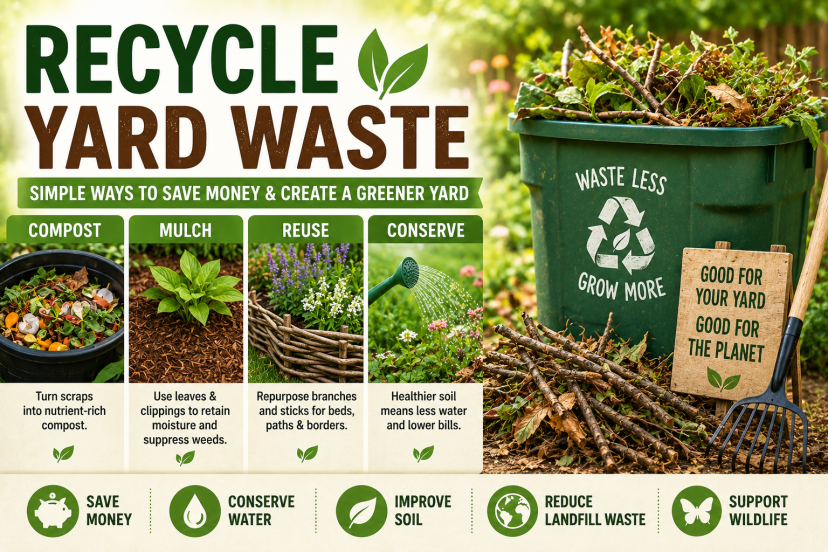
Many homeowners spend time and money maintaining their yards, only to throw away valuable organic material that could actually improve their landscape. Grass clippings, fallen leaves, small branches, and garden debris are often viewed as waste, but they can become valuable resources. Learning how to recycle yard waste is one of the easiest ways to save money, reduce landfill waste, and create a healthier outdoor space. Better yet, many eco-friendly yard solutions require little effort and can lower your long-term landscaping costs.
Whether you’re trying to conserve water, improve soil naturally, or create a low-maintenance yard, recycling yard debris can help you achieve all three goals.
Quick Answer: Recycle Yard Waste
To recycle yard waste, homeowners can compost leaves and grass clippings, create mulch, use branches for garden borders, build raised beds, and participate in local green waste programs. Recycling yard debris reduces waste while improving soil health and lowering landscaping costs.
Key Takeaways
- Most likely cause: Valuable organic materials like grass clippings, leaves, and branches are often discarded instead of being reused around the yard.
- Usually serious? No. It won’t immediately harm your property, but failing to recycle yard waste can increase landscaping costs, reduce soil quality, and send useful materials to landfills.
- First thing to check: Identify what types of yard debris you produce most often and determine whether they can be composted, mulched, reused, or accepted by your local green waste collection program.
- Best solution: Compost organic materials, use leaves and wood chips as mulch, repurpose branches for landscaping projects, and take advantage of community yard waste recycling services whenever available.
🌿 Why Recycling Yard Waste Matters
According to the EPA, yard waste makes up a significant portion of household waste in the United States.
Common yard materials include:
- Grass clippings
- Leaves
- Small branches
- Garden plants
- Pine needles
- Flower trimmings
Instead of sending these materials to landfills, homeowners can reuse them to create healthier landscapes.
Benefits include:
- ✅ Reduced landfill waste
- ✅ Lower landscaping expenses
- ✅ Improved soil quality
- ✅ Better moisture retention
- ✅ Reduced need for chemical fertilizers
- ✅ More sustainable outdoor spaces
Learning to recycle yard waste is one of the simplest eco-friendly improvements any homeowner can make.
🍂 Types Of Yard Waste That Can Be Recycled
Not every material belongs in the trash.
Common recyclable yard materials include:
Green Materials
These provide nitrogen for compost.
Examples include:
- Grass clippings
- Vegetable scraps
- Fresh plant trimmings
- Coffee grounds
Brown Materials
These add carbon to compost piles.
Examples include:
- Dry leaves
- Pine needles
- Small twigs
- Cardboard
Woody Materials
Larger materials can be reused in landscaping projects.
Examples include:

- Tree branches
- Logs
- Shrub cuttings
♻️ Benefits Of Recycling Yard Waste
Homeowners who recycle yard waste often discover several long-term advantages.
Save Money
Compost and mulch reduce the need for:
- Store-bought fertilizer
- Soil amendments
- Weed barriers
- Commercial mulch products
Improve Soil Naturally
Organic matter helps:
- Increase nutrient availability
- Improve drainage
- Support beneficial microorganisms
Conserve Water
Mulch made from recycled yard debris helps soil retain moisture, reducing irrigation needs.
Reduce Chemical Use
Healthy soil naturally supports stronger plants, decreasing dependence on synthetic fertilizers.
🌱 Recycle Yard Waste By Creating Compost
Composting is one of the most popular ways to recycle yard waste.
Materials To Add
Green Materials
- Grass clippings
- Vegetable scraps
- Plant cuttings
Brown Materials
- Leaves
- Straw
- Shredded cardboard
Materials To Avoid
- Meat products
- Dairy products
- Diseased plants
- Pet waste
Benefits Of Compost
Compost:
- Improves soil fertility
- Reduces waste
- Encourages earthworms
- Supports healthy plant growth
Many U.S. communities actively promote backyard composting programs.
🌾 Turn Yard Waste Into Mulch
Mulch is one of the easiest ways to recycle yard waste.
Materials that work well include:

- Shredded leaves
- Pine needles
- Grass clippings
- Small wood chips
Benefits of mulch include:
- Reduced evaporation
- Fewer weeds
- Improved soil temperature
- Lower watering costs
Organic mulch naturally breaks down and enriches the soil over time.
🌳 Reuse Branches And Logs In Landscaping
Tree branches don’t always need disposal.
Homeowners can reuse them to create:
Garden Borders
Small branches make attractive natural edging.
Raised Garden Beds
Larger logs can help define planting areas.
Wildlife Habitats
Brush piles provide shelter for birds and beneficial insects.
Pathway Materials
Wood slices can create rustic stepping stones.
These projects help recycle yard waste while adding character to your landscape.
🌼 Use Grass Clippings Correctly
Grass clippings are rich in nitrogen.
Instead of bagging them:
- Leave them on the lawn after mowing.
- Add them to compost piles.
- Use thin layers around vegetable gardens.
Grasscycling returns nutrients directly to the soil and reduces waste.
🍁 Save Fallen Leaves Instead Of Throwing Them Away
Leaves are one of nature’s best free resources.
Shredded leaves can:
- Become compost.
- Serve as mulch.
- Protect plant roots during winter.
- Improve soil structure.
Leaf mold is highly valued by gardeners because it increases moisture retention naturally.
💧 Recycling Yard Waste Helps Conserve Water
One of the hidden benefits of learning to recycle yard waste is water conservation.

Organic matter improves the soil’s ability to hold moisture.
As a result:

- Plants need less watering.
- Soil dries out more slowly.
- Drought stress decreases.
This is especially important in states experiencing water shortages and seasonal restrictions.
🛠️ DIY Projects Using Recycled Yard Materials
Recycled materials can become useful landscape features.
Build A Compost Bin
Materials:
- Wooden pallets
- Reclaimed lumber
- Hardware cloth
Create Natural Garden Paths
Use:
- Wood chips
- Shredded bark
- Mulched branches
Build Raised Beds
Repurpose:
- Logs
- Fallen limbs
- Untreated wood
Create Pollinator Habitats
Brush piles and native plant areas attract beneficial insects.
🌎 Local Green Waste Programs In The U.S.
Many cities now offer:
- Curbside green waste collection.
- Municipal compost facilities.
- Mulch giveaways.
- Community compost programs.
Check with your local waste management department to see what services are available.
Participating in these programs makes it easier to recycle yard waste responsibly.
🚫 Mistakes To Avoid When Recycling Yard Waste
Avoid these common errors:
Adding Diseased Plants To Compost
Plant diseases can spread.
Using Chemically Treated Wood
Treated lumber may contain harmful chemicals.
Applying Thick Grass Layers
Excessive clippings can block airflow.
Mixing Weed Seeds Into Compost
Aggressive weeds may survive and spread.
Following proper techniques helps ensure successful results.
👷 When To Consult A Professional
Most homeowners can recycle yard waste themselves. However, professional help may be helpful if:
- Large tree removal is required.
- Storm damage creates dangerous debris.
- Drainage problems exist.
- Heavy equipment is needed.
- Extensive landscape renovations are planned.
Certified arborists, landscapers, and eco-contractors can safely manage larger projects.
❓ FAQs: Recycle Yard Waste
What Is Yard Waste?
Yard waste includes grass clippings, leaves, branches, flowers, and other organic landscaping materials.
Can Grass Clippings Be Used As Mulch?
Yes. Thin layers of grass clippings can help retain moisture and suppress weeds.
Should I Compost Leaves?
Absolutely. Leaves are excellent carbon-rich materials for compost piles.
Can I Recycle Tree Branches?
Yes. Branches can become mulch, garden borders, raised beds, or wildlife habitats.
What Yard Waste Should Not Be Composted?
Avoid meat, dairy products, diseased plants, pet waste, and chemically treated wood.

Does Recycling Yard Waste Save Money?
Yes. Compost and mulch reduce the need for purchased fertilizers and landscaping supplies.
Are There Municipal Yard Waste Programs?
Many U.S. cities offer curbside collection and community composting programs.
🌱 Conclusion: Recycle Yard Waste
Learning how to recycle yard waste is a simple step that benefits both your wallet and the environment. From composting leaves to reusing branches and creating natural mulch, small changes can transform waste into valuable resources.
By recycling organic materials, homeowners can create healthier soil, conserve water, reduce costs, and build beautiful low-maintenance landscapes that work with nature rather than against it.
Every bag of leaves you keep out of the landfill is a small investment in a greener future.
Disclaimer: This article is for educational purposes only. Local regulations regarding composting, green waste collection, and tree disposal may vary. Always follow municipal guidelines and use proper safety equipment when handling yard debris.
 Explore more: