Can You Use Fresh Wood Chips In Raised Bed Hugelkultur? What To Know
How To Avoid Nitrogen Problems And Safer Layering Tips
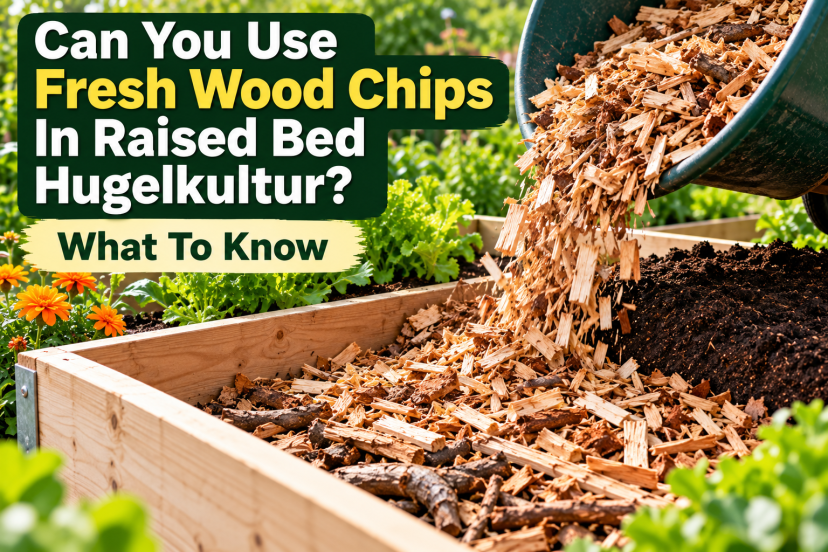
Yes, you can use fresh wood chips in raised bed hugelkultur, but where you place them matters. Fresh, untreated wood chips can be used as a surface mulch or incorporated cautiously into the lower woody section of a deep raised bed. However, mixing large quantities directly into vegetable-growing soil can temporarily reduce nitrogen availability.
For most small raised beds, the safest practical approach is to keep fresh wood chips out of the main root zone and use finished compost and quality planting soil above any woody material.
Wood chips can help reuse garden waste, but they are not a substitute for healthy growing soil. Their decomposition rate, nitrogen effects, and influence on moisture depend on the wood species, chip size, soil conditions, and placement.
Quick Answer – Can You Use Fresh Wood Chips In Raised Bed Hugelkultur?
Yes. Fresh wood chips from clean, untreated wood can be used in a micro hugelkultur raised bed, provided they are not mixed heavily into the main planting soil.
For a small vegetable garden, consider these guidelines:
-
Surface mulch: Apply approximately 2–3 inches of clean wood chips around established plants, keeping chips away from stems.
-
Buried woody layer: Use a modest amount beneath a substantial layer of quality planting soil.
-
Root zone: Avoid incorporating large quantities of fresh chips into the upper 6–12 inches where vegetable roots are actively growing.
-
Nitrogen management: Monitor plant growth and use appropriate soil testing or fertilization if deficiencies develop.
-
Wood safety: Avoid treated, painted, contaminated, or unidentified wood.
Important: Fresh wood chips do not automatically remove nitrogen from an entire raised bed. Nitrogen immobilization is usually most significant near the interface where carbon-rich chips are decomposing.
Fresh Wood Chips In Raised Bed Hugelkultur – Best Uses Compared
| Placement | Recommendation | Main Consideration |
|---|---|---|
| On the soil surface | Generally suitable | Helps reduce evaporation and suppress weeds |
| Mixed into planting soil | Usually avoid | May temporarily immobilize nitrogen |
| Thin layer beneath growing soil | Possible with caution | Can settle as chips decompose |
| Thick buried layer | Less desirable | Reduces rooting volume and may affect water movement |
| Mixed with finished compost | Depends on placement | Compost does not eliminate all decomposition concerns |
| Composted before use | Often preferable | More stable organic material |
The main distinction is between using wood chips as mulch and incorporating them into soil.
Surface mulch remains largely separated from the active root zone, while buried or mixed-in chips interact more directly with soil microorganisms.
Why Fresh Wood Chips Can Cause Nitrogen Problems
Fresh wood contains large amounts of carbon relative to nitrogen.
When bacteria and fungi begin decomposing wood, they need nitrogen to support their growth.
If sufficient nitrogen is not available within the wood itself, microorganisms may temporarily use nitrogen from the surrounding soil.
This process is called nitrogen immobilization.
Surface Chips Behave Differently From Buried Chips
When wood chips remain on the soil surface, decomposition is concentrated around the mulch-soil interface.
Most of the underlying root zone remains physically separated from the chips.
That is why surface wood-chip mulch is commonly recommended for trees, shrubs, and many garden applications.
However, when fresh chips are thoroughly mixed into growing soil, the contact area between wood and soil increases.
This creates more opportunities for microorganisms to use nitrogen from the surrounding soil.
Does Nitrogen Immobilization Last Forever?
No. Nitrogen immobilization is a temporary biological process.
As wood decomposes and microbial populations change, nitrogen cycles through organic matter and soil organisms.
However, the timing varies with temperature, moisture, wood species, chip size, and soil conditions.
There is no reliable universal waiting period after which all fresh wood chips become suitable for incorporation into vegetable soil.
How To Use Fresh Wood Chips In A 4×4 Raised Garden Bed
For a 4-foot-by-4-foot raised bed, the best approach depends on its depth.
A shallow bed should prioritize planting soil, while a deeper bed may accommodate a modest woody layer.
Step 1 – Check The Raised Bed Depth
Before adding wood chips, measure the internal depth of the bed.
| Bed Depth | Suggested Approach |
|---|---|
| 12 inches | Prioritize soil and finished compost; use chips as surface mulch |
| 18 inches | Consider a shallow woody base while preserving substantial soil depth |
| 24 inches | More flexibility for lower organic layers |
| 30 inches or deeper | Additional space for woody material, subject to crop needs |
These are practical design considerations rather than scientifically established hugelkultur ratios.
For many vegetables, preserving at least 10–12 inches of quality planting soil above coarse woody material is a reasonable starting point.
Deep-rooted crops may benefit from considerably more soil.
Step 2 – Choose Clean, Untreated Wood Chips
Use chips from a known, uncontaminated source.
Suitable materials may include freshly chipped branches from ordinary landscape trees.
Avoid:
-
Pressure-treated lumber chips.
-
Painted or stained wood.
-
Railroad ties.
-
Chemically contaminated material.
-
Unknown construction waste.
-
Chips from trees recently exposed to questionable chemical treatments.
Be especially cautious with black walnut material when growing juglone-sensitive plants.
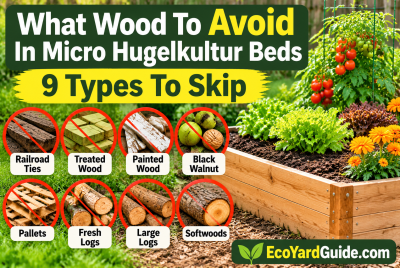
For more detailed material guidance, see What Wood To Avoid In Micro Hugelkultur Beds: 9 Types To Skip
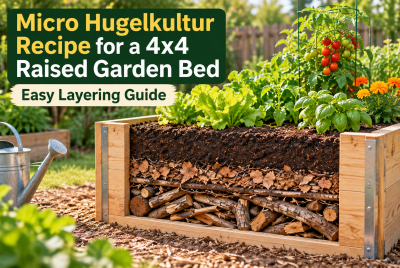
Step 3 – Place Woody Material Below The Growing Soil
If experimenting with buried chips, keep the layer relatively shallow and beneath the main planting zone.
For example, in an 18-inch-deep raised bed, a small amount of woody material could occupy part of the lower 3–4 inches.
This is an illustrative layout, not a proven optimum.
Avoid creating a thick, tightly packed layer of fine chips that forms a distinct barrier between the native ground and planting soil.
A large difference in texture between adjacent layers can influence water movement.
Step 4 – Add Finished Compost And Quality Soil
Cover the woody material with a suitable growing medium containing mineral soil or an appropriate raised-bed mix and finished compost.
Avoid relying entirely on compost.
A good growing medium should support roots, retain sufficient moisture, and drain adequately.
Do not assume that placing compost directly above fresh wood chips completely prevents nitrogen immobilization.
The main benefit comes from maintaining a substantial, functional root zone.
Step 5 – Water And Check For Settling
Water the bed thoroughly after filling.
Allow the water to move through the soil, then inspect for depressions or uneven settling.
Wood chips gradually lose volume as they decompose.
Small voids may also close as the soil settles into spaces between pieces.
Top up the planting soil when necessary, preferably between crops.
Step 6 – Monitor Plant Growth
During the first growing season, watch for:
-
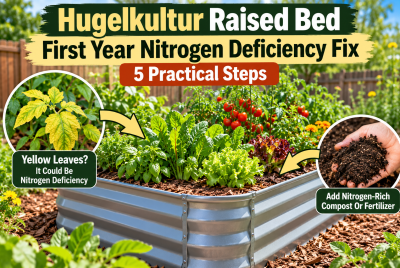
Pale or yellowing leaves.
-
Slow growth.
-
Uneven soil moisture.
-
Unexpected settling.
-
Poor drainage.
These symptoms do not prove that fresh wood chips are responsible.
Check watering practices, soil conditions, and nutrient availability before making corrections.
Fresh Wood Chips Vs Aged Wood Chips: Which Is Better?
Both can be useful, but their best applications differ.
| Feature | Fresh Wood Chips | Aged Wood Chips |
|---|---|---|
| Surface mulching | Suitable | Suitable |
| Mixing into soil | Generally not recommended | Depends on decomposition stage |
| Nitrogen immobilization | Greater potential when incorporated | Often reduced as decomposition progresses |
| Structural stability | Will settle as they decompose | May be more stable if well decomposed |
| Availability | Often free after pruning | May require storage or composting |
| Best use | Mulch or cautious lower-layer use | Mulch or composting feedstock |
Aged wood chips are not automatically finished compost.
Chips that have been stored for several months may still contain substantial undecomposed wood.
For planting soil, finished compost is generally more predictable than either fresh or partially aged chips.
Can Fresh Wood Chips Improve Water Retention?
Wood chips are often promoted as a way to reduce watering requirements in hugelkultur beds.
The answer depends on their placement.
Surface Wood Chips
A layer of mulch can reduce direct soil evaporation, moderate soil temperature, and help suppress weeds.
These are established reasons for using organic mulch.
A 2–3-inch layer is a common starting recommendation, although the appropriate depth varies with material and crop.
Buried Wood Chips
Buried wood can absorb moisture, but that does not guarantee improved water availability to vegetable roots.
Water movement depends on the soil texture, organic layers, drainage, and moisture conditions.
A thick buried layer may also create an abrupt change in pore size that influences how water moves through the bed.
Do not assume that adding buried chips will automatically reduce irrigation needs.
Monitor moisture within the actual root zone and adjust watering accordingly.
5 Common Mistakes When Using Fresh Wood Chips
1. Mixing Chips Directly Into Vegetable Soil
Large quantities of fresh chips mixed into the growing medium can increase nitrogen immobilization.
Better approach: Keep chips on the surface or use them sparingly below the main rooting zone.
2. Filling Half The Bed With Chips
A thick layer may save money on soil initially, but it also reduces rooting volume and can lead to settling.
Better approach: Prioritize enough quality soil for the vegetables being grown.
3. Using Chips From Unknown Sources
Free chips are not always suitable for food gardens.
Better approach: Confirm the wood source and avoid material with uncertain treatment or contamination history.
4. Assuming Compost Eliminates Every Problem
Adding compost does not guarantee that nitrogen immobilization, poor drainage, or settling will disappear.
Better approach: Use compost to improve growing soil, not as a universal fix for excessive woody fill.
5. Watering Based Only On Surface Appearance
Wood-chip mulch may appear dry while the soil underneath remains moist.
Better approach: Check moisture several inches into the planting soil before watering.
Better Alternatives To Fresh Wood Chips In Raised Beds
If the goal is to reduce soil costs or improve garden sustainability, consider alternatives that do not require burying fresh wood chips.
Finished Compost
Finished compost contributes organic matter and nutrients.
Mix it into suitable planting soil according to soil conditions and crop needs.
Shredded Leaves
Clean, shredded leaves can be composted or used as surface mulch.
Avoid piling thick mats of wet leaves around plant stems.
Aged Organic Mulch
Aged wood chips, shredded bark, or other suitable organic materials can protect the soil surface.
They gradually break down and may need replenishment.
Conventional Raised-Bed Soil
For a small vegetable bed, using quality growing soil throughout the full depth is often the most predictable option.
This is particularly useful for shallow beds or crops with extensive root systems.
Frequently Asked Questions
Can I Put Fresh Wood Chips At The Bottom Of A Raised Bed?
Yes, but use caution. A modest amount of clean, untreated chips beneath a substantial layer of planting soil is possible in a deep bed. Avoid thick, compacted layers that reduce rooting space or interfere with water movement. In shallow beds, using chips as surface mulch is generally a better choice.
Will Fresh Wood Chips Steal Nitrogen From My Tomatoes?
Fresh wood chips can temporarily immobilize nitrogen when mixed into soil where tomato roots are growing. Surface mulch is much less likely to create a significant root-zone nitrogen problem. If tomatoes show yellowing or slow growth, investigate soil moisture and nutrient availability rather than assuming wood chips are responsible.
How Long Should Fresh Wood Chips Age Before Using Them?
There is no universal aging period. Decomposition depends on wood species, chip size, moisture, temperature, and microbial activity. Fresh, clean chips can be used immediately as surface mulch. If you intend to incorporate woody material into planting soil, finished compost is generally preferable to relying on chips that have simply been stored for a few months.
Final Thoughts
So, can you use fresh wood chips in raised bed hugelkultur? Yes, but placement and quantity are more important than simply whether the chips are fresh.
Clean, untreated wood chips work well as surface mulch. In deeper raised beds, small amounts may also be used cautiously beneath a substantial layer of quality planting soil.
Avoid mixing large quantities of fresh chips directly into vegetable-growing soil, and do not sacrifice essential rooting depth to save on soil costs.
For most gardeners, the easiest starting point is to use wood chips on the surface, maintain healthy soil beneath them, and monitor moisture and plant growth throughout the season.
Research And Further Reading
Explore more: