Micro Hugelkultur Recipe For A 4×4 Raised Garden Bed: Easy Layering Guide
Works In Suburban Gardens Where Space And Soil Depth Are Limited
A micro hugelkultur recipe for a 4×4 raised garden bed uses small pieces of untreated wood, twigs, leaves, compost, and quality planting soil to create a layered growing environment. The goal is to reuse organic yard materials, gradually improve soil organic matter, and potentially reduce watering needs as the wood decomposes.
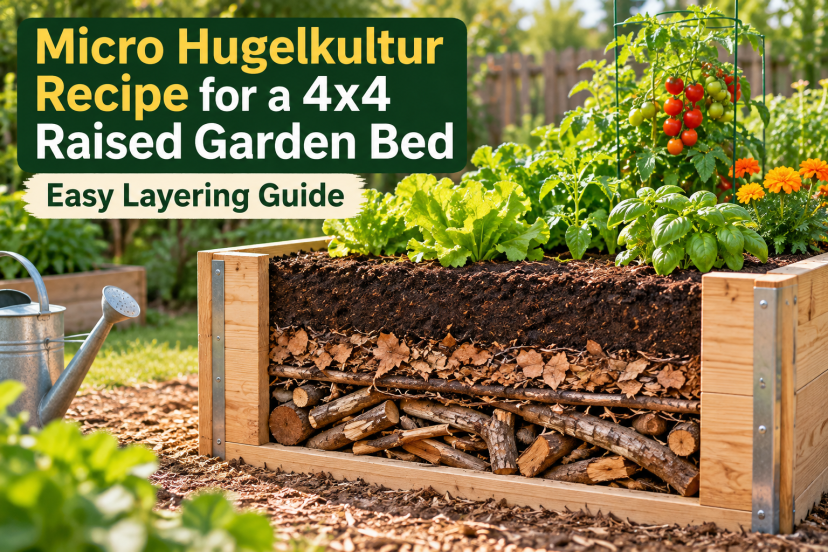
For a standard 4-foot-by-4-foot raised bed that is 18 inches deep, a practical starting design uses approximately 4 inches of woody material, 2 inches of leaves and small organic debris, 2 inches of compost-rich material, and 10 inches of planting soil.
Unlike traditional hugelkultur mounds, which may contain large logs and several feet of organic material, this smaller approach works in suburban gardens where space and soil depth are limited.
Quick Answer – Best Micro Hugelkultur Recipe For A 4×4 Raised Bed
For a 4×4 raised bed that is 18 inches deep, use this suggested layering recipe:
| Layer | Material | Depth |
|---|---|---|
| Bottom | Small untreated logs and branches | 4 inches |
| Second | Twigs, shredded leaves, and plant debris | 2 inches |
| Third | Finished compost and partially decomposed organic matter | 2 inches |
| Top | Quality raised-bed planting mix | 10 inches |
| Total | 18 inches |
This is a practical example, not a scientifically established universal formula. The best proportions depend on the crops, wood size, soil quality, and available materials.
Keep at least 10–12 inches of suitable growing medium above the coarse woody layers for many common vegetables. Deep-rooted crops may benefit from additional soil depth, while shallow beds are usually better filled primarily with soil and finished compost.
Micro Hugelkultur Materials Checklist
Materials To Gather
0 of 7
For a 4×4 bed, each inch of depth represents approximately 1.33 cubic feet of material before accounting for gaps and settling. Therefore, the 10-inch planting layer requires about 13.3 cubic feet of soil mix, or roughly 0.49 cubic yards.
Order a little extra planting mix if the materials are loose or expected to settle.
How Much Material Does A 4×4 Raised Bed Need?
The quantity depends primarily on the bed’s height.
| Bed Height | Total Volume | Suggested Approach |
|---|---|---|
| 12 inches | 16 cubic feet | Mostly soil and compost |
| 18 inches | 24 cubic feet | Shallow woody base with substantial soil |
| 24 inches | 32 cubic feet | More room for organic layering |
These volumes assume the bed measures 4 feet by 4 feet internally and is filled to its stated height. Actual interior dimensions may be smaller.
For an 18-inch bed, the suggested layer volumes are approximately 5.3 cubic feet of woody material, 2.7 cubic feet of leaves and twigs, 2.7 cubic feet of compost-rich material, and 13.3 cubic feet of soil. Wood gaps mean these are space allocations rather than exact quantities to purchase.
Step-By-Step: How To Build A 4×4 Micro Hugelkultur Bed
Step 1 – Prepare The Raised Bed And Ground
Choose a level location that receives adequate sunlight for the vegetables you intend to grow. Many fruiting vegetables perform best with approximately 6–8 hours of direct sunlight daily.
Remove weeds and large debris before positioning the bed.
For an open-bottom bed on suitable ground, gently loosen compacted surface soil with a garden fork. This helps roots move into the native soil beneath the raised bed.
Avoid placing a closed-bottom bed directly over an impermeable surface without adequate drainage.
Recommended bed: 4 feet long, 4 feet wide, and 18–24 inches tall.
Step 2 – Add A 4-Inch Layer Of Small Wood
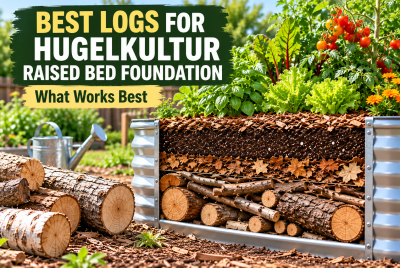
Place untreated, preferably aged or partially decomposed branches and small logs across the bottom.
Use pieces that fit comfortably within the bed without creating large empty spaces.
Suitable options include clean, untreated wood from known tree species. Avoid chemically treated lumber, painted wood, and potentially harmful or allelopathic species such as black walnut.
Arrange the pieces loosely enough for soil to settle between them, but avoid large unsupported cavities.
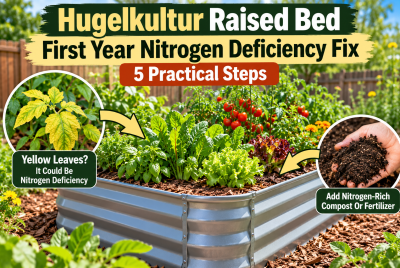
Important: Fresh wood can contribute to temporary nitrogen immobilization as decomposer organisms use nitrogen. Partially decomposed wood is generally preferable.
Step 3 – Add 2 Inches Of Twigs And Shredded Leaves
Fill spaces around the larger wood with smaller twigs, shredded dry leaves, and clean plant debris.
This layer helps reduce large voids and incorporates materials that will gradually break down.
Do not compress wet leaves into a dense mat. Thick, compacted layers can interfere with water and air movement.
Lightly moisten dry material as you work, without saturating it.
Step 4 – Add 2 Inches Of Compost-Rich Material
Spread finished compost over the woody materials, allowing some to settle into the spaces between branches.
Finished compost supplies nutrients and organic matter to the growing environment.
Avoid burying large quantities of fresh grass clippings or kitchen scraps. These materials can create unpleasant odors or localized anaerobic conditions if packed too tightly.
Best choice: Mature, earthy-smelling compost made from clean plant materials.
Step 5 – Add 10 Inches Of Quality Planting Soil
Cover the lower layers with approximately 10 inches of suitable raised-bed planting mix.
A soil-and-compost blend is generally more appropriate than using pure compost.
Spread the mix evenly, gently firming it by hand to eliminate large pockets without heavily compacting the growing medium.
Leave enough room at the top for mulch and watering.
For deep-rooted vegetables or beds placed on concrete, consider increasing the planting soil depth to 12–18 inches or more, depending on the crop.
Step 6 – Water The Bed Before Planting
Water the planting soil thoroughly and allow excess water to drain.
Check whether the soil settles noticeably around the edges or above gaps in the wood.
Add more planting mix if needed.
You can plant immediately, but monitoring settling during the first few weeks is particularly important.
Step 7 – Plant Vegetables And Add Surface Mulch
Plant crops suited to the available soil depth, sunlight, and growing season.
For an 18-inch bed with a 10-inch planting layer, leafy greens, bush beans, and many herbs are reasonable starting choices.
Use additional soil depth for crops requiring more extensive root systems.
Apply a thin layer of suitable organic mulch around established plants, keeping it away from stems.
Mulch can help conserve surface moisture regardless of whether the bed contains buried wood.
How Micro Hugelkultur Works In A Small Raised Bed
Hugelkultur is a gardening approach that incorporates buried wood and other organic materials beneath growing soil.
As microorganisms and fungi break down the wood, its structure and chemical composition gradually change.
Wood can absorb and retain moisture, but the extent to which buried wood improves irrigation efficiency in a small raised bed has not been established consistently through controlled research.
There are also potential disadvantages.
Washington State University Extension notes that scientific evidence supporting hugelkultur’s claimed gardening benefits remains limited. University of Maryland Extension raises concerns about nitrogen immobilization and water movement at boundaries between coarse and fine materials.
Why Wood Decomposition Matters
Decomposing wood changes the physical structure of the lower bed over time.
This may contribute organic matter, but it also reduces the volume occupied by the original wood.
As the material collapses, soil can settle into the spaces.
Large pieces and substantial woody layers create a greater potential for uneven settling than smaller amounts of well-decomposed material.
Why Nitrogen Availability Matters
Microorganisms decomposing carbon-rich wood require nitrogen.
If wood is mixed directly into the root zone, decomposition can temporarily reduce nitrogen availability to plants.
Keeping most wood beneath a substantial planting layer, using aged materials, and monitoring crop growth may help reduce this problem.
South Dakota State University Extension recommends avoiding freshly cut wood and packing nitrogen-rich organic materials around the woody pieces.
Best Wood For Micro Hugelkultur Raised Beds
Choose wood based on its condition, treatment history, and species.
| Wood Material | Suitability | Main Consideration |
|---|---|---|
| Partially decomposed untreated branches | Preferred for this method | Smaller pieces are easier to arrange |
| Untreated hardwood pieces | Potentially suitable | May decompose slowly |
| Fresh untreated wood | Less desirable | Greater nitrogen concerns |
| Black walnut | Avoid | Contains compounds that can affect sensitive plants |
| Pressure-treated or painted wood | Avoid as buried fill | Potential contamination concerns |
| Unknown construction scraps | Avoid | Treatment and chemical history uncertain |
Use clean material from a source you trust.
Wood collected from roadsides, industrial properties, or potentially contaminated locations should not be used in vegetable-growing beds.
5 Common Micro Hugelkultur Mistakes To Avoid
1. Using Logs That Are Too Large
Large logs can occupy too much growing space and create significant gaps.
Better approach: Choose smaller pieces that fit the lower portion of the bed without creating an unstable foundation.
2. Leaving Too Little Soil For Roots
A shallow planting layer limits available nutrients, water, and rooting space.
Better approach: Prioritize the soil requirements of your crops. In a 12-inch bed, filling the entire depth with quality soil and compost is often preferable.
3. Adding Too Much Fresh Wood
Large quantities of fresh wood can increase the risk of nitrogen immobilization near the root zone.
Better approach: Use aged or partially decomposed material and keep it below the main growing layer.
4. Assuming The Wood Eliminates Watering
A buried wood layer does not guarantee reduced irrigation.
Better approach: Check moisture in the root zone regularly and water according to actual plant needs.
5. Ignoring Soil Settling
As buried organic materials decompose, the soil surface can sink.
Better approach: Inspect the bed regularly and replenish the growing medium when necessary, taking care not to bury plant crowns or stems.
Better Alternatives For A 4×4 Raised Garden Bed
Micro hugelkultur is optional. For many vegetable gardens, a conventional raised-bed soil mixture is a simpler and more predictable approach.
| Method | Main Advantage | Main Limitation |
|---|---|---|
| Micro hugelkultur | Reuses clean woody debris | Settling and nitrogen concerns |
| Soil and finished compost | Predictable rooting environment | May require more purchased soil |
| Surface organic mulch | Conserves moisture and protects soil | Requires occasional replenishment |
| Drip irrigation | Delivers water near roots | Initial setup and maintenance |
For gardeners primarily interested in healthy vegetable growth, a quality soil-and-compost mixture with surface mulch is a strong choice.
Rutgers Cooperative Extension recommends clean mineral soil amended with well-rotted compost for many permanent raised beds because it supports drainage, nutrient retention, and a more stable growing volume.
How To Maintain A Micro Hugelkultur Bed During The First Year
The first growing season is the most important period for monitoring moisture, plant growth, and settling.
First Month: Monitor Moisture And Settling
Check soil moisture several inches below the surface rather than relying only on how the topsoil looks.
Water when the root zone needs moisture. Hot, windy weather may require more frequent watering than cool, humid conditions.
Watch for depressions forming as soil moves into gaps around the buried wood.
First Growing Season: Watch For Nutrient Problems
Monitor leaf color, growth rate, and overall plant vigor.
Pale foliage or stunted growth may indicate nutrient deficiencies, although poor drainage, root damage, and other problems can produce similar symptoms.
Use soil testing and appropriate fertilization rather than automatically adding extra nitrogen.
After Harvest: Replenish The Growing Medium
Inspect the bed for uneven settling.
Add suitable soil or finished compost as needed to restore growing depth, preferably between crops.
Oklahoma State University Extension recommends seasonal maintenance and adding soil or compost as hugelkultur materials break down.
Frequently Asked Questions
Can I Use Fresh Logs In A 4×4 Micro Hugelkultur Raised Bed?
Fresh logs are not the preferred option. Their decomposition may temporarily immobilize nitrogen, particularly where wood contacts the growing soil. Partially decomposed untreated wood is generally a better choice. If fresh wood is your only option, consider using less of it and maintaining a substantial layer of quality planting soil above it.
Is A 12-Inch Raised Bed Deep Enough For Micro Hugelkultur?
A 12-inch bed is usually better filled with quality growing soil rather than substantial woody layers. Many vegetables benefit from having the entire bed depth available for roots. If the bed is open-bottomed and placed over healthy, loosened native soil, roots may also extend into the ground beneath it.
How Long Does Buried Wood Last In A Raised Garden Bed?
Wood decomposition varies considerably with species, piece size, moisture, temperature, and biological activity. Small, soft, partially decomposed pieces may break down relatively quickly, while larger, denser logs can persist for years. Expect gradual changes rather than a predictable decomposition schedule, and monitor the bed for settling.
Final Thoughts
A micro hugelkultur recipe for a 4×4 raised garden bed can be a practical way to experiment with reusing clean woody materials in a compact garden.
For an 18-inch bed, a shallow woody base beneath a substantial layer of planting soil offers a more conservative starting point than filling most of the bed with logs.
However, micro hugelkultur is not automatically better than a conventional soil-and-compost raised bed. Its water-saving and productivity benefits remain uncertain, and gardeners should account for settling, nitrogen availability, and adequate rooting depth.
Start with safe materials, prioritize healthy soil, and monitor plant performance throughout the growing season.
For more ideas, explore the Micro-Hugelkultur For Raised Beds series on Eco Yard Guide, including guides to choosing wood, preventing nitrogen problems, and maintaining layered raised beds.
Research And Further Reading
Explore more: