Best Containers For Urban Gardening (Top Picks For Small Spaces 2026)
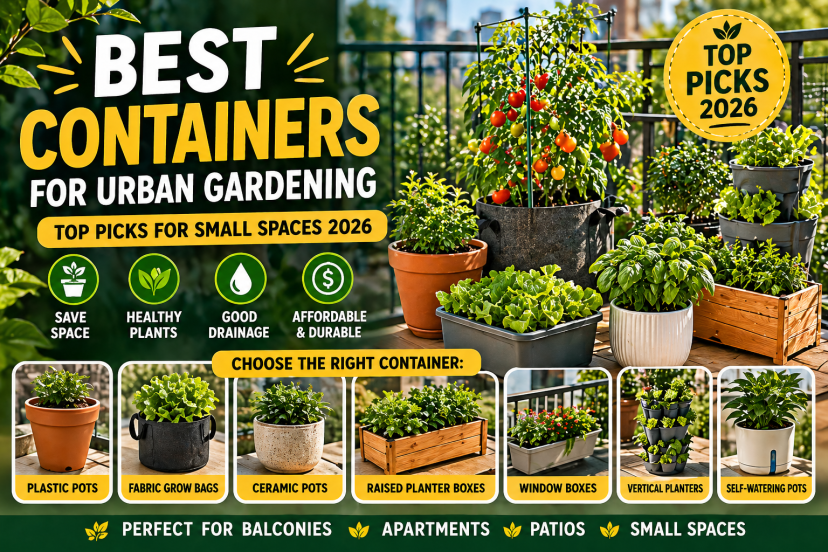
🌱 Best Containers For Urban Gardening (Quick Answer)
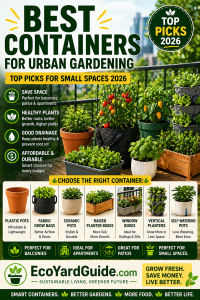
The best containers for urban gardening include plastic pots, fabric grow bags, ceramic planters, window boxes, and vertical planters. The right choice depends on your space, plant type, and budget—but all must have proper drainage and enough room for roots.
🏡 Why Choosing The Right Container Matters
Your container is more than just a pot—it directly affects:
- Plant growth
- Root health
- Water retention
- Yield (how much you harvest)
👉 The wrong container can limit growth—even if everything else is perfect.
That’s why choosing the best containers for urban gardening is critical.
🪴 1. Plastic Pots (Best Overall Choice)
Plastic pots are the most common—and for good reason.
Pros:
- Lightweight
- Affordable
- Easy to find
- Good moisture retention
Cons:
- Less breathable than fabric
- Can heat up in the strong sun
👉 Best for beginners and most vegetables.
🌿 2. Fabric Grow Bags (Best For Healthy Roots)
Grow bags are one of the best upgrades you can make.
Pros:
- Excellent drainage
- Better airflow to roots
- Prevent root circling
- Lightweight and foldable
Cons:
- Dry out faster
- Need more frequent watering
👉 Ideal for tomatoes, peppers, and larger plants.
🏺 3. Ceramic And Clay Pots (Best For Aesthetic + Stability)
These are heavier and more decorative.
Pros:
- Attractive design
- Stable (won’t tip easily)
- Good insulation
Cons:
- Heavy
- More expensive
- Can crack in cold weather
👉 Great for balconies and visible spaces.
🌱 4. Raised Planter Boxes (Best For Small Outdoor Areas)
Raised containers provide more growing space.
Pros:
- More soil volume
- Better root development
- Higher yields
Cons:
- Take up more space
- Higher cost
👉 Perfect if you have a small patio or balcony with room.
🪴 5. Window Boxes (Best For Tight Spaces)
Window boxes maximize narrow areas.
Pros:
- Space-saving
- Ideal for herbs and greens
- Easy to access
Cons:
- Limited depth
- Not suitable for large plants
👉 Best for windowsills and balcony railings.
🌿 6. Vertical Planters (Best Space-Saving Option)
Vertical containers are perfect for small homes.
Pros:
- Maximize vertical space
- Increase plant capacity
- Great for apartments
Cons:
- Water distribution can be tricky
- Not ideal for large plants
👉 One of the smartest urban gardening ideas.

🪴 7. Self-Watering Containers (Best For Convenience)
These containers include a built-in water reservoir.
Pros:
- Reduce watering frequency
- Maintain consistent moisture
- Great for busy schedules
Cons:
- Higher upfront cost
- Can overwater if misused
👉 Ideal for beginners who forget to water regularly.
🌱 How To Choose The Right Container Size
Size matters more than most people think.
General Guidelines:
- Herbs → 6–8 inches deep
- Leafy greens → 8–12 inches
- Tomatoes/peppers → 12–18 inches
👉 Larger containers usually produce better results.
💧 Drainage: The Most Important Feature
Without proper drainage, plants can fail quickly.
What To Look For:
- Drainage holes at the bottom
- Well-draining soil
- Saucers to catch excess water
👉 No drainage = root rot risk.
🌞 Material Matters (Quick Comparison)
Plastic:
- Lightweight, affordable, beginner-friendly
Fabric:
- Best root health, better airflow
Clay/Ceramic:
- Attractive, stable, heavier
👉 Choose based on your space and needs.
💰 Best Container Setup (High ROI Starter Setup)
If you want a simple, effective setup:
- 2–3 plastic pots
- 1–2 fabric grow bags
- Herbs + leafy greens
- One larger plant (tomato or pepper)
👉 This setup balances cost, ease, and productivity.
🧠 Smart Container Tips Most People Miss
- Use larger containers when possible
- Group plants with similar needs
- Elevate containers for better drainage
- Rotate pots for even sunlight
- Clean containers between planting cycles
👉 These small tips improve results significantly.
⚠️ Common Container Mistakes To Avoid
Avoid these common issues:
- Using containers without drainage
- Choosing pots that are too small
- Overwatering
- Using poor soil
- Overcrowding plants
👉 Fixing these leads to healthier plants.
📅 What To Expect (Container Gardening Results)
Here’s a typical timeline:
- 1–2 weeks → sprouting
- 3–5 weeks → growth stage
- 6–8 weeks → first harvest
- 2–3 months → strong production
👉 Container gardening can be very productive when done right.
❓ FAQs About Containers For Urban Gardening
What is the best container for beginners?
Plastic pots are the easiest and most affordable option.
Are grow bags better than pots?
Grow bags offer better airflow and root health—but require more watering.
Do all containers need drainage holes?
Yes. Drainage is essential to prevent root rot.
What size container is best for vegetables?
Most vegetables need at least 8–12 inches of depth, with larger plants needing more.
🌟 Final Thoughts: Choose Smart, Grow Better
The right container can make gardening easier—and more productive.
Start simple:
- Choose the right size
- Ensure good drainage
- Pick the right material
Then expand.
With the best containers for urban gardening, even a small space can produce impressive results.
⚠️ Disclaimer
This content is for general informational purposes only. Results may vary, and you should always follow proper gardening and safety practices.
 Explore more: