Why Is My Lawn Not Growing? Discover 15 Common Causes And Simple Fixes
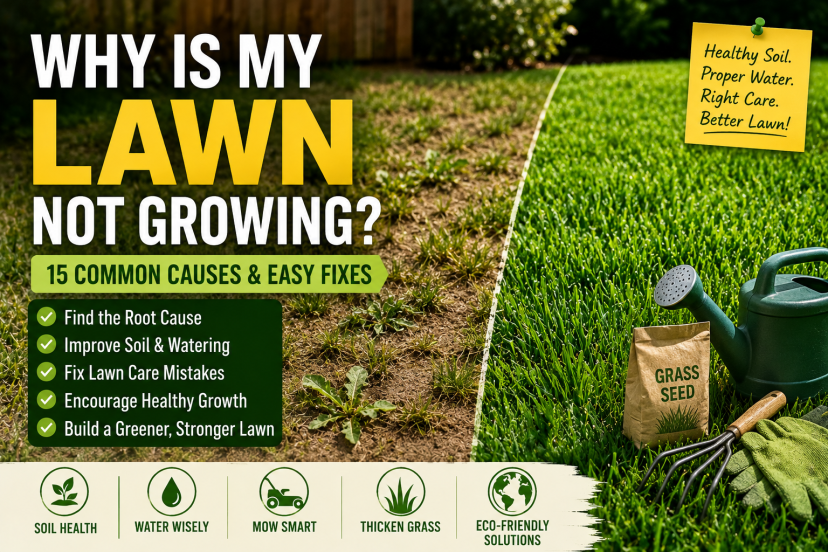
If you’ve watered, mowed, fertilized, or even reseeded your yard and still find yourself asking, “Why is my lawn not growing?”, the problem may have less to do with how much effort you’re putting in and more to do with the conditions beneath and around your grass.
Healthy turf needs the right combination of sunlight, water, air, nutrients, soil conditions, temperature, and appropriate maintenance. When even one of these factors is significantly out of balance, grass may grow slowly, become thin, or disappear altogether.
The solution isn’t necessarily more fertilizer or more water. In fact, adding either without identifying the underlying problem can waste money and potentially make matters worse. By checking your soil, irrigation, sunlight, mowing practices, and grass variety first, you can make more targeted improvements.
Here are 15 common reasons lawns struggle to grow—and practical, eco-friendly ways to build healthier turf without unnecessary chemicals or water.
⚡ Quick Answer: Why Is My Lawn Not Growing?
A lawn may stop growing well because of compacted or poor soil, too little sunlight, incorrect watering, nutrient or pH problems, improper mowing, heavy traffic, pests, disease, thatch, or grass that isn’t suited to your climate.
Start by checking soil moisture, sunlight, compaction, and irrigation coverage. If the cause isn’t obvious, a soil test can help identify pH and nutrient problems before you spend money on fertilizers or other treatments.
Key Takeaways
Most likely cause: If you’re wondering why is my lawn not growing, poor growing conditions—especially compacted soil, inadequate sunlight, improper watering, or unsuitable turfgrass—are common places to start.
Usually serious? Usually not. Many struggling lawns improve when the underlying soil, water, mowing, or sunlight problem is corrected.
First thing to check: Examine soil moisture and compaction, determine how much sunlight the area receives, and make sure irrigation reaches the struggling sections.
Best solution: Diagnose before treating. Improve the specific growing condition limiting your grass rather than automatically adding fertilizer, water, seed, or pesticides.
🔍 Why Your Lawn Isn’t Growing And How To Identify The Problem
Grass growth depends on several systems working together.
Roots need oxygen, moisture, nutrients, and enough soil space to develop. Grass blades need adequate sunlight for photosynthesis. The turf also needs temperatures appropriate for its species.

When something interferes with this balance, the grass usually provides clues.
A lawn that’s uniformly growing slowly may be experiencing seasonal dormancy or a widespread soil or nutrient issue. Grass struggling underneath trees may not receive enough sunlight. Thin sections along walkways can indicate traffic and compaction.
Brown or irregular patches could point toward water problems, pests, disease, pet activity, or other stresses.
Start by examining the pattern rather than immediately treating the entire lawn.
Often, the location of poor growth tells you more than the color of the grass itself.
🌱 15 Common Causes Of A Lawn Not Growing
1. Compacted Soil
Compacted soil is one of the most common obstacles to healthy turf.
Repeated foot traffic, vehicles, lawn equipment, and activity on wet soil can compress the ground. This reduces pore space, making it harder for air and water to reach grass roots.
Try pushing a screwdriver several inches into moist soil. If it is much harder to penetrate struggling areas than healthy sections, compaction may be contributing.

Core aeration can help relieve significant compaction when performed at the appropriate time for your turf type.
2. Not Enough Sunlight
Most grasses need substantial light to grow densely.
Areas underneath mature trees, alongside buildings, or next to tall fences may receive too little sunlight.
If grass repeatedly thins in the same shady location despite adequate water and soil conditions, additional fertilizer probably won’t solve the problem.
A shade-tolerant grass variety may help where moderate light is available. In deep shade, consider mulch, native shade plants, or appropriate groundcovers instead of repeatedly reseeding unsuccessful turf.
3. Not Enough Water
Grass can’t grow without sufficient moisture.
During drought, heat, or windy conditions, soil can dry rapidly. Turf may slow its growth, wilt, become brown, or enter dormancy.
Check moisture several inches below the soil surface rather than judging only by appearance.
Also examine your irrigation system. A blocked or poorly adjusted sprinkler can leave one section dry even when the rest of the lawn receives enough water.
Correcting irrigation coverage is often more efficient than increasing watering time everywhere.
4. Too Much Water
More water isn’t always better.
Grass roots require oxygen as well as moisture. Soil that remains saturated can create poor root conditions and may encourage certain diseases.

Signs can include persistently soggy soil, standing water, weak growth, yellowing, or thinning turf.
If you’re irrigating frequently, check the soil before the next scheduled watering.
Reducing unnecessary irrigation can conserve water, lower utility costs, and encourage healthier root development.
5. Poor Drainage
Sometimes the watering schedule isn’t the problem—the water simply has nowhere to go.
Heavy clay soil, compaction, low spots, runoff, and grading problems can keep parts of a lawn saturated.
Observe your yard after heavy rain.
If water remains for long periods, investigate drainage before reseeding or applying fertilizer.
Minor compaction problems may respond to aeration, while significant drainage or grading issues may require professional evaluation.

6. Soil pH Is Unsuitable
Soil pH influences how available certain nutrients are to plants.
If the pH is significantly outside the preferred range for your turf species, grass can struggle even when nutrients are present.
Don’t guess based on appearance alone.
A soil test is the most reliable way to understand your soil’s pH and determine whether an amendment is appropriate.
Avoid routinely applying lime simply because you’ve heard it improves lawns. Lime is useful only when soil conditions indicate that it is needed.
7. Nutrient Deficiency
Grass requires nutrients to produce healthy leaves and roots.
A genuine deficiency can lead to slow growth, poor color, and thinning turf. However, symptoms can resemble other problems such as drought or root stress.
Before applying fertilizer, consider a soil test.

Using fertilizer based on actual soil needs can reduce unnecessary spending and help prevent excess nutrients from washing into storm drains and waterways.
8. Too Much Fertilizer
If some fertilizer is good, more isn’t necessarily better.

Excessive fertilizer—particularly soluble nitrogen—can damage turf, contribute to excessive growth, increase susceptibility to certain stresses, and potentially burn grass.
Spills can create severely damaged patches.
Always measure your lawn and apply products according to label instructions.
Sustainable lawn care means using the smallest appropriate input rather than automatically applying more.
9. Mowing Too Short
Repeatedly scalping the lawn removes much of the leaf surface grass needs to produce energy.
Short turf can also expose the soil to more sunlight, increasing moisture loss and creating opportunities for weeds.
Use the recommended mowing height for your particular grass species.
As a general maintenance principle, avoid removing more than about one-third of the grass blade during a single mowing.
10. Dull Mower Blades
Your mower can affect lawn growth more than you might expect.
A sharp blade makes a relatively clean cut. A dull blade tears and shreds grass, leaving damaged tips that may turn brown and increase stress.
Examine the grass shortly after mowing.
If the ends look ragged or shredded rather than cleanly cut, sharpen or replace the mower blade.

It’s a simple, inexpensive improvement that requires no additional water or chemicals.
11. Excessive Thatch
Thatch is the layer of living and dead organic material between the green grass and the soil.
A modest layer isn’t necessarily harmful, but excessive thatch can interfere with water movement and root development.
Before dethatching, measure the layer rather than assuming it is the problem.
Aggressive dethatching when it isn’t needed can unnecessarily damage healthy turf.
When excessive thatch is confirmed, appropriate dethatching or core aeration may help, depending on your grass species and growing season.
12. Heavy Foot Traffic
Grass growing along frequently traveled routes often becomes thin.
People, pets, bicycles, wheelbarrows, and lawn equipment can damage grass while gradually compacting the soil underneath.
If your weak turf forms a clear route between a patio, gate, shed, or driveway, traffic is an obvious clue.
Instead of continually reseeding the same location, create a permanent pathway using stepping stones, gravel, mulch, or permeable pavers.

13. Lawn Pests
Certain insects can damage grass blades, stems, or roots.
Potential pests vary by region and may include grubs, chinch bugs, billbugs, sod webworms, and others.
Don’t apply insecticide simply because your lawn isn’t growing.
Look for insects or characteristic damage first. Your cooperative extension office can help identify pests common to your area and recommend appropriate management strategies.
14. Lawn Disease
Some turf diseases cause thinning, discoloration, slow growth, or dead patches.
Conditions such as prolonged leaf wetness, excessive moisture, poor airflow, and inappropriate fertilization can favor certain diseases.
Because many lawn diseases resemble drought stress, insect damage, or nutrient problems, proper identification matters.
Avoid automatically applying fungicides to a struggling lawn. Correcting environmental conditions may be an important part of management, and not every brown or thin patch is caused by disease.
15. The Wrong Grass For Your Climate Or Yard
Sometimes homeowners do everything reasonably well, and the lawn still struggles because the turf species isn’t suited to the location.
Cool-season and warm-season grasses respond differently to temperature and seasonal conditions. Individual varieties also differ in shade, drought, cold, heat, and traffic tolerance.
Choose grass recommended for your region and specific site.
If one area remains too shady, wet, dry, or heavily traveled for turf, replacing grass with native plants, drought-tolerant groundcovers, mulch, or permeable hardscaping may be more economical and sustainable.
🔎 How To Confirm Why Your Lawn Isn’t Growing
Before buying anything, perform a basic lawn inspection.
Start with sunlight. Observe the problem area at several points during the day to determine how much direct light it actually receives.
Next, check soil moisture several inches down and compare struggling sections with healthy turf.
Push a screwdriver into moist soil to identify possible compaction.
Run your irrigation system and watch each sprinkler. Check for blocked heads, overspray, dry areas, and leaks.
Inspect individual grass blades and roots for discoloration, chewing damage, insects, or disease symptoms.
Review your mowing height and mower blade condition.
If none of these observations explain the problem, consider obtaining a soil test. It can provide valuable information about pH and nutrient conditions and prevent unnecessary treatments.
🛠️ How To Fix A Lawn That Isn’t Growing
Once you’ve identified the likely cause, concentrate your effort there.
Aerate significantly compacted soil at the appropriate time. Adjust irrigation where the soil is consistently too wet or dry. Correct sprinkler coverage before increasing total water use.
Raise the mowing height if you’ve been cutting too short and sharpen dull mower blades.
Use soil-test results to guide fertilizer or amendment applications.
After correcting the underlying conditions, repair bare or thin sections with seed, plugs, or sod appropriate for your grass type and climate.
Choose the correct establishment season. Cool-season and warm-season turfgrasses have different optimal growing periods.
Most importantly, don’t force grass to grow where conditions fundamentally don’t support it. Converting difficult lawn areas to appropriate landscaping can save years of repeated watering, fertilizing, and reseeding.
⚠️ Mistakes To Avoid When Your Lawn Won’t Grow
Avoid adding fertilizer before determining whether nutrients are actually the problem.
Don’t increase watering automatically. Excessive irrigation can be just as harmful as drought and wastes a valuable resource.
Avoid reseeding the same unsuccessful area repeatedly without correcting shade, soil, drainage, or traffic issues.
Don’t mow extremely short in an attempt to stimulate new growth.
And don’t treat unexplained lawn problems with pesticides or fungicides without identifying a pest or disease.
A diagnosis-first approach usually costs less and reduces unnecessary lawn-care inputs.
♻️ How To Prevent Poor Lawn Growth
Build your lawn around its environment rather than constantly fighting local conditions.
Choose turf species suited to your climate, sunlight, and expected use. Maintain an appropriate mowing height and sharp mower blades.
Water according to soil and plant needs while following local restrictions.
Use soil testing periodically to make informed fertilization decisions.
Minimize compaction by creating paths through high-traffic areas and avoiding heavy equipment on saturated soil.
Repair small bare sections before weeds take over.
Finally, consider reducing turfgrass where it repeatedly struggles. Native planting beds, drought-tolerant groundcovers, rain gardens, and permeable pathways can make a landscape more diverse while reducing mowing and irrigation requirements.
❓ Frequently Asked Questions
Why Is My Grass Green But Not Growing?
Grass may remain green while growing slowly because of temperature, insufficient sunlight, compacted soil, nutrient limitations, or seasonal changes. Some turfgrasses naturally grow much more slowly outside their peak season.
Why Won’t Grass Grow In Certain Spots?
Localized problems often involve shade, compaction, poor irrigation coverage, pet activity, buried debris, drainage problems, or heavy traffic. Compare the problem spot with healthy grass nearby.
Why Won’t Grass Grow Under My Trees?
Tree canopies reduce sunlight while tree roots compete with turf for water and nutrients. Some areas beneath mature trees simply don’t provide enough light for dense turfgrass.
Will Adding Topsoil Help My Lawn Grow?
Sometimes, but only if poor soil is contributing to the problem. Adding topsoil won’t correct deep shade, excessive traffic, inappropriate grass varieties, or serious drainage problems.
Should I Fertilize Grass That Isn’t Growing?
Only when fertilizer is appropriate for your turf and growing conditions. If possible, use a soil test to determine whether nutrient deficiencies exist before applying fertilizer.
Can Too Much Water Stop Grass From Growing?
Yes. Persistently saturated soil can reduce oxygen around the roots and create conditions favorable to some diseases. Check moisture before increasing irrigation.
How Long Does It Take A Struggling Lawn To Recover?
Recovery time varies widely depending on the cause, grass species, season, and extent of damage. Mild stress may improve relatively quickly, while severely damaged turf may require reseeding or replacement during the appropriate growing season.
🌿 Related Garden Problems
Grass turning brown: Water stress, heat, insects, disease, mowing damage, and dormancy can cause discoloration.
Bare spots in the lawn: Compaction, traffic, shade, irrigation problems, and pests can cause turf to disappear.
Lawn full of weeds: Thin grass leaves growing space for weeds to become established.
Mushrooms in the lawn: Moisture and decomposing organic material commonly encourage mushroom growth.
Standing water: Drainage problems and compacted soil can create poor conditions for turf roots.
These problems often overlap, which is why examining the entire growing environment can be more effective than treating symptoms individually.
🌎 Final Thoughts On Why Is My Lawn Not Growing
If you’re asking why is my lawn not growing? Don’t assume your yard needs another bag of fertilizer or longer sprinkler cycles.
Your lawn may actually be telling you that something about its environment needs to change.
Start with the basics: sunlight, soil, moisture, drainage, mowing, and grass variety. Then investigate less obvious possibilities such as compaction, thatch, insects, and disease.
Solving the underlying problem can help you avoid wasting money on repeated treatments that don’t address the real cause.
And sometimes the most sustainable solution is recognizing that turfgrass isn’t ideal for every square foot of your property.
Replacing chronically unsuccessful lawn areas with native plants, drought-tolerant groundcovers, mulch beds, or permeable pathways can reduce water consumption and maintenance while creating a more interesting and environmentally friendly landscape.
A successful eco-friendly yard isn’t necessarily the one with the most grass. It’s the one where the right plants are growing in the right places with fewer unnecessary inputs.
Gardening Advice: Every garden is different. Soil type, climate, weather, plant variety, and growing conditions can all affect results. If your plants continue to decline despite following the recommendations in this article, or if you suspect a serious plant disease, invasive pest infestation, or a hazardous tree issue, contact your local cooperative extension office, certified arborist, or qualified gardening professional for personalized advice.
Disclaimer: This article is for informational purposes only and is not a substitute for professional horticultural, arboricultural, or agricultural advice. Gardening results vary depending on local growing conditions, soil, weather, and plant variety. Always read and follow the instructions on any fertilizers, pesticides, herbicides, or other garden products before use.
 Explore more:
- Why Is Moss Growing In My Lawn?
- Best Rain Garden Ideas
- Pollinator Friendly Garden Ideas That Save Money