Eco-Friendly Lawn Alternatives for Pollinators: The Ultimate Guide
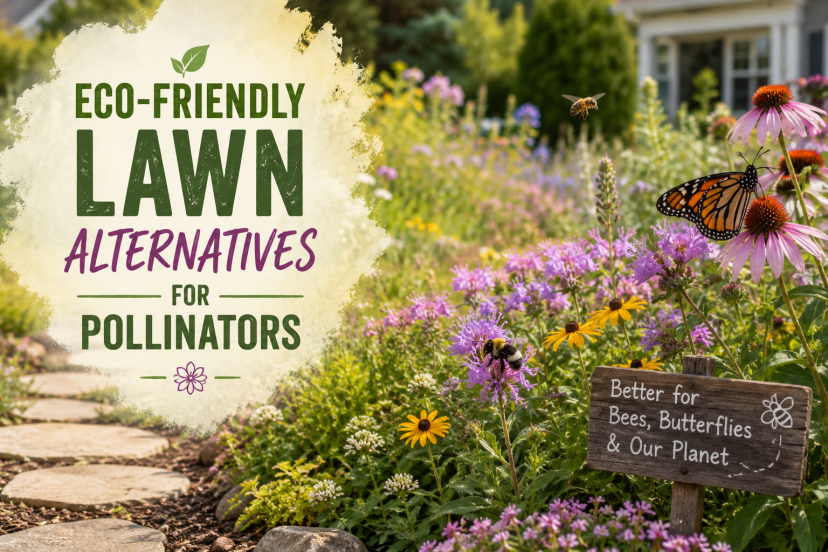
Traditional green lawns are a staple of American suburbs. However, they come with a hidden environmental cost. Standard turfgrass offers virtually no food or shelter for bees, butterflies, and other essential pollinators. Maintaining a pristine lawn also requires massive amounts of water, fertilizer, and chemical pesticides. Transitioning your property to an eco-friendly lawn alternative is a powerful way to restore biodiversity. By replacing resource-heavy grass with native plants, ground covers, and wildflower meadows, you turn your yard into a thriving ecosystem. This comprehensive guide explores the best eco-friendly lawn alternatives for pollinators. It details step-by-step instructions to help you successfully transform your yard.
Why Replace Your Traditional Lawn?
Traditional turfgrass is essentially a biological desert. It is an exotic monoculture that does not support local wildlife.
The Problem with Turfgrass
- Resource Waste: The EPA estimates that landscape irrigation accounts for nearly one-third of all residential water use.
- Chemical Pollution: Homeowners use up to ten times more chemical pesticides per acre than farmers. These chemicals run off into local waterways and poison non-target insects.
- Habitat Loss: The expansion of manicured lawns strips pollinators of the nesting sites and foraging grounds they need to survive.
The Benefits of Pollinator-Friendly Alternatives
- Biodiversity Support: Providing nectar, pollen, and larval host plants directly aids declining populations of native bees, honeybees, butterflies, moths, and hummingbirds.
- Lower Maintenance: Once established, most lawn alternatives require minimal mowing, watering, and zero chemical inputs.
- Cost Savings: You will save money on water bills, fertilizers, pesticides, and lawnmower fuel.
- Soil Regeneration: Deep-rooted native plants improve soil structure, increase water infiltration, and prevent erosion far better than shallow-rooted turfgrass.
Top Eco-Friendly Lawn Alternatives for Pollinators
Choosing the right substitute depends on your climate, soil type, and how you use your yard. Here are the most effective options for creating a pollinator paradise.
1. Clover Lawns (Microclover & Dutch White Clover)
Clover is one of the easiest and most popular lawn alternatives. While it was once considered a weed, homeowners are rediscovering its immense benefits.
       [ Traditional Turfgrass ]               [ White Clover / Microclover ]
       • Shallow roots (~2-6 inches)           • Deep taproots (~12+ inches)
       • Requires synthetic nitrogen           • Fixes nitrogen naturally
• Sterile to local wildlife • Abundant blooms feed bees- Why Pollinators Love It: Dutch white clover produces abundant white and pink blossoms rich in nectar. It is a favorite forage source for honeybees and native bumblebees.
- Growth Habits: Clover stays low to the ground and requires minimal mowing. It can handle moderate foot traffic, making it an excellent choice for families and pets.
- Environmental Perks: As a legume, clover fixes nitrogen from the air and pumps it into the soil. This eliminates the need for synthetic fertilizers. It also stays green during peak summer droughts when traditional grass turns brown.
2. Native Wildflower Meadows
A wildflower meadow replaces uniform green with a dynamic tapestry of colors, textures, and heights.
                        NATIVE WILDFlower MEADOW
   🌸 Coneflower      🌼 Black-Eyed Susan      🦋 Milkweed
(Deep nectar) (Late-season pollen) (Monarch host plant) - Why Pollinators Love It: A mixture of native annuals and perennials provides a continuous supply of food from early spring through late autumn.
- Key Species: Focus on species native to your specific US region. Excellent choices include Coneflowers (Echinacea), Black-Eyed Susans (Rudbeckia), Coreopsis, and Milkweed (Asclepias)—which is crucial for monarch butterfly caterpillars.
- Growth Habits: Meadows grow tall (typically 1 to 4 feet). They work best in backyards, structural borders, or areas with fewer neighborhood aesthetic restrictions. They only need to be mowed once a year in late winter to disperse seeds and prevent woody brush overgrowth.
3. Tapestry Lawns (Mixed Herbal Carpets)
A tapestry lawn consists of various low-growing, non-grass perennial plants woven together.
- Why Pollinators Love It: Combining multiple plant species ensures a variety of flower shapes and blooming periods. This supports a wider diversity of insect species.
- Key Species: Creeping Thyme (Thymus serpyllum), Roman Chamomile (Chamaemelum nobile), Corsican Mint, and low-growing Sedums.
- Growth Habits: This alternative forms a dense, colorful carpet. Walking on a tapestry lawn releases pleasant herbal aromas. Creeping thyme, for example, produces carpets of purple flowers that buzz with bee activity throughout summer. It requires no mowing and thrives in poor, well-drained soil.
4. Sedum and Succulent Carpets
For dry, rocky, or sloped properties, low-growing stonecrop (Sedum) is an exceptional turf replacement.
- Why Pollinators Love It: Sedum varieties produce clusters of star-shaped flowers in mid-to-late summer. This provides a crucial food source when other spring flowers have faded.
- Growth Habits: Sedums are incredibly drought-tolerant and store water in their fleshy leaves. They spread easily to form a dense, weed-suppressing mat. They handle poor soil and intense sun with ease, making them completely maintenance-free after planting.
Comparison of Pollinator Lawn Alternatives
| Alternative Type | Foot Traffic Tolerance | Sunlight Requirements | Mowing Frequency | Main Pollinator Benefit |
|---|---|---|---|---|
| Clover Lawn | Moderate to High | Full Sun to Partial Shade | 2–4 times per year | High nectar for bees |
| Wildflower Meadow | Low | Full Sun | Once per year (Late winter) | Complete lifecycle support |
| Tapestry Lawn | Moderate | Full Sun to Partial Shade | Optional (1–2 times/year) | High insect diversity |
| Sedum Carpet | Low | Full Sun | Never | Late-summer forage |
How to Transition Your Yard: Step-by-Step
Transforming your lawn requires careful preparation. Simply tossing seeds onto existing turf grass rarely works, as established lawns easily choke out new seedlings. Follow these steps to ensure success.
Step 1: Remove the Existing Turf
You must clear your current grass to give your alternative plants room to grow. Avoid chemical herbicides like glyphosate, which leave toxic residues that harm soil biology and pollinators.
- Sheet Mulching (Lasagna Gardening): Cover the lawn with a layer of corrugated cardboard or thick newspaper. Overlap the edges by 6 inches to block light completely. Add 4 to 6 inches of organic compost and wood chips on top. Over a few months, the grass suffocates and decomposes, leaving behind rich, planting-ready soil.
- Solarization: Lay clear plastic sheeting tightly over closely mowed grass during the hot summer months. Leave it for 6 to 8 weeks. The trapped heat bakes the grass, its roots, and any weed seeds in the top layer of soil.
- Mechanical Removal: For small areas, use a kick-cutter or sod cutter to physically remove the top layer of turf.
Step 2: Prepare the Soil
Once the grass is gone, avoid tilling the ground. Tilling brings buried weed seeds to the surface, causing unwanted competition for your new plants. Instead, rake the surface gently to loosen the top inch of soil. If you used sheet mulching, you can plant directly into the decomposed organic matter.
Step 3: Select and Plant Your Alternatives
Choose your plant mix based on your local climate zone and sunlight conditions.
- Seeding Clover or Meadows: Broadcast seeds evenly across the bare soil. For even distribution, mix small seeds with dry sand. Rake the area lightly so the seeds make firm contact with the soil. Do not bury them too deeply.
- Plugging Perennials: If you are installing a tapestry lawn or sedum carpet, space out individual starter plants (plugs) 6 to 12 inches apart. They will naturally spread and fuse into a continuous mat over one to two growing seasons.
Step 4: Establish and Maintain
New seeds and plugs need consistent moisture to develop strong root systems.
- Watering: Water lightly and frequently for the first 3 to 4 weeks to keep the soil damp. Once your alternative lawn is established, cut back watering to a minimal, as-needed schedule.
- Weeding: Monitor the area for invasive weeds during the first season. Pull weeds by hand to give your selected ground covers a competitive edge.
Overcoming Challenges and Community Norms
Replacing a traditional lawn can sometimes cause pushback from neighbors or Homeowners Associations (HOAs). Managing these challenges requires proactive planning.
- Design Intentionally: Use clean borders, pathways, and stone retaining walls to frame your yard. A neat border of mulch or brick shows neighbors that your wildflower meadow or clover patch is an intentional landscape feature rather than a neglected yard.
- Add Signage: Place a small, attractive sign in your yard reading “Pollinator Habitat” or “Certified Wildlife Habitat.” Educating your community helps change public perception from wanting manicured lawns to appreciating ecological diversity.
- Check Local Ordinances: Review your city’s weed and vegetation ordinances. Many municipalities limit the height of traditional grass but offer exceptions for intentionally managed native plantings and wildflower gardens.
Build Your Eco-Friendly Yard Today
Every square foot of traditional lawn you replace with a pollinator-friendly alternative helps restore balance to the environment. Whether you choose a low-growing clover blend for your front yard or a wild meadow for your backyard, your efforts provide essential food and shelter for local wildlife.
Start small by transforming a single garden bed or side yard this season. Watch your property transform into a beautiful, low-maintenance destination for bees and butterflies.
 Disclaimer
 Disclaimer
This content is for general informational purposes only. Results may vary, and you should always follow proper gardening and safety practices.
 Explore more: