Common Eco-Yard Mistakes: 10 Costly Errors Most Homeowners Make (And How To Avoid Them)
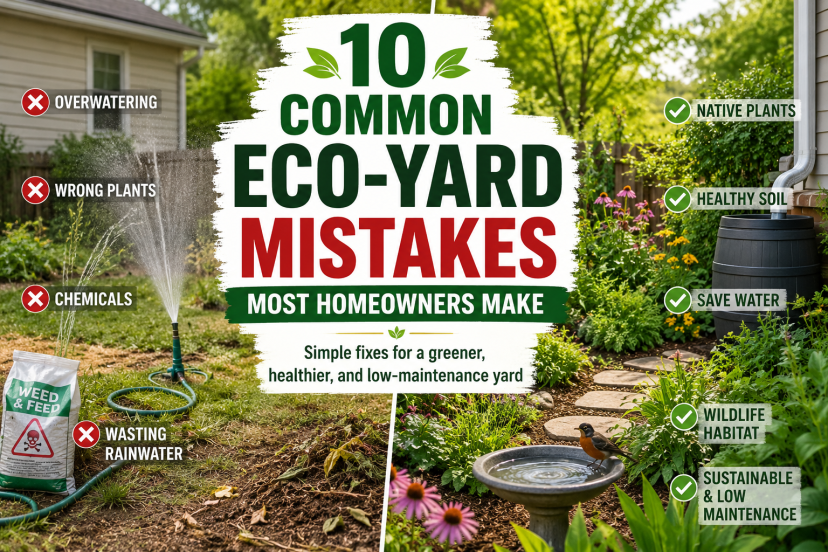
Creating an environmentally friendly yard doesn’t have to be expensive or complicated. In fact, many homeowners begin with great intentions but unknowingly make choices that waste water, increase maintenance, and reduce biodiversity. The good news? Most common eco-yard mistakes are surprisingly easy to fix.
Whether you’re planting a pollinator garden, installing rain barrels, switching to drought-tolerant landscaping, or simply trying to lower your water bill, avoiding a few common mistakes can make a huge difference.
This guide covers the 10 most common eco-yard mistakes, why they happen, and the practical steps you can take to build a beautiful, low-maintenance, environmentally friendly yard that works with nature—not against it.
⭐ Quick Answer
The common eco-yard mistakes homeowners make include overwatering, planting the wrong species, using excessive lawn fertilizer, ignoring native plants, poor soil care, removing wildlife habitat, wasting rainwater, relying on chemical pesticides, using inefficient irrigation, and neglecting long-term planning. Correcting these mistakes can lower maintenance costs, conserve water, improve soil health, and create a more resilient landscape.
🌱 Why Avoiding Common Eco-Yard Mistakes Matters
Eco-friendly landscaping isn’t just about helping the environment.
Done correctly, it can also:
- 💧 Reduce outdoor water use
- 💵 Lower utility bills
- 🌼 Increase pollinators
- 🌳 Improve soil quality
- 🌎 Reduce your carbon footprint
- 🏡 Increase curb appeal
- 🛠 Lower long-term maintenance
Across much of the U.S., water conservation has become increasingly important due to drought conditions and growing populations. Many states now encourage water-efficient landscaping through rebates, smart irrigation incentives, and local conservation programs.
Avoiding common eco-yard mistakes helps ensure your investments actually produce long-term savings.
🌿 Common Eco-Yard Mistake #1: Planting The Wrong Plants
One of the biggest mistakes is choosing plants based only on appearance.
Many homeowners buy tropical or water-hungry plants that struggle in their climate.
Instead, choose:
- Native plants
- Regionally adapted shrubs
- Drought-tolerant perennials
- Climate-appropriate trees
- Local grasses
Benefits include:
- Less watering
- Fewer fertilizers
- Better disease resistance
- Improved wildlife habitat
Native landscaping often requires far less maintenance once established.
💧 Common Eco-Yard Mistake #2: Overwatering Your Landscape
Many lawns receive much more water than necessary.
Signs of overwatering include:
- Mushy soil
- Yellow grass
- Fungus growth
- Weed outbreaks
- High water bills
Instead:

- Water deeply but less often.
- Water early in the morning.
- Install drip irrigation.
- Use smart irrigation controllers.
- Check soil moisture before watering.
Adding mulch around plants also helps reduce evaporation.
🌎 Common Eco-Yard Mistake #3: Ignoring Healthy Soil
Healthy soil is the foundation of every successful eco-yard.
Unfortunately, many homeowners focus only on plants while ignoring what’s beneath them.
Improve soil naturally by:
- Adding compost
- Leaving grass clippings
- Mulching garden beds
- Avoiding unnecessary tilling
- Planting cover crops where practical
Healthy soil holds more moisture, reducing irrigation needs while feeding beneficial microorganisms.
🍂 Common Eco-Yard Mistake #4: Throwing Away Yard Waste
Leaves, grass clippings, and small branches are valuable resources.
Instead of sending them to landfills:
- Start composting
- Use shredded leaves as mulch
- Create leaf mold
- Reuse wood chips around trees
- Compost garden debris
Composting naturally improves soil structure and reduces the need for synthetic fertilizers.
🐝 Common Eco-Yard Mistake #5: Removing Wildlife Habitat
A perfectly tidy yard isn’t always the healthiest yard.
Pollinators and beneficial insects need food and shelter.
Create habitat by adding:
- Native flowers
- Bird baths
- Bee hotels
- Small brush piles
- Flowering shrubs
- Berry-producing plants
These simple additions support:

- Bees
- Butterflies
- Birds
- Beneficial insects
A healthy ecosystem naturally reduces pest problems.
🚿 Common Eco-Yard Mistake #6: Wasting Rainwater
Rainwater is free.
Yet many homeowners allow thousands of gallons to flow directly into storm drains.
Simple rainwater harvesting ideas include:
Install Rain Barrels
Collect roof runoff for watering gardens.
Create Rain Gardens
Capture runoff naturally while filtering pollutants.
Direct Downspouts
Move water toward planted areas instead of driveways.
Use Permeable Surfaces
Permeable pavers allow rainwater to soak into the soil instead of creating runoff.

These strategies reduce erosion and conserve municipal water.
🌼 Common Eco-Yard Mistake #7: Using Too Much Fertilizer
More fertilizer does not mean healthier plants.
Excess fertilizer can:
- Burn roots
- Pollute waterways
- Encourage weak growth
- Increase mowing
Eco-friendly alternatives include:
- Compost
- Slow-release organic fertilizers
- Homemade compost tea
- Mulched leaves
Always perform a soil test before applying fertilizer.
Many county extension offices throughout the U.S. offer affordable soil testing services.
🐞 Common Eco-Yard Mistake #8: Relying On Chemical Pesticides
Chemical pesticides may solve one problem while creating others.
They can harm:

- Bees
- Butterflies
- Earthworms
- Birds
- Beneficial insects
Instead, try Integrated Pest Management (IPM):
- Hand-remove pests
- Encourage natural predators
- Use insecticidal soap when necessary
- Rotate plants
- Improve plant health
Healthy landscapes naturally experience fewer pest outbreaks.

🚰 Common Eco-Yard Mistake #9: Using Inefficient Irrigation
Traditional sprinklers often waste significant amounts of water.
Upgrade to:
- Drip irrigation
- Soaker hoses
- Smart sprinkler controllers
- Moisture sensors
- Rain sensors
These systems deliver water directly where plants need it while reducing evaporation.
Many utilities across the U.S. offer rebates for WaterSense-certified irrigation controllers.
🌳 Common Eco-Yard Mistake #10: Planning Only For Today
Many landscaping decisions ignore how plants will grow.
Ask yourself:
- How large will this tree become?
- Will roots affect sidewalks?
- Will shrubs block windows?
- Can solar panels become shaded?
- Will this increase future maintenance?
Long-term planning saves money while preventing unnecessary removals and replacements.
A sustainable yard should continue improving over time.
🌼 Eco-Friendly Strategies That Prevent Common Eco-Yard Mistakes
Building an environmentally friendly landscape doesn’t require a complete redesign.
Small improvements often provide the greatest benefits.
Consider:
- 🌿 Replace small lawn sections with native gardens.
- 💧 Install drip irrigation.
- 🍂 Add 2–3 inches of mulch.
- 🌎 Compost kitchen and yard waste.
- 🐝 Plant pollinator-friendly flowers.
- 🌳 Increase tree canopy where appropriate.
- 🌧 Install rain barrels.
- ☀ Choose solar-powered outdoor lighting.
- 🌾 Reduce unnecessary mowing.
- 🪴 Improve soil before planting.
Each improvement supports healthier ecosystems while reducing maintenance.
💰 How Avoiding Common Eco-Yard Mistakes Saves Money
Eco-friendly landscaping often lowers long-term costs through:
- Lower water bills
- Reduced fertilizer purchases
- Fewer pesticides
- Less mowing
- Lower replacement costs
- Reduced erosion repairs
- Improved property value
Although some upgrades require an upfront investment, many pay for themselves over time through reduced maintenance and utility expenses.
🛠 When To Consult A Professional
Some eco-yard projects are ideal for DIY, while others benefit from professional expertise.
Consider hiring a professional if you are:
- Designing a complete drought-tolerant landscape.
- Installing a large rain garden or drainage system.
- Planning irrigation upgrades across a large property.
- Installing solar-powered landscape systems.
- Addressing severe erosion or grading issues.
- Removing large trees or planting near utilities.
- Applying for local water conservation rebates that require certified installation.
An experienced landscaper, irrigation specialist, solar installer, or eco-contractor can help ensure your project complies with local codes and performs efficiently.
❓ FAQs: Common Eco-Yard Mistakes
1. What are the most common eco-yard mistakes?
The most common eco-yard mistakes include overwatering, planting unsuitable species, ignoring soil health, overusing fertilizer, relying on pesticides, wasting rainwater, and removing wildlife habitat.
2. Do native plants really save water?
Yes. Native plants are adapted to local conditions and usually require much less supplemental watering once established.
3. Is compost better than fertilizer?
Compost improves soil structure and feeds beneficial microbes, while fertilizer primarily adds nutrients. Many gardens benefit from using compost as the foundation and fertilizer only when needed.
4. What is the easiest eco-friendly yard improvement?
Adding mulch is one of the easiest improvements because it reduces weeds, conserves moisture, and improves soil over time.
5. How can I reduce lawn maintenance naturally?
Reduce lawn size, plant native groundcovers, mow at the proper height, leave grass clippings, and improve soil health.
6. Are rain barrels worth installing?
Yes. Rain barrels can reduce outdoor water use, provide free irrigation water, and help reduce stormwater runoff.
7. Can an eco-yard increase home value?
A well-designed sustainable landscape with healthy plants, efficient irrigation, shade trees, and attractive outdoor spaces may improve curb appeal and appeal to environmentally conscious buyers.
🎯 Final Thoughts
Making your yard more sustainable doesn’t require perfection. It starts with recognizing the common eco-yard mistakes that quietly waste water, increase maintenance, and limit your landscape’s potential.
By choosing native plants, improving soil, conserving rainwater, using efficient irrigation, and creating habitat for beneficial wildlife, you can build an outdoor space that’s beautiful, resilient, and easier to maintain. Small changes made consistently can lead to meaningful savings, healthier ecosystems, and a yard you’ll enjoy for years to come.
Disclaimer: This article is for general educational purposes only. Always follow local regulations, HOA requirements, water-use restrictions, and safety guidelines before beginning landscaping, irrigation, drainage, electrical, or excavation projects. Environmental conditions and recommendations may vary by region.
 Explore more: