Sunlight For Vegetable Garden: How Much Do Plants Really Need? (2026 Guide)
🌞 Why Sunlight Is The #1 Factor In Gardening Success
If your plants aren’t growing well, sunlight is usually the reason.
Sunlight affects:
- Growth speed
- Yield (how much food you get)
- Plant health
- Flavor and quality
Even perfect soil and watering won’t fix poor light conditions.
🌱 Sunlight For Vegetable Garden (Quick Answer)
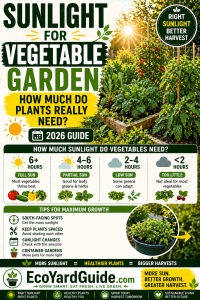
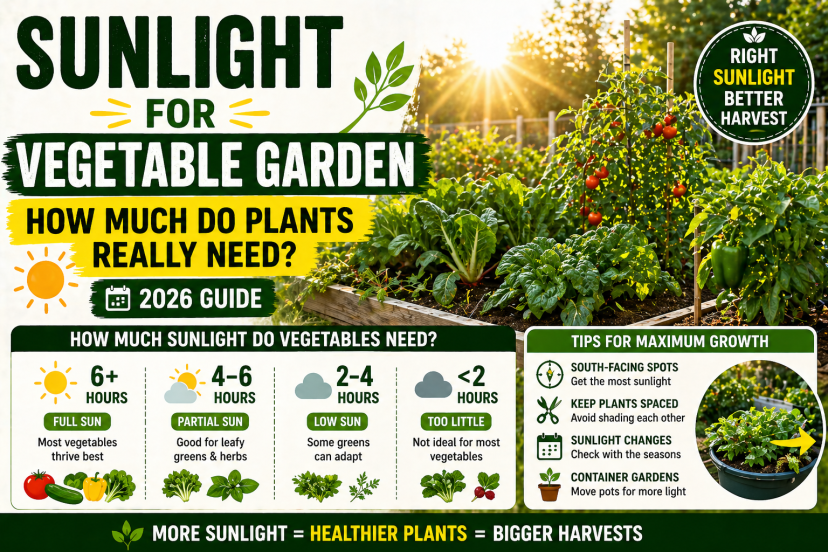
Most vegetables need 6–8 hours of direct sunlight daily to grow properly. Leafy greens can grow with 4–6 hours, while herbs and low-light plants can survive with less. If sunlight is limited, grow lights can help replace natural light.
🌿 How Much Sunlight Do Vegetables Really Need?
Not all plants need the same amount of light.
Full Sun (6–8 Hours Daily)
Best for:
- Tomatoes
- Peppers
- Cucumbers
- Beans
These plants need strong, consistent sunlight to produce fruit.
Partial Sun (4–6 Hours Daily)
Best for:
- Lettuce
- Spinach
- Kale
- Arugula
These plants grow well with moderate sunlight.
Low Light (2–4 Hours Daily)
Best for:
- Mint
- Parsley
- Green onions
Growth is slower—but still possible.
🧠 How To Check Sunlight In Your Space
Before planting, understand your light conditions.
Simple Ways To Check:
- Observe how sunlight moves during the day
- Track how many hours of direct sunlight hit your space
- Check shadows at different times
Do this for at least one full day.
🏠 Sunlight For Indoor Vegetable Gardens
Indoor gardening comes with unique challenges.
Best Indoor Light Sources:
- South-facing windows (strongest light)
- East-facing windows (morning light)
- West-facing windows (afternoon light)
If Light Is Limited:
- Use LED grow lights
- Position plants closer to windows
- Rotate plants regularly
Indoor light is usually weaker than outdoor sunlight.
🌿 Sunlight For Balcony And Small Space Gardens
Balconies can vary a lot in sunlight.

Common Balcony Types:
- South-facing → best for vegetables
- East-facing → good for greens
- North-facing → limited options
Knowing your balcony direction is key.
💡 Grow Lights: The Best Backup Solution
If natural sunlight isn’t enough, grow lights solve the problem.
Benefits Of Grow Lights:
- Consistent light
- Year-round growing
- Works in any room
When To Use:
- Low-light apartments
- Winter months
- Indoor-only setups
Grow lights can completely replace sunlight if needed.
⚠️ Signs Your Plants Need More Sunlight
Plants give clear signals when light is insufficient.
Watch For:
- Slow or no growth
- Pale or yellow leaves
- Long, weak stems
- Plants leaning toward light
These are common beginner issues.
🌱 How To Fix Low Sunlight Problems
If your plants aren’t getting enough light, here’s what to do:
Simple Fixes:
- Move plants to a brighter location
- Use reflective surfaces (walls, mirrors)
- Add grow lights
- Choose low-light plants
Small adjustments can make a big difference.
🌿 Best Vegetables For Low Sunlight
If your space is limited, choose the right plants.
Low-Light Vegetables:
- Lettuce
- Spinach
- Arugula
- Kale
- Herbs
These are more forgiving in lower light conditions.
🌞 Best Vegetables For High Sunlight
If you have strong sunlight, take advantage of it.
High-Light Vegetables:
- Tomatoes
- Peppers
- Cucumbers
- Beans
These produce more with strong light.
🧠 Smart Sunlight Tips Most People Miss
- Rotate plants for even exposure
- Avoid placing plants behind thick glass
- Clean windows for better light
- Don’t overcrowd plants
These small tweaks improve results significantly.
📅 What To Expect (Light Impact On Growth)
Light directly affects growth speed.
With Good Sunlight:
- Faster growth
- Higher yields
- Healthier plants
With Poor Sunlight:
- Slower growth
- Lower production
- Weak plants
Light is the biggest growth factor.
⚠️ Common Sunlight Mistakes
Avoid these common issues:
- Assuming “bright room” = enough sunlight
- Ignoring seasonal light changes
- Overcrowding plants
- Not adjusting plant placement
Most problems come from misunderstanding light.
❓ FAQs About Sunlight For Vegetable Gardens
How many hours of sunlight do vegetables need?
Most vegetables need 6–8 hours of direct sunlight daily.
Can vegetables grow with less sunlight?
Yes—vegetables can grow with less sunlight, but growth will be slower, and yields may be lower.
Are grow lights as good as sunlight?
Yes. High-quality grow lights can fully replace natural sunlight.
What is the best direction for sunlight?
South-facing spaces usually provide the strongest and longest sunlight.
🌟 Final Thoughts: Get The Light Right First
If you want your garden to succeed, focus on sunlight first.
Everything else comes second.
Start with:
- Understanding your light conditions
- Choosing the right plants
- Adjusting your setup
With proper sunlight for vegetable garden setups, even small spaces can produce strong, healthy plants.
⚠️ Disclaimer
This content is for general informational purposes only. Results may vary, and you should always follow proper gardening and safety practices.
 Explore more: