Permeable Landscaping: Smart Yard Surfaces That Save Money, Prevent Flooding, And Boost Home Value
🌱 Why Permeable Landscaping Matters More Than Ever
If you’re a homeowner trying to:
-
Lower long-term maintenance costs
-
Prevent flooding or standing water
-
Protect your foundation and soil
-
Increase curb appeal and resale value
-
Build a cleaner, more climate-friendly yard
…then permeable landscaping is one of the smartest upgrades you can make.
Across the U.S., extreme rain events are becoming more common, while many cities are tightening stormwater regulations. Traditional concrete and asphalt push water away from your yard — often toward your home, foundation, or neighbors.
Permeable landscaping flips that model by letting water soak into the ground naturally, supporting water conservation & irrigation, soil health, and wildlife & environmental support at the same time.
⚡ Quick Answer: What Is Permeable Landscaping?
Permeable landscaping uses surfaces that allow water to pass through into the soil instead of running off.
Common permeable options include:
-
Permeable pavers
-
Gravel or crushed stone paths
-
Porous concrete or asphalt
-
Grass or turf pavers
-
Mulch and planted ground covers
The goal is to manage rain where it falls — reducing runoff, erosion, and water waste.
🌎 Why Traditional Surfaces Create Yard Problems
🚫 The Hidden Issues With Impermeable Surfaces
Concrete and asphalt may look clean, but they often cause:

-
Standing water after storms
-
Soil erosion
-
Basement leaks or foundation stress
-
Washed-out garden beds
-
Polluted runoff entering storm drains
In many U.S. neighborhoods, over 50% of yard surfaces are impermeable. That creates drainage problems and overwhelms municipal systems during heavy rain.
Permeable landscaping addresses these issues by working with nature instead of against it.
🌿 Permeable Landscaping Basics (Beginner Friendly)
🧱 Common Permeable Surface Types
1️⃣ Permeable Pavers
-
Interlocking bricks with gaps for drainage
-
Filled with gravel or grass
-
Durable and attractive
2️⃣ Gravel & Crushed Stone
-
Ideal for walkways and driveways
-
Low cost and DIY-friendly
-
Supports eco-friendly landscaping & lawn care
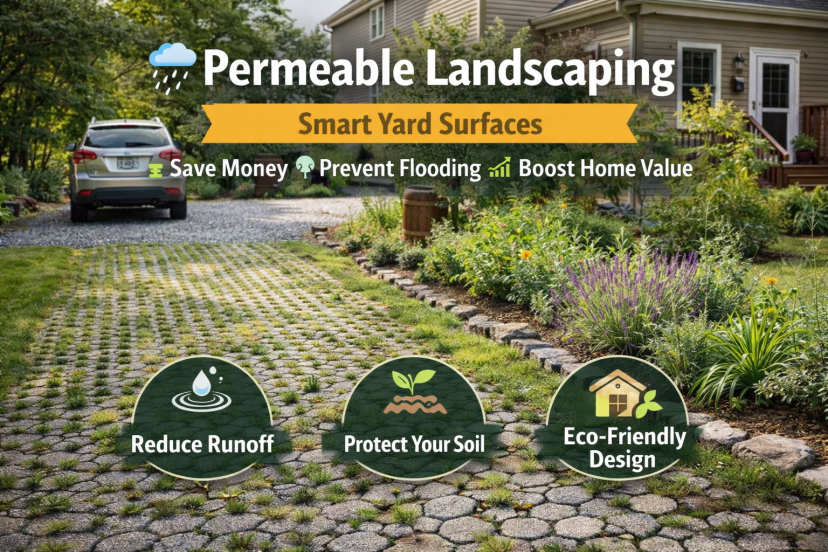
3️⃣ Grass Pavers
-
Plastic or concrete grids filled with soil and grass
-
Strong enough for vehicles
-
Maintains green space
4️⃣ Mulched & Planted Areas
-
Tree rings
-
Garden beds
-
Rain gardens
These surfaces support sustainable gardening & composting while reducing runoff.
🏡 Real-Life Scenario: Suburban Flood Fix With Permeable Landscaping
Location: Midwest single-family home
Problem: Water pooling near the foundation after storms
What The Homeowners Did:
-
Replaced the concrete side path with gravel
-
Installed permeable pavers in patio area
-
Added mulch beds along the fence line
Results After 1 Year:
-
No more standing water
-
Reduced basement humidity
-
Lower yard maintenance costs
-
Improved curb appeal
This type of permeable landscaping solution is becoming popular in flood-prone U.S. regions.
🧠 Self-Assessment Checklist: Do You Need Permeable Landscaping?
Check all that apply:
-
Water pools in your yard after rain
-
Downspouts drain onto hard surfaces
-
Soil washes away near walkways
-
Driveway runoff flows toward your home
-
Garden beds dry out unevenly
-
Local flooding happens during heavy storms
If you checked 2 or more, permeable landscaping could significantly improve your yard’s performance.
⚖️ Expectation vs Reality: Permeable Landscaping
| Expectation | Reality |
|---|---|
| Costs more than concrete | Often cheaper long-term |
| Looks unfinished | Modern designs are clean and stylish |
| Hard to maintain | Usually lower maintenance |
| Only for new homes | Can be retrofitted easily |
| Doesn’t handle heavy rain | Performs better during storms |
🌧️ How Permeable Landscaping Helps Water Conservation
Permeable landscaping supports water conservation & irrigation by:

-
Recharging groundwater
-
Reducing irrigation needs
-
Preventing runoff loss
-
Supporting deep root systems
This means healthier plants with less watering, especially during dry summers.
🌱 Soil Health & Environmental Benefits
🪱 Improved Soil Health
When water infiltrates naturally:
-
Soil microbes thrive
-
Roots grow deeper
-
Organic matter stays intact
This improves soil health & organic fertilization, reducing reliance on chemicals.
🦋 Wildlife Support
Permeable surfaces help:
-
Pollinators access moisture
-
Reduce toxic runoff
-
Support native plants & biodiversity
🛠️ Practical Next-Step Guide (No Overwhelm)
Step 1: Identify Problem Areas
Focus on:
-
Downspout exits
-
Driveways
-
Side yards
-
Patios
Step 2: Start Small
Begin with:
-
One gravel path
-
One permeable patio zone
-
Mulch beds near runoff areas
Step 3: Upgrade Drainage Gradually
Add:
-
Rain gardens
-
French drains with gravel
-
Permeable paver borders
Step 4: Combine With Other Eco Upgrades
Permeable landscaping works well with:
-
Rain barrels
-
Native planting
-
Solar landscape lighting
This strengthens eco home & outdoor living benefits.
♻️ DIY Permeable Landscaping Projects
Beginner-friendly options:
-
Gravel walkway with edging
-
Mulched tree rings
-
Permeable stepping stone path
These align with DIY eco projects & recycled materials goals.
🇺🇸 U.S.-Specific Considerations
Northeast
-
Freeze-thaw safe pavers
-
Proper base preparation
Southeast
-
Heavy rain capacity
-
Erosion-resistant designs
Midwest
-
Frost-resistant gravel systems
-
Drainage slopes
Southwest
-
Xeriscaping with permeable gravel
-
Heat-resistant materials
Local building codes may offer incentives or rebates for permeable landscaping projects.

❓ FAQs: Permeable Landscaping
1. Does permeable landscaping really prevent flooding?
Yes. It significantly reduces surface runoff and allows rainwater to absorb into the soil.
2. Is permeable landscaping durable enough for driveways?
Yes. Properly installed permeable pavers and grass grids handle vehicle weight well.
3. Does permeable landscaping require more maintenance?
Usually less. Gravel and pavers need occasional leveling, but no sealing or resurfacing.
4. Can permeable landscaping increase home value?
Yes. Buyers value drainage solutions, eco features, and low-maintenance yards.
5. Is permeable landscaping expensive?
Costs vary, but many homeowners save money over time through reduced repairs and water damage prevention.
6. Does Permeable Landscaping Help Reduce Water Bills?
Yes — by allowing rainwater to soak into the ground and naturally hydrate soil and plant roots. This means you may need less supplemental irrigation, especially during warmer months.
🌟 Conclusion: Small Surface Changes, Big Long-Term Gains
Permeable landscaping isn’t just about drainage — it’s about building a smarter yard foundation.
By replacing even small areas of concrete with permeable surfaces, you can:

-
Reduce flooding risk
-
Protect your home
-
Save water
-
Support local ecosystems
-
Increase property value
Start with one area, learn how your yard responds, and expand gradually. The long-term benefits often surprise homeowners.
⚠️ Disclaimer
This article is for informational purposes only. Results from permeable landscaping projects may vary based on soil type, climate, installation quality, and local regulations. Always check local codes, HOA rules, and drainage requirements before making major yard changes.
 Explore more:
- Natural Backyard Privacy Ideas
- Drought-Tolerant Plants That Thrive in U.S. Yards
- Eco Friendly Landscaping Materials