Xeriscaping Basics: How To Create A Water-Smart Yard (Beginner Guide)
🌿 A Smarter Way To Landscape With Less Water
For many eco-conscious homeowners, keeping a beautiful yard feels like a constant tug-of-war between appearance, water bills, and environmental responsibility. Traditional lawns demand frequent watering, mowing, fertilizing, and maintenance — all of which add up in cost and environmental impact. That’s why xeriscaping for beginners is quickly becoming one of the most popular landscaping approaches across the U.S.
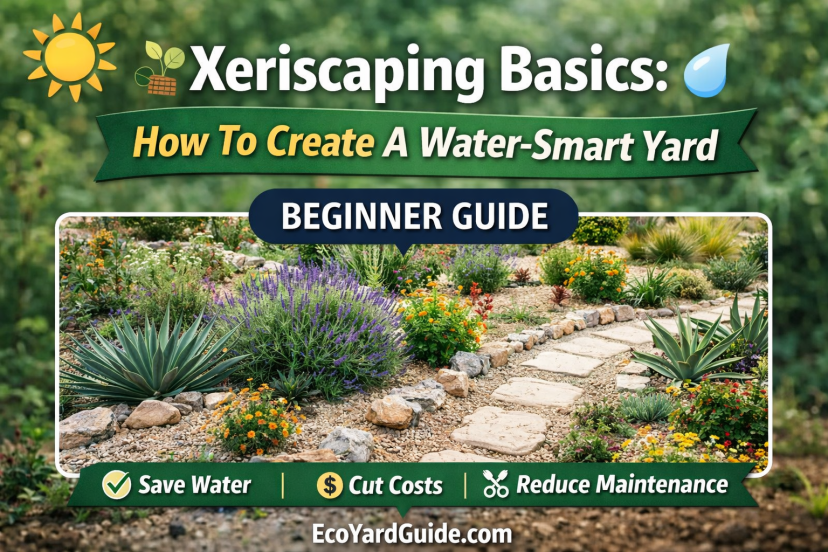
Xeriscaping focuses on designing outdoor spaces that use significantly less water while still looking attractive and intentional. It’s not about turning your yard into a desert — it’s about working with your local climate, choosing the right plants, and reducing unnecessary waste.
With drought conditions affecting many states and water restrictions becoming more common, learning how to build a low-water yard is both a practical and planet-friendly upgrade.
This beginner-friendly guide breaks xeriscaping down into a simple 7-step plan you can follow with confidence.
💧 What Is Xeriscaping And Why It Matters
Xeriscaping is a landscaping method designed to reduce or eliminate the need for supplemental irrigation. The term comes from the Greek word xeros, meaning dry.
At its core, xeriscaping for beginners focuses on:
-
Smart water use
-
Climate-appropriate plants
-
Efficient irrigation
-
Soil health and ground coverage
Unlike traditional lawns, xeriscaped yards rely on thoughtful design instead of constant watering.
🌎 Why Xeriscaping Is Growing In The U.S.
-
Increased drought conditions in states like California, Arizona, Nevada, and Texas
-
Rising water utility costs nationwide
-
Municipal water restrictions and conservation incentives
-
Homeowners seeking lower-maintenance yards
Xeriscaping supports modern drought landscaping goals while keeping outdoor spaces functional and attractive.

🌱 Benefits Of Xeriscaping For Beginners
Xeriscaping offers advantages that go far beyond water savings.
✅ Key Benefits Of A Low-Water Yard
-
Reduces outdoor water use by 50–75%
-
Lowers monthly utility bills
-
Requires less mowing and maintenance
-
Improves soil health
-
Supports native pollinators
-
Increases long-term property value
For beginners, xeriscaping is one of the easiest eco-friendly yard upgrades with lasting results.
🔧 Xeriscaping For Beginners: The 7-Step Plan
This step-by-step approach makes xeriscaping manageable — even if you’ve never redesigned a yard before.
🌱 Step 1: Assess Your Yard And Climate
Before making changes, understand what you’re working with.
🔍 What To Observe
-
Sun exposure throughout the day
-
Slopes and drainage patterns
-
Existing plant health
-
Soil type (clay, sandy, loam)
-
Local rainfall averages
In many U.S. regions, choosing plants adapted to your climate is the foundation of successful drought landscaping.
💧 Step 2: Reduce Or Replace High-Water Turf
Traditional grass lawns are often the biggest water consumers in a yard.
🌿 Lawn Reduction Options
-
Shrink the lawn size instead of removing it entirely
-
Replace unused areas with mulch or gravel
-
Convert sections to native plant beds
-
Use ground covers instead of grass
This shift instantly transforms your space into a more sustainable low-water yard.
🌼 Step 3: Choose Drought-Tolerant Plants
Plant selection is where xeriscaping truly comes together.

🌱 Beginner-Friendly Xeriscape Plants (U.S.)
-
Native grasses
-
Lavender
-
Coneflower
-
Black-eyed Susan
-
Yarrow
-
Sage
-
Agave (warm climates)
Native plants naturally thrive with less water and support local ecosystems.
🌎 Step 4: Improve Soil Health Naturally
Healthy soil retains moisture better and reduces watering needs.
🔧 Soil Improvement Tips
-
Add compost to increase organic matter
-
Avoid synthetic fertilizers
-
Use worm castings for nutrients
-
Loosen compacted soil
Good soil preparation is essential for xeriscaping for beginners and long-term success.
🌿 Step 5: Use Mulch For Moisture Control
Mulch plays a major role in drought-resistant landscaping.
💧 Benefits Of Mulching
-
Reduces evaporation
-
Regulates soil temperature
-
Prevents weed growth
-
Improves soil quality
Organic mulches like wood chips or bark work especially well in drought landscaping designs.
💦 Step 6: Install Efficient Irrigation
Even xeriscaped yards need some watering — just not wasteful watering.
🔧 Water-Smart Irrigation Options
-
Drip irrigation systems
-
Soaker hoses
-
Smart irrigation timers
-
Rain sensors
Drip irrigation delivers water directly to roots, making it ideal for a low-water yard.
☀️ Step 7: Maintain With Seasonal Adjustments
Xeriscaped yards aren’t maintenance-free, but they’re much easier to manage.
🌱 Seasonal Care Tips
-
Adjust watering by season
-
Prune plants annually
-
Refresh mulch as needed
-
Remove invasive weeds early
Consistent, light maintenance keeps your xeriscaping for beginners project thriving.
🌿 Common Xeriscaping Myths (And The Truth)
Many beginners hesitate due to misconceptions.
❌ Myth Vs Reality
-
Myth: Xeriscaping looks boring
-
Reality: Design and plant variety create beauty
-
Myth: Xeriscaping means no water
-
Reality: It means efficient water use
-
Myth: Only works in deserts
-
Reality: Works in most U.S. climates
👷 When To Consult A Professional
While many xeriscaping projects are DIY-friendly, professional help may be useful if:
-
You have steep slopes or drainage issues
-
You’re installing large irrigation systems
-
Local regulations require permits
-
You want integrated solar or rainwater systems
-
Your yard redesign is extensive
A landscaper or eco-contractor can ensure your drought landscaping plan meets local codes and performs efficiently.

❓ FAQs About Xeriscaping For Beginners
🌱 1. Is xeriscaping expensive to start?
Initial costs vary, but long-term savings on water and maintenance often offset upfront expenses.
💧 2. Does xeriscaping work outside desert climates?
Yes. Xeriscaping adapts to many U.S. climates, including temperate and coastal regions.
🌿 3. Can I still have grass with xeriscaping?
Yes. Many homeowners keep smaller lawn areas while converting the rest to a low-water yard.
☀️ 4. How much water does xeriscaping save?
Most xeriscaped yards reduce outdoor water use by 50% or more.
🌎 5. Are native plants required for xeriscaping?
Native plants are recommended but not mandatory. Drought-tolerant non-native plants can also work.
🔧 6. Is drip irrigation necessary?
It’s not required, but drip irrigation greatly improves efficiency in xeriscaping for beginners.
🌱 7. Does xeriscaping increase home value?
Yes. Water-efficient landscaping is attractive to buyers in drought-prone areas.
🌿 Conclusion: A Water-Smart Yard Starts With Smart Choices
Xeriscaping isn’t about sacrificing beauty — it’s about designing smarter. By following this xeriscaping for beginners guide, you can create a yard that saves water, lowers costs, and supports the environment.

Every plant choice, soil improvement, and irrigation upgrade moves you closer to a sustainable outdoor space that works with nature instead of against it.
Small steps today lead to long-term environmental and financial benefits.
⚠️ Disclaimer
This article is for educational purposes only. Always follow local regulations, HOA guidelines, and safety practices. Water restrictions and landscaping laws vary by region.
 Explore more:
- Natural Backyard Privacy Ideas
- Drought-Tolerant Plants That Thrive in U.S. Yards
- Permeable Landscaping: Smart Yard Surfaces That Save Money