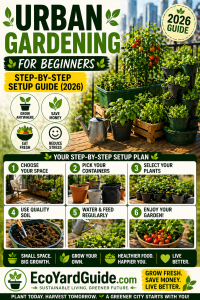
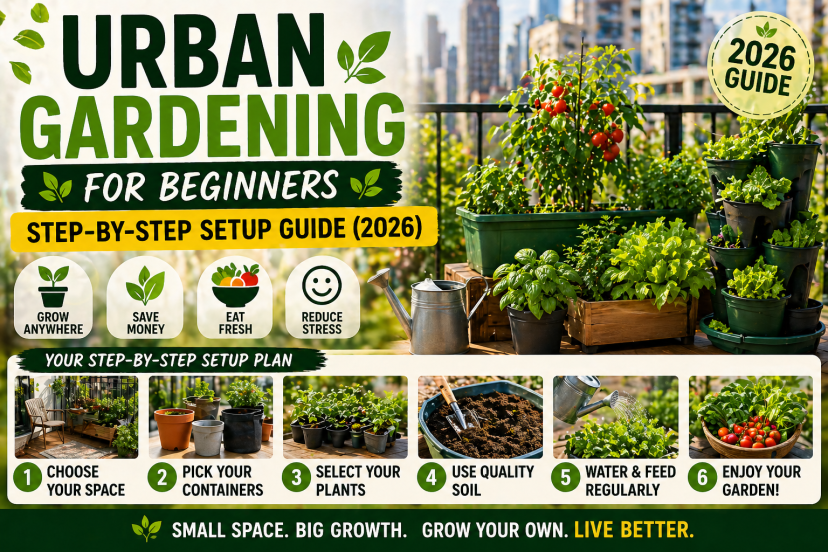
Urban Gardening For Beginners: Step-By-Step Setup Guide (2026)
🌱 Urban Gardening For Beginners (Quick Answer)
Urban gardening for beginners means growing plants in small spaces like balconies, patios, or indoors using containers, vertical setups, or simple systems. Start with easy plants like herbs or lettuce, use quality soil, ensure enough sunlight, and water consistently.
🌿 Why Urban Gardening Is Perfect For Beginners
Starting a garden in the city might seem complicated—but it’s actually one of the easiest ways to grow your own food.
You don’t need:
- A backyard
- Expensive tools
- Years of experience
What you do need is a simple plan.
Urban gardening is beginner-friendly because:
- You can start small
- It’s low-cost
- You control the environment
- Mistakes are easy to fix
👉 That’s why more people are searching for urban gardening for beginners than ever before.
🪴 Step 1: Choose The Right Space
Before you buy anything, look at your available space.
Common Urban Gardening Spaces:
- Balconies
- Windowsills
- Small patios
- Indoor corners with light
What To Check First:
- How many hours of sunlight do you get
- Whether the space is protected from strong winds
- How much room do you actually have
👉 Most edible plants need 4–6 hours of sunlight daily.
🌞 Step 2: Understand Your Sunlight
This is where most beginners go wrong.
Plants don’t fail because you’re bad at gardening—they fail because of poor light.
Simple Sunlight Guide:
- Full sun: 6–8 hours (best for tomatoes, peppers)
- Partial sun: 3–6 hours (great for herbs, greens)
- Low light: under 3 hours (stick to herbs like mint)
👉 If your space lacks sunlight, consider using a basic grow light.
🌱 Step 3: Start With Easy Plants
Don’t try to grow everything at once.
Start with plants that are:
- Fast-growing
- Low maintenance
- Hard to mess up
Best Plants For Beginners:
- Basil
- Mint
- Lettuce
- Spinach
- Green onions
- Cherry tomatoes
👉 These give quick results, which keeps you motivated.
🪴 Step 4: Pick The Right Containers
Containers are the foundation of urban gardening.
What To Look For:
- Drainage holes (very important)
- Enough depth for roots
- Lightweight material (for balconies)
Good Container Options:
- Plastic pots
- Fabric grow bags
- Wooden boxes
- Recycled buckets
👉 Bigger containers usually mean healthier plants.

🌿 Step 5: Use Quality Soil (Not Regular Dirt)
This is a big mistake beginners make.
Don’t use garden soil from outside—it doesn’t work well in containers.
Use:
- Potting mix
- Organic container soil
- Compost blends
Why It Matters:
- Better drainage
- More nutrients
- Healthier root growth
👉 Good soil = faster growth + fewer problems.
💧 Step 6: Water The Right Way
Watering seems simple—but it’s where most plants fail.
Basic Rules:
- Water when the top inch of soil feels dry
- Avoid overwatering
- Make sure water drains properly
Signs Of Problems:
- Yellow leaves → too much water
- Dry, drooping leaves → not enough
👉 Consistency is more important than quantity.
🌼 Step 7: Feed Your Plants (Simple Nutrition)
Plants need nutrients—especially in containers.
Easy Feeding Options:
- Liquid fertilizer (every 1–2 weeks)
- Organic compost
- Slow-release plant food
👉 Think of it as “feeding” your plants so they keep producing.
🌿 Step 8: Start Small (Most Important Rule)
This is the difference between success and failure.
Don’t Do This:
- Start with 10–15 plants
- Try complicated systems
- Buy everything at once
Do This Instead:
- Start with 2–3 plants
- Learn what works
- Expand slowly
👉 Small wins build confidence fast.
⚠️ Urban Gardening Mistakes Beginners Make
Avoid these common mistakes:
- Not enough sunlight
- Overwatering plants
- Using poor soil
- Choosing hard-to-grow plants
- Overcrowding containers
👉 Fixing just one of these can dramatically improve results.
📅 What To Expect (Realistic Timeline)
Here’s what beginners should expect:
- 1–2 weeks: Seeds sprout
- 3–5 weeks: Noticeable growth
- 6–8 weeks: First harvest (herbs, greens)
- 2–3 months: Strong production
👉 Herbs and leafy greens are the fastest to grow.
🧠 Beginner-Friendly Urban Gardening Tips
- Start with herbs for quick success
- Rotate plants for better growth
- Keep tools simple
- Observe your plants daily
- Adjust based on what you see
👉 Gardening is a skill—you improve fast with practice.
❓ FAQs About Urban Gardening For Beginners
Is urban gardening hard for beginners?
No. Urban gardening is actually one of the easiest ways to start gardening because you control the environment and can begin small.
How much space do I need?
Very little. Even a windowsill can support herbs and small plants.
What is the easiest thing to grow?
Basil, mint, and lettuce are among the easiest and fastest-growing plants.
Do I need expensive equipment?
No. Most beginners can start with basic pots, soil, and sunlight.
🌟 Final Thoughts: Start Simple And Grow From There
Urban gardening for beginners doesn’t have to be complicated.
The simplest plan works best:
- Choose a small space
- Start with easy plants
- Use good soil
- Stay consistent
That’s it.
Once you see your first plants grow, everything becomes easier—and a lot more rewarding.
⚠️ Disclaimer
This content is for general informational purposes only. Results may vary, and you should always follow proper gardening and safety practices.
 Explore more:
- How To Start A Garden In A Small Apartment
- Hydroponic Gardening At Home
- Budget-Friendly Yard Transformations