Hugelkultur Raised Bed First Year Nitrogen Deficiency Fix: 5 Steps
Test The Soil When Practical And Correct The Problems
To fix a first-year nitrogen deficiency in a hugelkultur raised bed, you must replenish the nitrogen that decomposing wood steals from the surrounding soil. A hugelkultur raised bed first year nitrogen deficiency fix starts with checking whether the plants actually lack nitrogen, then supplying an appropriate nitrogen fertilizer to the growing soil when needed. Fresh wood chips, sawdust, and other carbon-rich materials can encourage microorganisms to temporarily immobilize nitrogen as they decompose, leaving less available for vegetable roots.
The most effective approach is to test the soil when practical, correct watering or root problems, and apply nitrogen according to the crop’s needs and the fertilizer label. There is usually no reason to dig up an entire raised bed or remove buried logs.
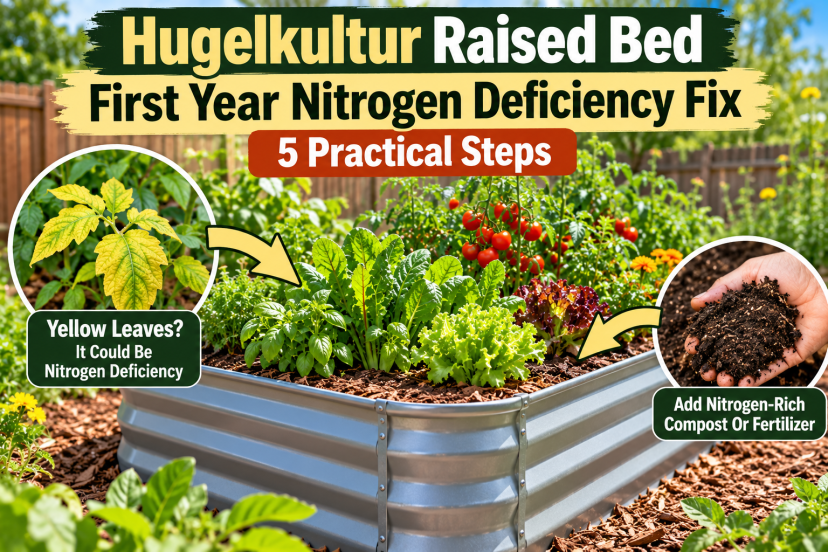
However, yellow leaves do not automatically mean nitrogen deficiency. Excess watering, poor drainage, cold soil, and other nutrient problems can produce similar symptoms.
This guide explains how to identify likely nitrogen shortages, correct them safely, and prevent problems during the first growing season.
Quick Answer – How Do You Fix Nitrogen Deficiency In A New Hugelkultur Bed?
If your first-year hugelkultur plants have pale older leaves and weak growth, first check soil moisture, drainage, and the growing medium.
When nitrogen deficiency is likely or confirmed, apply a suitable nitrogen-containing fertilizer to the root zone at the labeled rate. Water it in as directed and monitor subsequent growth.
Avoid mixing additional fresh wood chips or sawdust into the planting soil.
If the bed contains intact logs buried beneath 10–12 inches of quality growing medium, nitrogen immobilization from those logs may be limited to their immediate surroundings.
First-Year Hugelkultur Nitrogen Deficiency: Symptom Checklist
| What You Notice | Possible Explanation | First Thing To Check |
|---|---|---|
| Older leaves turn uniformly pale green or yellow | Nitrogen deficiency | Soil fertility and feeding history |
| Slow growth across several plants | Nutrient shortage or root stress | Moisture, temperature, and soil |
| Yellow leaves with soggy soil | Overwatering or poor drainage | Root-zone moisture |
| Yellowing mainly between leaf veins | Other nutrient problems | Which leaves are affected |
| Stunted plants in cold spring soil | Reduced root activity | Soil temperature |
| Yellow leaves after adding fresh sawdust | Possible nitrogen immobilization | Where woody material was mixed |
| Brown leaf edges after fertilizing | Possible salt or fertilizer injury | Application rate and placement |
Nitrogen is mobile within plants, so deficiency often appears first on older leaves. But symptoms alone cannot reliably establish the cause.
Why New Hugelkultur Raised Beds Can Develop Nitrogen Deficiency
1. Fresh Wood Contains Large Amounts Of Carbon
Wood has a relatively high carbon-to-nitrogen ratio.
As microorganisms break down woody material, they require nitrogen to build their cells.
When insufficient nitrogen is available in the decomposing material, microorganisms can temporarily use mineral nitrogen from the surrounding soil.
This process is called nitrogen immobilization.
The risk is particularly relevant when fine woody material is mixed directly into the growing zone.
2. Sawdust And Wood Chips Have More Exposed Surface Area
Small particles generally provide more surface area for microbial activity than large, intact logs.
As a result, fresh sawdust or fine wood chips incorporated throughout planting soil can create more widespread nitrogen competition.
Large logs buried well below the primary root zone are less likely to affect the entire bed in the same way.
This distinction matters because not every hugelkultur bed needs additional nitrogen simply because it contains wood.
3. The Growing Soil May Have Been Low In Nitrogen Initially
A new raised bed may contain an unsuitable soil mixture, immature compost, or insufficient nutrients.
Vegetables require different amounts of nitrogen depending on crop type and growth stage.
Heavy-feeding crops may show nutrient limitations sooner than plants with modest nitrogen requirements.
4. Watering Problems Can Mimic Nutrient Deficiency
Roots need oxygen to function properly.
When soil remains saturated, root activity can decline, and plants may struggle to absorb nutrients even when nitrogen is present.
Similarly, very dry soil can limit nutrient movement toward roots.
Correcting watering conditions may be necessary before fertilizer can help.
How To Fix Nitrogen Deficiency In A First-Year Hugelkultur Bed
Step 1 – Check Which Leaves Are Turning Yellow
Examine several plants before adding fertilizer.
Nitrogen deficiency commonly causes relatively uniform yellowing that begins on older leaves.
Look for:
-
Older leaves: Pale green or yellow before younger leaves.
-
Reduced growth: Plants remain smaller than expected.
-
Overall appearance: Several plants show similar symptoms.
-
Recent changes: Yellowing began after fresh woody material was incorporated into the growing soil.
If only one plant is affected, inspect its roots, stem, and surrounding soil before assuming the entire bed needs nitrogen.
Step 2 – Check Soil Moisture And Drainage
Insert a finger or hand trowel several inches into the soil.
If the root zone is saturated, improve watering practices and investigate drainage before fertilizing.
If the soil is excessively dry, water appropriately.
A moisture problem can prevent plants from responding normally to added nutrients.
Do not assume that buried logs eliminate the need for regular irrigation.
Step 3 – Test The Soil When Practical
A soil test can help identify pH problems and evaluate available nutrients, although standard home-garden soil tests do not always provide a reliable measurement of immediately available nitrogen.
Contact a local Cooperative Extension service for crop-specific testing and fertilizer recommendations.
If you recently filled the bed with purchased soil, review its ingredients and any fertilizer already included.
Avoid adding nitrogen blindly when the plants have no clear signs of deficiency.
Step 4 – Apply An Appropriate Nitrogen Fertilizer
When nitrogen supplementation is justified, select a fertilizer labeled for the vegetables being grown.
Possible options include:
| Fertilizer Type | Main Advantage | Important Consideration |
|---|---|---|
| Water-soluble nitrogen fertilizer | Nutrients can become available relatively quickly | Follow dilution and application directions |
| Granular vegetable fertilizer | Convenient for measured applications | Nutrient release depends on formulation |
| Blood meal | Concentrated organic nitrogen source | Release varies; can attract animals |
| Feather meal | Organic nitrogen source | Generally requires microbial breakdown |
| Finished compost | Adds organic matter and some nutrients | Nitrogen availability is variable |
Apply fertilizer to the growing soil, not directly into buried logs.
Use the product’s labeled application rate for your crop and growing area.
For example, a fertilizer labeled 10-0-0 contains 10% nitrogen by weight. One pound of that fertilizer supplies approximately 0.1 pound of total nitrogen.
That calculation does not mean one pound is the correct application amount for a particular bed. The appropriate rate depends on the crop, soil, fertilizer formulation, and existing fertility.
Step 5 – Water And Monitor New Growth
Follow the fertilizer label’s watering instructions.
Check plants over the following days and weeks for healthier new growth.
Leaves that have already yellowed may not fully regain their original color, so new growth is often a more useful indicator.
Avoid repeatedly adding fertilizer simply because older leaves remain yellow.
Excess nitrogen can encourage overly leafy growth, increase salt-related injury risk, and contribute to nutrient losses through runoff or leaching.
How To Prevent Nitrogen Problems When Building A Hugelkultur Bed
Prevention begins with keeping fresh woody materials away from the main growing zone.
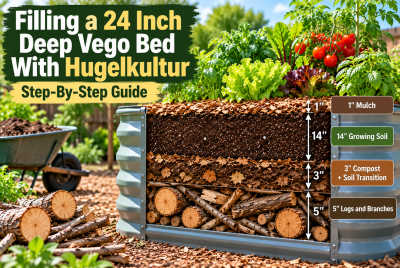
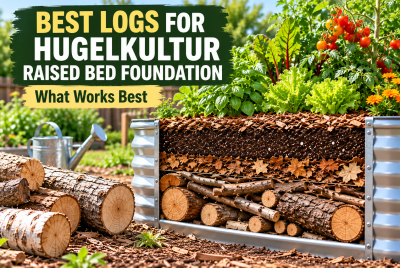
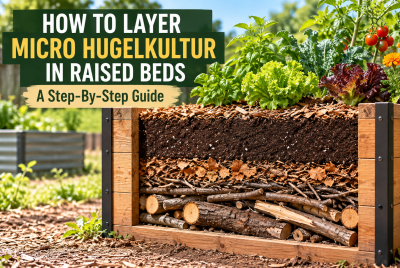
For a deep raised bed, use modest amounts of clean, untreated logs and branches near the bottom.
Fill large gaps with suitable soil and mature compost.
Maintain substantial growing soil above the wood.
For many vegetables, approximately 10–12 inches of suitable growing medium is a useful starting point, with more depth beneficial for some crops and growing situations.
Avoid mixing large quantities of fresh sawdust into the upper soil layer.
Finished compost is generally a better soil amendment than fresh wood chips incorporated directly around vegetable roots.
A surface mulch made from wood chips is different from wood chips mixed into soil. Surface-applied mulch typically presents less risk of widespread nitrogen immobilization within the root zone.
4 Common Mistakes That Make Nitrogen Problems Worse
1. Adding Fertilizer Without Checking Moisture
Yellow leaves may result from waterlogged roots rather than low nitrogen.
Better approach: Correct obvious moisture and drainage problems before applying fertilizer.
2. Applying Too Much Nitrogen At Once
More fertilizer does not necessarily produce healthier plants.
Excess nitrogen can damage roots, promote excessive vegetative growth, and increase environmental losses.
Better approach: Follow crop-specific recommendations and the product label.
3. Mixing Fresh Sawdust Into The Growing Soil
Fine woody material incorporated throughout the root zone can increase microbial nitrogen demand.
Better approach: Keep fresh sawdust out of vegetable-growing soil or compost it appropriately before use.
4. Digging Up Healthy Buried Logs
Large logs buried beneath substantial growing soil do not automatically cause widespread nitrogen deficiency.
Removing them can disturb established roots and damage the bed’s soil structure.
Better approach: Diagnose plant and soil conditions first. Correct the growing zone without unnecessary excavation.
Better Alternatives To Repeated Fertilizer Applications
If nitrogen problems continue, investigate the overall growing environment rather than increasing fertilizer indefinitely.
A suitable, balanced raised-bed soil mix can provide a more predictable root zone than a growing layer containing large quantities of fresh woody material.
Finished compost may help maintain soil organic matter, but its nitrogen contribution should not be assumed to meet every crop’s needs.
For future beds, consider using fewer buried logs and reserving fresh wood chips for surface mulch.
Crop selection can also help. Leafy vegetables and fruiting crops have different nutrient demands, so fertilizer planning should reflect what is actually planted.
Frequently Asked Questions
How Long Does First-Year Hugelkultur Nitrogen Deficiency Last?
There is no fixed timeline. Nitrogen immobilization depends on wood particle size, carbon content, soil temperature, moisture, microbial activity, and nitrogen availability. Fine wood mixed into soil may affect nitrogen availability differently from intact buried logs. With an appropriate diagnosis and fertilizer application, plants may produce healthier new growth, but recovery varies by crop and growing conditions.
Should I Add Blood Meal Directly To The Logs In A Hugelkultur Bed?
Usually, there is no need to uncover buried logs just to add blood meal. If nitrogen supplementation is needed, apply an appropriate fertilizer to the growing soil according to its label. Blood meal is one possible nitrogen source, but it is not automatically better than other fertilizers and can attract animals. Base the decision on crop needs and soil conditions.
Can A Hugelkultur Bed Have Yellow Leaves Even When Nitrogen Is Available?
Yes. Excessive watering, poor drainage, cold soil, root damage, inappropriate pH, and other nutrient deficiencies can cause yellowing. Check which leaves are affected, examine moisture conditions, and consider soil testing before adding nitrogen. Fertilizer may not correct the problem if roots cannot function properly or another stress is responsible.
Final Thoughts
A hugelkultur raised bed first year nitrogen deficiency fix should focus on accurate diagnosis and careful nutrient management rather than automatically adding large quantities of fertilizer.
Fresh sawdust and fine wood chips mixed into growing soil can temporarily immobilize nitrogen, but intact logs buried beneath a substantial growing layer may have a much smaller effect on plant nutrition.
Start by examining leaf symptoms, checking moisture, and reviewing the soil mixture. If nitrogen supplementation is justified, choose an appropriate fertilizer and follow its label.
For future beds, keep fresh woody materials below the main root zone and use quality growing soil.
Explore more: