Filling A 24 Inch Deep Vego Bed With Hugelkultur: Step-By-Step Guide
Maintaining Enough Root Space For Vegetables
Filling a 24 inch deep Vego bed with hugelkultur involves placing a modest amount of clean, untreated woody material at the bottom, filling the spaces with suitable organic matter and soil, and finishing with a deep layer of quality growing medium. This approach can reduce the initial amount of purchased soil while allowing gardeners to reuse branches, leaves, and other appropriate yard materials.
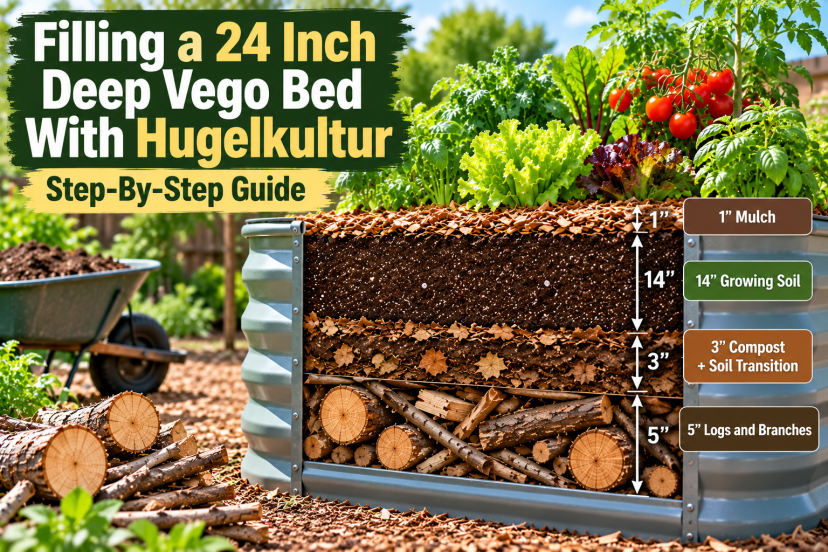
For a 24-inch-deep Vego raised bed, a practical starting design is 4–6 inches of woody material, 2–3 inches of compost-and-soil transition material, and approximately 13–15 inches of growing soil. Leave the remaining space for mulch and watering.
These dimensions are illustrative, not an official Vego Garden filling formula or scientifically established optimal ratio.
The most important consideration is maintaining enough root space for vegetables while preventing large air pockets, uneven settling, and moisture problems.
Quick Answer – How Should You Fill A 24-Inch Vego Raised Bed?
For an open-bottom, 24-inch-deep Vego Garden bed installed on suitable ground, use the following practical arrangement:
-
Bottom 4–6 inches: Small untreated logs and branches, with gaps filled using soil and smaller organic materials.
-
Next 2–3 inches: Finished compost mixed with suitable soil.
-
Next 13–15 inches: Quality raised-bed growing medium.
-
Top 1–2 inches: Organic mulch, with sufficient space below the rim for watering.
Do not fill half the bed with large logs simply to save money on soil. Oversized woody layers can reduce root depth, contribute to settling, and create uneven moisture conditions.
24-Inch Vego Bed Hugelkultur Layering Chart
The following example uses a total depth of 24 inches.
| Layer | Depth | Main Purpose |
|---|---|---|
| Small untreated logs and branches | 5 inches | Reuse woody material |
| Compost and soil transition | 3 inches | Fill gaps and separate layers |
| Quality growing soil | 14 inches | Support vegetable roots |
| Organic mulch | 1 inch | Protect the soil surface |
| Space below rim | 1 inch | Allow watering without overflow |
| Total | 24 inches |
The 5-inch woody layer is measured as the overall occupied depth, including soil and other material packed into the spaces between branches.
Actual quantities depend on the bed’s internal dimensions, shape, and the size of the woody materials.
How Much Material Do You Need For A 24-Inch Vego Bed?
Vego Garden offers different modular bed configurations, so the amount of material required depends on the exact model and assembly layout.
A bed’s height alone does not determine its capacity.
For a rectangular bed, calculate the approximate volume using:

For example, a hypothetical 4×4-foot bed that is 24 inches deep has a theoretical volume of 32 cubic feet.
Using the layering example above:
| Material Layer | Depth | Approximate Volume |
|---|---|---|
| Woody base | 5 inches | 6.7 cu. ft. |
| Compost and soil transition | 3 inches | 4.0 cu. ft. |
| Growing soil | 14 inches | 18.7 cu. ft. |
| Mulch | 1 inch | 1.3 cu. ft. |
| Empty rim space | 1 inch | 1.3 cu. ft. |
These figures describe layer volumes, not exact purchasing quantities.
Woody materials leave irregular spaces, and some growing soil will be needed to fill those gaps.
For rounded or modular Vego beds, use the manufacturer’s published soil-capacity specifications when available rather than assuming the bed is a perfect rectangle.
Why Use Hugelkultur In A Deep Vego Raised Bed?
Hugelkultur is a gardening method that incorporates woody materials beneath growing soil.
Traditional hugelkultur often uses large mounds of logs, branches, and other organic matter.
A 24-inch Vego bed allows gardeners to adapt the method to a smaller, contained space.
Reuse Suitable Yard Materials
Small branches and untreated logs from routine pruning can be used instead of sending all woody waste for disposal.
This may be practical for homeowners with access to clean, uncontaminated tree trimmings.
However, avoid collecting wood from questionable sites or using painted and chemically treated lumber.
Reduce Initial Soil Purchases
A modest woody layer occupies space that would otherwise require purchased growing medium.
This can reduce initial material costs, especially in deeper raised beds.
However, any savings depend on local soil prices, material availability, and future maintenance.
Buried wood gradually decomposes, so additional growing soil may be needed as the bed settles.
Gradually Add Organic Matter
Wood breaks down through biological processes involving fungi and other soil organisms.
Over time, decomposing woody materials contribute organic matter to the surrounding soil.
However, fresh logs do not provide an immediate source of readily available plant nutrients.
Potential Moisture Benefits
Partially decomposed wood can hold moisture, but the effect of buried wood on irrigation needs varies.
A new hugelkultur bed should not be assumed to require less watering than a conventional raised bed.
Soil composition, mulch, weather, drainage, and irrigation practices remain important.
Materials Needed To Fill A 24-Inch Vego Bed
Gather your materials before assembling the layers.
| Material | Recommended Use | Important Consideration |
|---|---|---|
| Small untreated logs | Bottom woody layer | Avoid oversized pieces |
| Untreated branches and twigs | Fill spaces around logs | Use clean, identifiable wood |
| Shredded leaves | Small amounts between branches | Avoid thick, compacted mats |
| Finished compost | Transition layer | Use mature compost |
| Raised-bed soil | Main growing layer | Choose a suitable vegetable-growing medium |
| Organic mulch | Surface protection | Keep away from plant stems |
| Watering can or hose | Moistening materials | Avoid saturation |
| Gloves and hand trowel | Installation | Protect hands from sharp metal edges |
For woody material, maple, birch, poplar, and suitable fruit-tree branches are practical choices when available.
Dense or naturally rot-resistant wood may persist longer, while softer materials may break down sooner.
Avoid pressure-treated scraps, railroad ties, painted lumber, and wood from unknown industrial sources.
Step-By-Step: Filling A 24-Inch Deep Vego Bed With Hugelkultur
Step 1 – Assemble The Vego Raised Bed On Level Ground
Follow the assembly instructions supplied with your Vego Garden kit.
Install all required fasteners, supports, and braces before adding material.
Best location: A level area with suitable drainage and adequate sunlight for the vegetables you plan to grow.
Vego recommends placing its raised beds on grass or soil where practical, although some models can also be installed on other surfaces.
Check that the frame is stable and that no sharp edges are exposed.
Avoid placing the bed where irrigation runoff could collect against a house foundation.
Step 2 – Place Small Logs And Branches At The Bottom
Begin with clean, untreated woody materials.
For the example 24-inch bed, arrange a woody base approximately 5 inches deep.
Suggested log diameter: Approximately 1–3 inches for easy placement in a compact raised bed.
Larger pieces may fit, but they occupy more space and can leave difficult-to-fill gaps.
Arrange the branches horizontally, with smaller pieces between larger ones.
Do not force logs against the metal panels or use them as structural supports.
Step 3 – Fill Gaps With Twigs, Leaves, And Soil
Add smaller branches, shredded leaves, and suitable soil around the larger logs.
This step is especially important because large voids can cause the growing soil to sink unevenly.
Avoid thick, unsupported layers of loose leaves. They may compact considerably after becoming wet.
Lightly moisten the materials as you work.
The goal is to fill gaps without heavily compacting the bed.
Step 4 – Add A Compost And Soil Transition Layer
Cover the woody base with approximately 3 inches of mature compost mixed with suitable soil.
Work the mixture into remaining spaces.
This transition helps separate large woody materials from the main growing zone.
Use finished compost rather than relying on fresh kitchen scraps or unfinished organic waste.
Fresh carbon-rich material mixed directly into growing soil can temporarily affect nitrogen availability.
Step 5 – Add Approximately 14 Inches Of Growing Soil
Fill the main planting area with quality raised-bed soil.
For a 24-inch bed using the example layers, approximately 14 inches of growing medium provides a substantial root zone.
Vego Garden’s general soil guidance describes a blend of approximately 60% topsoil, 30% compost, and 10% potting soil, although the most suitable mix depends on the materials available and the crops being grown. Avoid using pure compost as the entire growing layer.
Step 6 – Water Thoroughly And Check The Soil Level
Water the bed to moisten the growing medium.
Watch for sudden depressions or areas where soil sinks into gaps.
Add more growing soil where necessary.
Do not heavily compress the soil to prevent settling.
A well-structured growing medium needs sufficient pore space for roots, water, and oxygen.
Step 7 – Add Mulch And Plant Your Vegetables
Apply approximately 1 inch of suitable organic mulch in this example, adjusting for the crop and mulch material.
Keep mulch away from plant stems.
Plant vegetables according to their spacing and depth requirements.
Leafy greens, herbs, tomatoes, and peppers may all be grown in appropriately prepared raised beds, provided sunlight, nutrients, irrigation, and growing depth meet their needs.
5 Common Mistakes When Filling A Deep Vego Bed
1. Using Too Many Large Logs
Filling half the bed with large logs may reduce initial soil purchases, but it can also restrict root depth and increase settling.
Better approach: Use a modest woody layer and preserve most of the bed for growing soil.
2. Leaving Large Air Pockets
Loose logs and branches can create hidden spaces.
When soil moves into these gaps, the surface may develop depressions.
Better approach: Fill spaces carefully with smaller materials and soil during construction.
3. Adding Fresh Wood Chips To The Growing Layer
Fine woody material mixed into soil can temporarily immobilize nitrogen during decomposition.
Better approach: Keep most undecomposed wood below the main root zone.
4. Assuming The Bed Will Need Less Water
Freshly buried wood does not automatically provide reliable water retention.
Better approach: Check soil moisture regularly and use mulch and appropriate irrigation.
5. Ignoring Future Settling
As buried organic materials decompose, the soil surface may gradually drop.
Better approach: Inspect the bed seasonally and replenish quality growing soil when necessary.
Better Alternatives If You Do Not Have Suitable Logs
You do not need hugelkultur to grow vegetables successfully in a deep Vego bed.
If suitable untreated wood is unavailable, consider filling the bed with a conventional raised-bed soil mixture.
This approach generally provides a more uniform root zone and avoids large structural voids.
Finished compost can improve organic matter content without introducing oversized buried logs.
Surface mulch can also help manage evaporation.
For gardeners who prioritize predictable growing conditions over initial soil savings, a conventional soil-filled bed may be the better choice.
How To Maintain A Hugelkultur-Filled Vego Bed
During the first growing season, check for soil settling, uneven moisture, and exposed branches.
Water according to the needs of your plants rather than assuming the woody base will keep the soil moist.
Before each major planting season:
-
Check soil depth: Measure how far the growing surface has dropped.
-
Inspect the frame: Look for loose fasteners or panel deformation.
-
Replenish soil: Add suitable growing medium where necessary.
-
Refresh mulch: Maintain appropriate surface coverage.
-
Monitor nutrients: Use soil testing and crop requirements to guide fertilizer decisions.
The buried wood will gradually decompose, but there is no universal timeline for complete breakdown.
Wood species, diameter, moisture, temperature, and microbial activity all influence the process.
Frequently Asked Questions
Can I Fill Half Of A 24-Inch Vego Bed With Logs?
You can physically place a large volume of wood inside a deep raised bed, but filling half a 24-inch bed with logs is not the best starting approach for most vegetable gardens. Large woody layers reduce usable growing depth and may increase settling. A modest layer beneath substantial growing soil is generally more practical.
How Much Soil Do I Need After Adding Hugelkultur To A Vego Bed?
The amount depends on the bed’s internal dimensions and how much space the woody materials occupy. In a hypothetical 4×4-foot bed, a 14-inch growing layer requires approximately 18.7 cubic feet of soil. Additional soil may be needed to fill spaces between logs and replenish the bed after settling.
Will Hugelkultur Make My Vego Raised Bed Sink?
Some settling is expected because buried wood and other organic materials gradually decompose. Loose materials may also compact or move into gaps after watering. Filling spaces during construction can reduce uneven depressions, but it cannot eliminate all settling. Check soil levels periodically and replenish growing medium when necessary.
Final Thoughts
Filling a 24-inch-deep Vego bed with hugelkultur can be a practical way to reuse suitable yard materials and reduce initial soil purchases without sacrificing the benefits of a deep metal raised bed.
The most reliable approach is to use a modest woody base, fill gaps carefully, and maintain a substantial layer of quality growing soil above the buried materials.
For a 24-inch-deep bed, the example arrangement of 5 inches of woody material, 3 inches of compost-and-soil transition, 14 inches of growing soil, 1 inch of mulch, and 1 inch of rim space provides a straightforward starting design.
Monitor moisture and settling throughout the first growing season, and adjust the bed according to your crops and local conditions.
Explore more:
For additional guidance, see these related Eco Yard Guide articles: