Solar vs LED Lighting: Which Is Better for Your Backyard?

🌿 Light Your Yard the Smart Way
When it comes to backyard lighting, homeowners today want more than just brightness — they want sustainability, savings, and style. Whether you’re illuminating a garden path, patio, or deck, two eco-friendly options dominate the market: solar lights and LED lights.
Both promise lower energy use and minimal maintenance, but which one truly delivers the best value for your outdoor space? 🌱
In this guide, we’ll dive deep into the solar vs LED outdoor lights debate — comparing their energy efficiency, brightness, cost savings, and long-term durability — so you can choose the best lighting solution for your backyard.
☀️ Understanding Solar vs LED Lighting
Before comparing, it’s important to understand what each system actually does — and how they’re connected.
🌞 Solar Lights
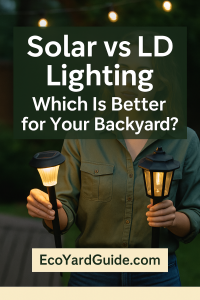
Solar lights are self-contained units powered by photovoltaic panels. During the day, they absorb sunlight and store energy in a rechargeable battery. When night falls, the battery powers built-in LED bulbs to provide illumination.
✅ Best for: Gardens, pathways, patios, fences, or anywhere sunlight is available.
⚙️ Key components: Solar panel, rechargeable battery, LED bulb, light sensor.
💡 LED Lights
LED (Light Emitting Diode) lights are energy-efficient electric bulbs that use semiconductors to produce light. While they can also be found in solar fixtures, many are powered through low-voltage wiring or standard electricity.
✅ Best for: Areas needing consistent brightness or longer runtime (e.g., driveways, decks).
⚙️ Key components: LED diode, electrical circuit, optional dimmer or timer controls.
💡 In short: Solar lights use LED technology — but not all LED lights are solar-powered.
🌎 Energy Efficiency: Which Saves More Power?
Energy efficiency is where both technologies shine — but in different ways.
🌞 Solar Lights: Energy from the Sun
Solar lighting runs entirely on renewable energy. It doesn’t draw from the electrical grid, making it 100% energy-efficient and cost-free to operate.
However, performance depends heavily on sunlight exposure. A cloudy week or a shaded garden can reduce brightness and runtime.
Pros:
✅ No electricity costs
✅ Zero emissions
✅ Works automatically at dusk/dawn
Cons:
⚠️ Dependent on weather and daylight hours
⚠️ Limited brightness in shaded or cloudy areas
💡 LED Lights: Efficient but Grid-Dependent
LED lights use up to 85% less energy than traditional incandescent bulbs. They’re ideal for consistent lighting because they don’t rely on solar panels — but they still consume small amounts of electricity.
Pros:
✅ Consistent brightness
✅ Works in any weather
✅ Longer lifespan (up to 50,000 hours)
Cons:
⚠️ Requires an electrical source or wiring
⚠️ Slight energy cost
🌱 Winner: Tie
Solar lights win for complete energy independence, while wired LEDs win for reliability in all weather.
💰 Cost Comparison: Short-Term vs Long-Term Savings
When comparing solar vs LED outdoor lights, cost is more than just the upfront price tag — it’s also about lifetime expenses.
🌞 Solar Lighting Costs
| Expense Type | Typical Cost | Notes |
|---|---|---|
| Initial Setup | $20–$100 per light | Higher-end models cost more but are wireless. |
| Operating Cost | $0 | Free solar energy. |
| Maintenance | Battery replacement every 2–3 years | ~$5–$15 per light. |
✅ Most U.S. homeowners save up to $50–$150 per year compared to electric outdoor lighting.
💡 LED Lighting Costs
| Expense Type | Typical Cost | Notes |
|---|---|---|
| Initial Setup | $10–$40 per bulb + wiring | Requires installation or electrician. |
| Operating Cost | $10–$30 per year | Based on 4 hours/day at $0.13 per kWh. |
| Maintenance | Minimal | LEDs last 10+ years. |
While wired LEDs have a small energy cost, they tend to last longer than solar lights and deliver more consistent brightness.
💰 Winner: Solar lights for upfront savings and zero energy bills — LEDs for long-term reliability.
💡 Brightness & Performance
Brightness is one of the biggest deciding factors between these two options.
🌞 Solar Lights: Moderate, Ambient Glow
Solar lights typically range between 5–200 lumens, depending on the size and model. That’s perfect for pathways, accents, and garden décor — but not for floodlighting large areas.
🌿 Great for:
-
Garden pathways
-
Patio borders
-
Decorative landscaping
⚠️ Not ideal for:
-
Security lighting
-
Large driveways or shaded yards
💡 LED Lights: High-Intensity Illumination
Wired LED lights can reach 800–1500 lumens (or more), making them far brighter than solar models. They’re ideal for driveways, backyards, or security areas requiring high visibility.
🌱 Great for:
-
Motion sensors and floodlights
-
Large lawns and patios
-
Consistent lighting schedules
⚠️ Downside: May require wiring or conduit installation.
🔆 Winner: LED lights for brightness — solar for subtle ambiance.
🏡 Durability & Maintenance
Outdoor lights must withstand weather, moisture, and time — especially in diverse U.S. climates.
🌞 Solar Lights
Modern solar path lights are built with weatherproof materials and sealed panels (often rated IP65–IP67). However, batteries degrade over time, usually lasting 2–3 years.
Maintenance:
✅ Clean panels monthly to remove dirt and pollen.
✅ Replace rechargeable batteries periodically.
✅ Keep sensors unblocked for automatic performance.
💡 LED Lights
LED fixtures are extremely durable — most rated for 10–15 years of use. They resist heat, cold, and moisture well, especially when paired with weather-resistant housings.
Maintenance:
✅ Minimal cleaning needed.
✅ Rare bulb replacements.
✅ Check wiring for corrosion occasionally.
🌿 Winner: LED lights for long-term durability, but solar lights remain easy to maintain for DIY homeowners.
🌱 Environmental Impact
If your goal is a greener yard, both options have environmental advantages.
🌞 Solar Lights
-
Run entirely on renewable solar energy 🌞
-
Reduce carbon footprint and power grid demand
-
No wiring or trenching = less soil disruption
-
Fully recyclable panels and LEDs
💡 LED Lights
-
Use significantly less energy than halogens
-
Contain no mercury or toxic materials
-
Compatible with timers and motion sensors for reduced waste
🌍 Verdict: Both are eco-friendly — solar lights are greener in operation, while LEDs reduce long-term waste.
🌿 Design & Aesthetic Appeal
Both lighting types come in countless designs, from modern minimalist to rustic lanterns.
-
Solar path lights often feature built-in stakes or decorative glass tops.
-
LED lights offer broader color temperature choices — from soft warm white (2700K) to daylight white (5000K).
💡 For eco-friendly homeowners: Solar lights work beautifully in landscapes, emphasizing sustainability and simplicity.
🧰 DIY Installation: Which Is Easier?
🌞 Solar Lights — Easiest Setup
Installing solar lights is as simple as placing stakes into the ground. There’s no wiring, digging, or electrical expertise required.
✅ Installation Time: Under 30 minutes.
✅ Tools Needed: None.
✅ Ideal For: Renters, beginners, or small gardens.
💡 LED Lights — Professional-Grade Setup
Low-voltage LED lighting systems often require:
-
Transformers
-
Underground wiring
-
Power source access
💧 Installation Time: 1–3 hours (DIY) or via a professional.
💧 Ideal For: Large properties or advanced lighting designs.
🔧 Winner: Solar lights for simplicity; LEDs for customization.
⚡ Pros and Cons Summary
| Feature | Solar Lights | LED Lights |
|---|---|---|
| Power Source | Sunlight (off-grid) | Electricity or battery |
| Energy Efficiency | 100% renewable | 80–90% less energy than incandescent |
| Brightness | Moderate | High |
| Durability | 2–5 years | 10–15 years |
| Maintenance | Battery cleaning/replacement | Minimal |
| Installation | Easy DIY | May require wiring |
| Best For | Pathways, gardens, patios | Driveways, large yards, security |
🌞 Quick Tip: Many homeowners blend both — solar lights for ambiance and LEDs for brightness.
🧰 When to Consult a Professional
While most solar lights are perfect for DIY installation, you may want to call a professional landscaper or eco-contractor if:
-
You’re installing wired LED systems across large outdoor areas.
-
You want to integrate smart home lighting controls or timers.
-
You’re designing low-voltage landscape lighting with multiple circuits.
A professional can ensure compliance with local electrical codes and optimize light placement for both aesthetics and efficiency.
❓ FAQs About Solar vs LED Outdoor Lights
1. Can I use both solar and LED lights together?
Yes! Many solar lights use LED bulbs. You can also mix separate systems — solar for accent lighting and wired LEDs for task lighting.
2. Are solar lights bright enough for security purposes?
Generally not. Most solar lights produce 10–200 lumens — ideal for ambiance but not for floodlighting.
3. How long do solar lights last on a full charge?
Typically 8–12 hours, depending on sunlight exposure and battery capacity.
4. Do LED lights attract insects?
Less than traditional bulbs! LEDs emit minimal UV light, which reduces bug attraction.
5. Are solar panels still effective in winter?
Yes, but shorter daylight hours reduce charging efficiency. Clean snow off panels regularly.
6. Can LED lights run on solar power?
Absolutely — many modern fixtures combine solar panels with LED bulbs for maximum efficiency.
7. Do solar lights work on cloudy days?
Yes, but at reduced brightness. Some models include battery backups for consistent performance.
🌸 Conclusion: Which Lighting Wins for You?
In the solar vs LED outdoor lights debate, the right choice depends on your goals:
-
🌞 Choose solar lights if you value energy independence, easy installation, and zero electricity bills.
-
💡 Choose LED lights if you want maximum brightness, long lifespan, and consistent performance year-round.
Many homeowners combine both — using solar path lights for garden ambiance and LED floodlights for driveways or patios.
Whatever you choose, both options bring you closer to a sustainable, efficient, and beautifully illuminated backyard.
☀️ Let your outdoor space shine — efficiently, sustainably, and beautifully. 🌿
⚠️ Disclaimer
Always follow the manufacturer’s instructions for installation. For wired systems, consult a licensed electrician to ensure compliance with local safety codes.
 Explore more:
- How to Light Up Your Yard With Solar Path Lights
- How to Create a Backyard Habitat for Birds and Butterflies
- Smart Sprinkler Systems That Save Water and Money