Natural Lawn Alternatives That Save Water & Time (Grass-Free Yard Guide)
🧩 Why More Homeowners Are Rethinking Traditional Lawns
For decades, the perfect green lawn was seen as the gold standard of home landscaping. But today, eco-conscious homeowners are starting to ask a smarter question: Is all that grass really worth it?
Traditional turf lawns demand frequent watering, mowing, fertilizing, and chemical treatments. That means higher water bills, more maintenance time, and greater environmental impact. In many U.S. states facing drought conditions and water restrictions, maintaining a grass lawn is becoming both expensive and unsustainable.
That’s why interest in natural lawn alternatives is growing fast.
Grass-free lawns can dramatically reduce water use, cut maintenance time, and still look beautiful. From clover lawns to native ground covers and no-mow options, there are now more eco-friendly choices than ever.
This guide compares the most popular natural lawn alternatives and helps you choose the right option for your climate, lifestyle, and sustainability goals.
💧 Why Traditional Grass Lawns Are Losing Popularity
Before exploring alternatives, it helps to understand why grass lawns are falling out of favor.
⚠️ Common Problems With Conventional Lawns
-
High water consumption
-
Weekly mowing requirements
-
Fertilizer and pesticide runoff
-
Poor drought tolerance
-
High long-term maintenance costs
According to U.S. water agencies, outdoor irrigation accounts for up to 50% of residential water use in many regions. Switching to natural lawn alternatives can significantly reduce that demand.
🌱 What Are Natural Lawn Alternatives?
Natural lawn alternatives replace or reduce traditional turf grass with plants that require less water, less mowing, and fewer chemicals.
Instead of fighting your local climate, these options work with it.
🌿 Benefits Of Grass-Free Lawns
-
Lower water usage
-
Reduced maintenance
-
Improved soil health
-
Fewer chemicals
-
Better support for pollinators
A well-designed no-mow lawn can be both practical and visually appealing.
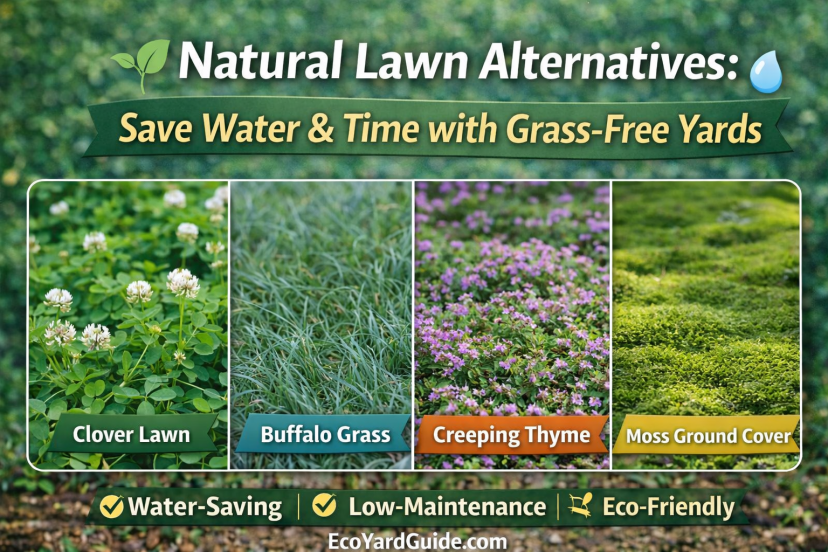
🍀 Clover Lawn: A Popular Low-Maintenance Choice
One of the most talked-about natural lawn alternatives is the clover lawn.
🌱 What Is A Clover Lawn?
A clover lawn uses white clover or microclover as the primary ground cover instead of grass.
✅ Benefits Of Clover Lawns
-
Requires little to no fertilizer
-
Stays green during drought
-
Naturally fixes nitrogen in soil
-
Soft underfoot
-
Attracts pollinators
Clover lawns are especially popular in the Northeast, Midwest, and Pacific Northwest.
⚠️ Considerations
-
Flowers may attract bees (great for ecosystems, less ideal for barefoot areas)
-
Not ideal for heavy foot traffic
🌾 Buffalo Grass: A Native, No-Mow Lawn Option
Buffalo grass is a warm-season native grass often used as a no-mow lawn alternative.
🌱 Why Buffalo Grass Works Well
-
Native to the Great Plains
-
Extremely drought tolerant
-
Minimal mowing required
-
Grows well in full sun
Buffalo grass thrives in states like Texas, Colorado, Kansas, and Nebraska.
🔧 Maintenance Notes
-
Goes dormant and brown in winter
-
Slower to establish than clover
-
Best for low-traffic areas
For hot, dry regions, buffalo grass is one of the most practical natural lawn alternatives.
🌸 Creeping Thyme: A Colorful Grass Replacement
Creeping thyme is a flowering ground cover that works beautifully in small yards or pathways.
🌼 Benefits Of Creeping Thyme
-
Produces colorful flowers
-
Drought tolerant once established
-
No mowing required
-
Pleasant fragrance when stepped on
It’s an excellent choice for homeowners who want beauty and sustainability.
⚠️ Best Uses
-
Small lawn areas
-
Between stepping stones
-
Sunny locations
Creeping thyme is not ideal for high-traffic lawns but shines as a decorative native ground cover alternative.
🍃 Moss Lawns: Perfect For Shady Yards
For homeowners with limited sunlight, moss lawns are one of the most overlooked natural lawn alternatives.
🌱 Why Moss Works
-
Thrives in shade
-
Requires no mowing
-
Uses very little water
-
Grows well in acidic soil
Moss lawns are especially popular in the Pacific Northwest and shaded urban yards.
⚠️ Things To Know
-
Not suitable for sunny, dry areas
-
Requires consistent moisture during establishment
For the right conditions, moss creates a soft, serene no-mow lawn.
🌿 Native Ground Covers: The Most Eco-Friendly Option
Native ground covers are plants that evolved in your local region.
🌎 Benefits Of Native Ground Covers
-
Adapted to local climate
-
Require minimal watering
-
Support native wildlife
-
Improve soil health
Examples include sedges, wild strawberries, and native grasses depending on region.
Using native ground covers is one of the most environmentally responsible landscaping choices.
🔧 How To Transition From Grass To Natural Lawn Alternatives
Switching doesn’t have to happen all at once.
🛠️ Step-By-Step Transition Plan
-
Identify low-use lawn areas
-
Remove turf grass gradually
-
Improve soil with compost
-
Choose appropriate ground cover
-
Water during establishment
-
Reduce watering over time
This phased approach makes adopting natural lawn alternatives more manageable.
💧 Water Savings: How Much Can You Really Save?
Water savings depend on your region and plant choice, but results are often dramatic.
💦 Average Water Reduction
-
Clover lawn: 30–50% less water
-
Buffalo grass: up to 75% less water
-
Native ground covers: up to 80% less water
In drought-prone states, switching lawns may also qualify for local rebates or incentives.
☀️ Choosing The Right Lawn Alternative For Your Climate
Climate matters when selecting natural lawn alternatives.
🌎 Quick Climate Guide
-
Hot & Dry → Buffalo grass, native ground covers
-
Cool & Moist → Clover lawn, moss
-
Shady → Moss, sedges
-
Small Areas → Creeping thyme
Matching plants to conditions ensures long-term success.
👷 When To Consult A Professional
Most lawn conversions are DIY-friendly, but professional help may be useful if:
-
Drainage issues exist
-
Large areas need grading
-
Local regulations apply
-
You want integrated irrigation systems
An eco-focused landscaper can help design efficient no-mow lawn solutions.
❓ FAQs About Natural Lawn Alternatives
🌱 1. Are natural lawn alternatives expensive?
Initial costs vary, but long-term savings on water and maintenance often outweigh setup costs.
💧 2. Do natural lawns attract more insects?
They support beneficial insects but don’t typically increase pests.
🌿 3. Can I mix grass with lawn alternatives?
Yes. Many homeowners blend traditional grass with native ground covers.
☀️ 4. Are these lawns kid- and pet-friendly?
Most are safe, but flowering options may attract bees.
🌾 5. How long does it take to establish a new lawn alternative?
Most options take 1–2 growing seasons to fully establish.
🌎 6. Do natural lawns increase home value?
Eco-friendly landscaping is increasingly attractive to buyers, especially in water-restricted areas.
🌱 7. Is a no-mow lawn really maintenance-free?
Maintenance is minimal but not zero — occasionally, weeding and care are still needed.
🌿 Conclusion: A Smarter Lawn For A Sustainable Future
Choosing natural lawn alternatives is one of the most impactful changes you can make for your yard and the environment. With options like clover lawns, buffalo grass, creeping thyme, and native ground covers, it’s easier than ever to reduce water use, save time, and still enjoy a beautiful outdoor space.
You don’t have to give up green — you just have to redefine it.
Small lawn changes today lead to big environmental benefits tomorrow.
⚠️ Disclaimer
This article is for educational purposes only. Always follow local regulations, HOA rules, and safety guidelines. Plant performance and water restrictions vary by region.
 Explore more:
- How To Build A Wildlife Friendly Yard That Supports Nature
- The Ultimate Guide to Eco Landscaping for Beginners
- How To Build Healthy Garden Soil Naturally