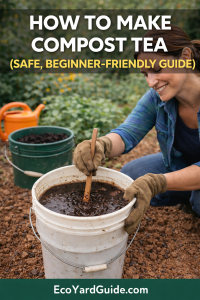
How to Make Compost Tea: How To Brew It & Use It Safely (Beginner-Friendly Guide)
⚙️ Turn Kitchen Waste Into Liquid Gold For Your Garden
If you’re looking for a powerful way to feed your plants naturally—without synthetic fertilizers—compost tea might be the missing piece in your eco-gardening routine.
Eco-conscious homeowners across the U.S. are turning to compost tea because it’s affordable, sustainable, and incredibly effective. Made from simple ingredients you may already have, compost tea transforms finished compost into a nutrient-rich liquid fertilizer that plants can absorb quickly.
Learning how to make compost tea allows you to recycle waste, reduce chemical use, and boost plant health—while saving money and protecting the environment.
In this guide, you’ll learn exactly how to brew compost tea step by step, understand compost tea benefits, apply it safely as an organic fertilizer spray, and avoid common beginner mistakes.
🌿 What Is Compost Tea (And Why It Works)
Compost tea is a liquid extract made by soaking compost in water to release nutrients and beneficial microorganisms.
🌱 What Compost Tea Contains
- Beneficial bacteria and fungi
- Dissolved nutrients
- Organic compounds that support soil life
Unlike solid compost, compost tea delivers nutrients immediately—making it ideal for quick plant support.
🌿 Compost Tea Benefits For Eco Gardeners
Using compost tea regularly improves both plant health and soil quality.
✅ Key Compost Tea Benefits
- Improves nutrient uptake
- Strengthens plant immune systems
- Boosts microbial soil life
- Reduces reliance on chemical fertilizers
- Supports sustainable gardening practices
In the U.S., many organic farms and home gardeners use compost tea as a low-impact alternative to synthetic fertilizers.
💧 Compost Tea Vs. Traditional Fertilizers
Understanding the difference helps you use compost tea correctly.
🌱 Compost Tea
- Mild, natural nutrient source
- Improves soil biology
- Safe for regular use
🚫 Synthetic Fertilizers
- Fast but short-lived results
- Can damage soil microbes
- Higher runoff risk
Compost tea feeds the soil and the plant—naturally.
🔧 What You Need To Make Compost Tea At Home
Before learning how to make compost tea, gather these simple tools.
🧰 Basic Supplies
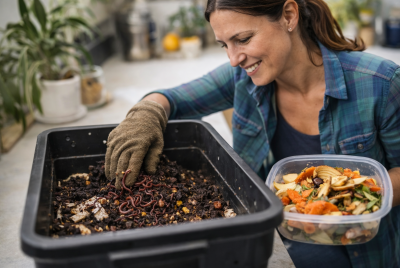
- Finished compost (or worm castings)
- Water (non-chlorinated preferred)
- 5-gallon bucket
- Stir stick or shovel
- Cloth or mesh bag (optional)
No special equipment is required for beginner compost tea.
🌱 Step-By-Step: How To Make Compost Tea Safely
This simple brewing method works well for home gardeners.
🔧 Step 1: Prepare The Water
- Fill a bucket with water
- Let it sit 12–24 hours to allow chlorine to dissipate
Chlorine can harm beneficial microbes, so this step matters.
🔧 Step 2: Add Compost
- Add 1–2 cups of finished compost per gallon of water
- Place compost directly in water or in a mesh bag
Use mature compost that smells earthy—not sour.
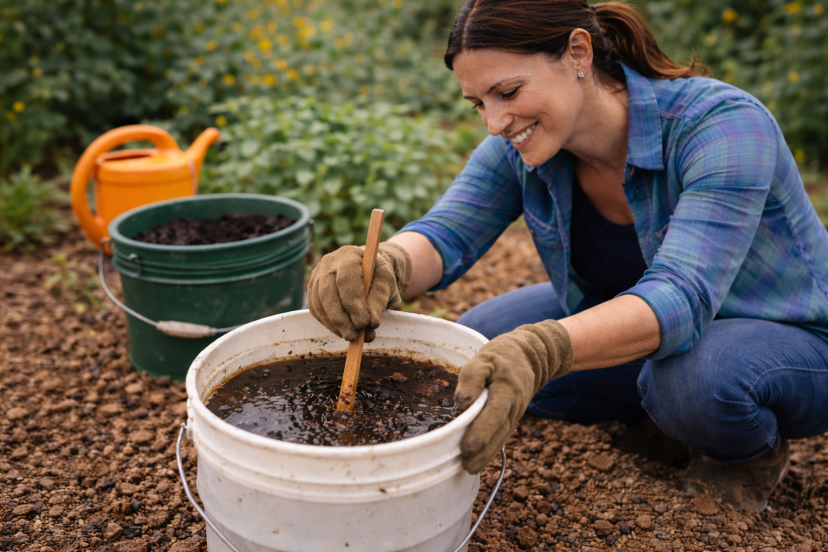
🔧 Step 3: Stir And Brew
- Stir thoroughly
- Let it brew for 12–24 hours
- Stir occasionally to keep microbes active
Avoid brewing longer than 24 hours to reduce the risk of harmful bacteria.
🔧 Step 4: Strain (Optional)
- Remove compost solids
- Use the liquid immediately
Fresh compost tea works best when used the same day.
🌿 Aerated Vs. Non-Aerated Compost Tea
You may hear about aerated compost tea, but beginners don’t need fancy equipment.
🌱 Non-Aerated Compost Tea (Beginner-Friendly)
- Simple soaking method
- Safe when brewed short-term
- Ideal for small gardens
🌱 Aerated Compost Tea
- Uses air pumps
- Requires more precision
- Common on larger farms
For most homeowners, non-aerated tea works perfectly.
🌿 How To Use Compost Tea In Your Garden
Once you know how to make compost tea, correct application is key.
🌱 Soil Application
- Pour directly at the plant roots
- Best for improving soil health
💧 Foliar Spray (Organic Fertilizer Spray)
- Spray lightly on leaves
- Apply early morning or evening
- Avoid strong sunlight
Foliar spraying allows plants to absorb nutrients quickly.
☀️ When To Apply Compost Tea
Timing affects compost tea benefits.
🕒 Best Times To Apply
- Early morning
- Late afternoon
- During active plant growth
Avoid applying before heavy rain to prevent runoff.
🌱 How Often Should You Use Compost Tea?
Compost tea is gentle and safe when used properly.
🔄 Recommended Frequency
- Every 2–4 weeks during the growing season
- Monthly for maintenance
- As needed for stressed plants
Overuse isn’t necessary—consistency works better.
🌿 Plants That Benefit Most From Compost Tea
Most plants respond positively.
🌱 Ideal Plants For Compost Tea
- Vegetables
- Fruit trees
- Flowering plants
- Lawns
- Houseplants
Seedlings and stressed plants especially benefit from mild compost tea.
🌿 Safety Tips: Using Compost Tea Responsibly
While compost tea is natural, safety matters.
⚠️ Compost Tea Safety Guidelines
- Use only finished compost
- Brew no longer than 24 hours
- Apply immediately after brewing
- Avoid spraying edible leaves close to harvest
These steps reduce any potential health risks.
🌿 Common Compost Tea Mistakes To Avoid
🚫 Using Unfinished Compost
It can introduce harmful bacteria.
🚫 Brewing Too Long
Increases risk of anaerobic conditions.
🚫 Storing Compost Tea
Always use fresh—never store.
🚫 Overapplying
More is not better with liquid fertilizers.
🌍 Environmental Benefits Of Compost Tea
Using compost tea supports eco-friendly gardening.
🌱 Sustainability Advantages
- Reduces chemical fertilizer use
- Lowers nutrient runoff
- Recycles organic waste
- Supports healthy soil ecosystems
Many U.S. gardeners use compost tea as part of zero-waste gardening systems.
🔍 When To Consult A Professional
Compost tea is usually DIY-friendly, but guidance can help.
🔧 Consider Professional Help If:
- Managing large properties
- Growing commercial crops
- Dealing with persistent plant disease
- Local regulations restrict organic sprays
Extension services often provide composting education.
❓ FAQs About Compost Tea
🌱 How long does compost tea last?
Compost tea should be used within a few hours of brewing.
💧 Can compost tea replace fertilizer?
Yes, for many gardens, it can replace synthetic fertilizers.
🌿 Is compost tea safe for vegetables?
Yes, when brewed and applied correctly.
🌱 Can I use compost tea on houseplants?
Absolutely—use diluted tea for indoor plants.
☀️ Does compost tea smell bad?
No. Proper compost tea smells earthy.
🌿 Can I make compost tea without compost?
Worm castings work as an excellent alternative.
🌱 Is compost tea better than solid compost?
They serve different purposes and work best together.
💥 Conclusion: Brew Simple, Grow Strong
Compost tea proves that powerful garden solutions don’t need to be expensive or complicated.
By learning how to make compost tea, you turn everyday compost into a fast-acting, eco-friendly plant booster that supports soil life, strengthens plants, and reduces chemical use.
Start small, brew safely, and use it consistently. Your garden—and the planet—will thank you.
⚠️ Disclaimer
Compost tea practices may vary by region. Always follow local regulations, food safety guidelines, and recommended brewing times. Consult professionals for large-scale or regulated applications.
 Explore more:
- How to Start a Native Plant Garden
- How To Build A Backyard Habitat Garden
- Hugelkultur Beds: Build A Natural Raised Bed