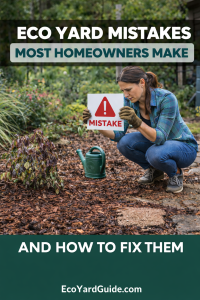
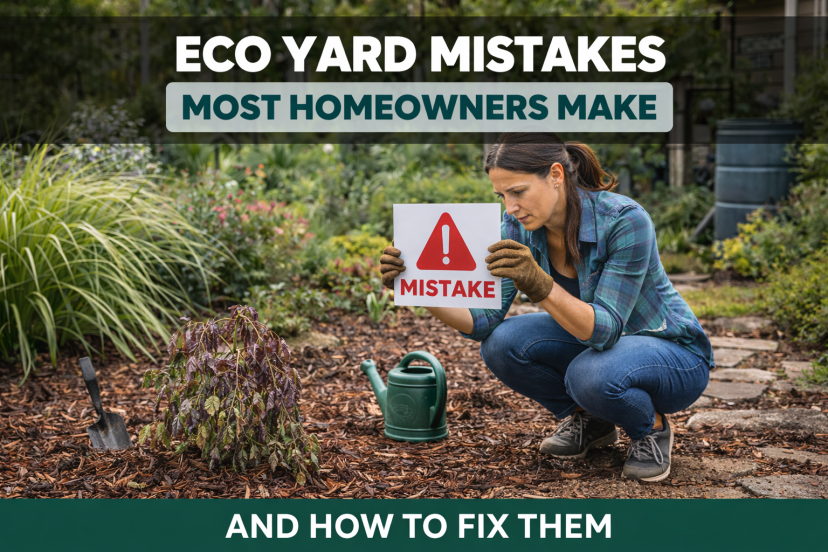
Eco Yard Mistakes Most Homeowners Make (And How To Fix Them)
🌱 Why Eco-Friendly Yards Go Wrong So Often
Many homeowners start their eco yard journey with the best intentions. You want to save money, reduce waste, lower water use, and create a healthier outdoor space for your family and the planet.
But here’s the truth: good intentions don’t always lead to good results.
Across the U.S., thousands of well-meaning homeowners unknowingly fall into the same eco yard mistakes—using the wrong plants, overwatering, buying “green” products that aren’t sustainable, or skipping critical planning steps. These sustainability fails can waste money, increase maintenance, and even harm local ecosystems.
The good news?
Most eco yard mistakes are easy to fix once you know what to look for.
This beginner-friendly guide breaks down the most common yard errors homeowners make—and shows you practical, affordable ways to correct them so your yard truly works with nature, not against it.
🌿 Why Eco Yard Mistakes Happen In The First Place
Eco-friendly landscaping isn’t always intuitive, especially if you’re new to sustainable living.
🌱 Common Reasons Homeowners Struggle
-
Misinformation from social media trends
-
Skipping planning and soil testing
-
Confusing “natural” with “sustainable.”
-
Trying to copy yards from different climates
-
Underestimating maintenance requirements
Understanding these causes helps prevent repeat mistakes and builds a stronger foundation for long-term sustainability.
🚫 Mistake #1: Choosing Plants That Don’t Match Your Climate
One of the biggest eco yard mistakes is planting greenery that looks beautiful—but doesn’t belong where you live.
🌱 Why This Is A Problem
-
Non-native plants require more water
-
Higher fertilizer and pesticide use
-
Poor survival rates
-
Increased maintenance costs
In the U.S., planting tropical or water-hungry species in dry states like Arizona, Nevada, or California often leads to constant replacements and wasted resources.
✅ How To Fix It
-
Choose native or climate-adapted plants
-
Check USDA Plant Hardiness Zones
-
Visit local extension offices or native plant nurseries
-
Use drought-tolerant landscaping in dry regions
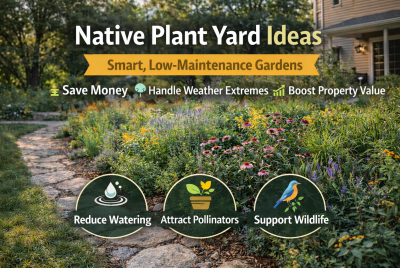
Native plants support pollinators, improve soil health, and reduce water use naturally.
💧 Mistake #2: Overwatering “Eco-Friendly” Landscapes
Many beginners assume green yards need lots of water. This common yard error defeats sustainability goals.
💧 Why Overwatering Happens
-
Automatic sprinkler systems run too often
-
Watering on fixed schedules instead of soil needs
-
Fear of plant stress
🌿 How To Fix It
-
Install drip irrigation systems
-
Water early in the morning
-
Use rain sensors or smart controllers
-
Group plants by water needs
In many U.S. states, water-saving irrigation systems qualify for rebates through local water agencies.
🔧 Mistake #3: Skipping Soil Health And Preparation
Healthy soil is the foundation of a sustainable yard—yet it’s one of the most overlooked beginner landscaping mistakes.
🌱 Why Poor Soil Causes Problems
-
Plants struggle to establish roots
-
Increased need for fertilizers
-
More runoff and erosion
-
Weak drought resistance
✅ How To Fix It
-
Test soil through local extension services
-
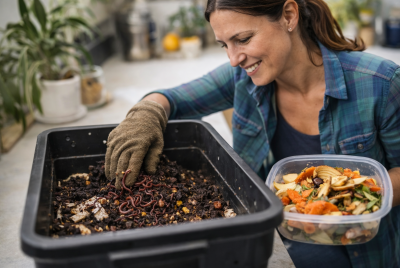
Add compost instead of synthetic fertilizers
-
Use mulch to protect soil moisture
-
Avoid compacting soil with heavy equipment
Improving soil reduces water use and boosts plant resilience long-term.
🌿 Mistake #4: Believing All “Green” Products Are Sustainable
Not everything labeled “eco-friendly” actually is.
🚫 Common Sustainability Fails
-
Plastic landscape fabrics
-
Artificial turf is marketed as water-saving
-
Chemical weed killers labeled “natural.”
-
Non-recyclable garden décor
✅ How To Fix It
-
Look for third-party certifications
-
Choose natural materials like wood, stone, and metal
-
Avoid single-use landscaping products
-
Prioritize durability over trends
True sustainability considers lifecycle impact—not just marketing claims.
🌧️ Mistake #5: Ignoring Drainage And Runoff
Poor water management is a major eco yard mistake that leads to erosion, flooding, and wasted rainwater.
💧 Why This Matters
-
Runoff carries pollutants into storm drains
-
Soil erosion damages plants
-
Water pools near foundations
🌱 How To Fix It
-
Install rain gardens
-
Use permeable pavers
-
Redirect downspouts to landscaped areas
-
Grade yards to guide water naturally
Many U.S. municipalities encourage runoff solutions to reduce stormwater system strain.
☀️ Mistake #6: Removing All Lawn Without A Plan
Replacing turf grass can be eco-friendly—but only if done correctly.
🚫 Why This Can Backfire
-
Bare soil causes erosion
-
Poor plant spacing increases weeds
-
Invasive plants spread easily
✅ How To Fix It
-
Replace lawns gradually
-
Use ground covers or native grasses
-
Add mulched planting beds
-
Keep functional lawn areas where needed
Smart lawn reduction balances sustainability with usability.
🔧 Mistake #7: Overcomplicating DIY Projects
Trying to do everything at once often leads to frustration and half-finished projects.
🌱 Why This Happens
-
Overambitious designs
-
Lack of time or tools
-
No clear priority list
✅ How To Fix It
-
Start with one small project
-
Focus on high-impact changes
-
Learn before expanding
-
Build skills gradually
Simple upgrades often deliver the biggest sustainability benefits.
🌿 Mistake #8: Forgetting Wildlife And Pollinators
Eco yards aren’t just for humans.
🐝 Why This Matters
-
Pollinators support food systems
-
Birds control pests naturally
-
Biodiversity strengthens ecosystems
✅ How To Fix It
-
Plant pollinator-friendly flowers
-
Avoid pesticides
-
Add bird baths or native shrubs
-
Leave some natural areas untouched
Even small yards can support local wildlife.
☀️ Mistake #9: Ignoring Long-Term Maintenance Needs
A sustainable yard should get easier over time—not harder.
🚫 Common Yard Errors
-
High-maintenance plant choices
-
Complex irrigation systems
-
Fragile materials
✅ How To Fix It
-
Choose low-maintenance natives
-
Simplify layouts
-
Use durable hardscaping
-
Plan for seasonal changes
Good design reduces labor and costs year after year.
🔍 When To Consult A Professional
While many fixes are DIY-friendly, some situations require expert guidance.
🔧 Seek Professional Help If:
-
Drainage problems threaten foundations
-
Large-scale grading is needed
-
Solar, irrigation, or water systems are involved
-
Local codes require permits
Eco-conscious landscapers and contractors can ensure compliance and long-term success.
❓ Frequently Asked Questions About Eco Yard Mistakes
🌱 What are the most common eco yard mistakes?
The most common eco yard mistakes include planting non-native species, overwatering, ignoring soil health, and trusting misleading “green” products.
💧 Do eco-friendly yards really save money?
Yes. Once established, sustainable yards reduce water bills, fertilizer costs, and maintenance expenses.
🌿 Are beginner landscaping mistakes expensive to fix?
Most beginner landscaping mistakes are affordable to correct if addressed early, especially with DIY solutions.
🌧️ How long does it take to fix sustainability fails?
Some fixes, like irrigation adjustments, are immediate. Others, like soil improvement, show results over months.
☀️ Can small yards be eco-friendly?
Absolutely. Small yards can support native plants, pollinators, and water-saving features just as effectively.
🔧 Should I remove my lawn completely?
Not always. Strategic lawn reduction often works better than total removal.
🌱 Are native plants really better?
Yes. Native plants are adapted to local climates, need less water, and support wildlife.
💥 Conclusion: Build Smarter, Not Harder
Making eco yard mistakes doesn’t mean you’ve failed—it means you’re learning.
By avoiding common yard errors and correcting beginner landscaping mistakes early, you can create a yard that saves money, conserves water, supports wildlife, and feels good to maintain. Sustainable landscaping isn’t about perfection—it’s about progress.
Start small, plan thoughtfully, and let your yard evolve into a healthier space for you and the planet.
⚠️ Disclaimer
DIY landscaping projects vary by region. Always check local regulations, HOA rules, and environmental guidelines before starting. Consult professionals for structural, drainage, or regulated installations.
 Explore more: