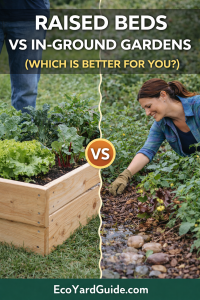
Raised Beds Vs In-Ground Gardens: Which Is Better For You And Your Eco Yard?
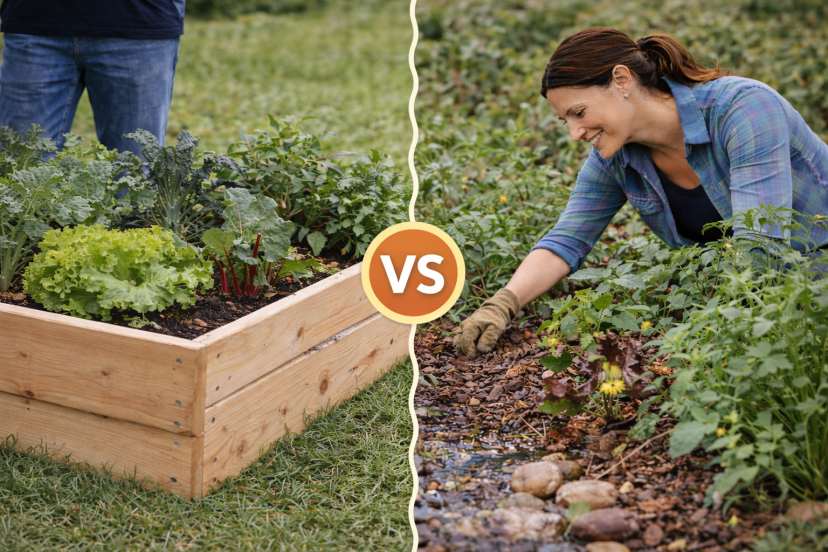
⭐ Choosing The Right Garden Bed For A Sustainable Yard
If you’re planning a garden, one of the first (and most important) decisions you’ll make is how to grow your plants. Should you build raised beds or dig directly into the ground?
For eco-conscious homeowners, this isn’t just a gardening question—it’s about cost, sustainability, soil health, water use, and long-term impact. The debate around raised beds vs in ground gardens can feel confusing, especially when advice online often ignores real-world budgets and environmental concerns.
The truth is:
👉 There’s no single “best” option for everyone.
The right choice depends on your soil, climate, time, physical comfort, and sustainability goals. This guide breaks down the pros and cons of each garden bed type, compares durability, soil quality, and cost, and helps you confidently choose what works best for your eco yard.
🌿 What Are Raised Beds And In-Ground Gardens?
Before comparing, let’s define each option clearly.
🌱 Raised Bed Gardens
- Soil is contained in a framed structure
- Beds sit above ground level
- Common materials: wood, metal, stone, composite
- Filled with imported soil mixes
🌿 In-Ground Gardens
- Plants grow directly in native soil
- No physical structure required
- Soil is amended over time
- Traditional, low-cost approach
Both options can be eco-friendly when designed thoughtfully.
🌱 Raised Beds Vs In Ground: Soil Quality Comparison
Soil quality is one of the biggest deciding factors.
🌿 Raised Bed Soil Benefits
- Full control over soil composition
- Ideal for poor or contaminated native soil
- Faster warming in spring
- Better drainage
This is a major advantage in areas with clay soil, compacted yards, or new construction lots.
🌿 In-Ground Soil Benefits
- Native soil supports long-term soil ecosystems
- Deep root access to minerals
- Less imported material
- Improves naturally over time
For healthy native soil, in-ground gardening often wins on sustainability.
💧 Water Use And Drainage Differences
Water management is critical for eco yards.
🌱 Raised Bed Water Use
- Drains quickly
- May dry out faster in hot climates
- Often needs more frequent watering
Raised beds are great for wet climates, but can require drip irrigation in dry regions.
🌿 In-Ground Garden Water Use
- Better moisture retention
- Deeper root systems
- Less frequent watering once established
For drought-prone U.S. regions, in-ground gardens are often more water-efficient.
🌱 Raised Garden Pros And Cons (Quick Overview)
✅ Raised Bed Pros
- Easier soil control
- Less bending and strain
- Fewer weeds initially
- Better drainage
❌ Raised Bed Cons
- Higher upfront cost
- Materials eventually wear out
- Imported soil has an environmental impact
- Can dry out quickly
Raised beds are convenient—but not always the most eco-friendly long term.
🌿 In-Ground Garden Pros And Cons
✅ In-Ground Pros
- Lowest cost option
- No building materials required
- Better long-term soil health
- Less watering over time
❌ In-Ground Cons
- Harder to improve poor soil initially
- More bending and labor
- Slower spring warm-up
- Weed pressure early on
In-ground gardens reward patience and soil-building practices.
🧩 Cost Comparison: Raised Beds Vs In Ground
Cost is a major factor for most homeowners.
💰 Raised Bed Costs
- Lumber or metal frames
- Hardware and tools
- Soil and compost
- Maintenance or replacement
Even DIY beds can cost hundreds of dollars per season.

💰 In-Ground Costs
- Compost and organic amendments
- Mulch
- Occasional soil testing
In-ground gardening is significantly cheaper over time.
🌿 Durability And Longevity
🌱 Raised Bed Durability
- Wood beds last 5–15 years (depending on material)
- Metal beds last longer but cost more
- Requires periodic repair or replacement
🌿 In-Ground Durability
- No structures to degrade
- Soil improves indefinitely
- Minimal long-term maintenance
From a durability standpoint, in-ground gardens are more sustainable.
🧘♀️ Environmental Impact and Sustainability
Eco gardeners should consider the full lifecycle impact.
🌿 Raised Bed Environmental Impact
- Lumber harvesting or metal production
- Transported soil mixes
- Disposal of old frames
Some raised bed materials are sustainable—but many are not.
🌿 In-Ground Environmental Benefits
- No manufactured materials
- Supports native soil life
- Builds carbon-rich soil over time
- Encourages regenerative gardening
For low-impact gardening, in-ground beds often align better with eco goals.
💡 Which Garden Bed Type Is Better For Different Situations?
🌿 Raised Beds Are Better If You:
- Have poor or contaminated soil
- Need accessibility or mobility support
- Garden in very wet areas
- Want fast, predictable results
🌿 In-Ground Gardens Are Better If You:
- Have usable native soil
- Want the lowest-cost option
- Focus on long-term sustainability
- Garden in dry or hot climates
Your yard conditions matter more than trends.
⚡ Can You Combine Raised Beds and In-Ground Gardening?
Yes—and many eco yards do.
🌿 Hybrid Gardening Strategy
- Raised beds for vegetables
- In-ground areas for perennials
- Native plants for soil improvement
- Compost systems are shared between both
This approach balances convenience and sustainability.
🧑 DIY Tips For Eco-Friendly Raised Beds
If you choose raised beds, reduce impact.
🌿 Sustainable Raised Bed Tips
- Use untreated, rot-resistant wood
- Choose recycled metal beds
- Build smaller, fewer beds
- Fill with local compost and soil
Avoid pressure-treated lumber unless certified safe for food gardens.
🌱 Improving In-Ground Gardens Naturally
If you choose in-ground, soil building is key.
🌿 Organic Soil Improvement Tips
- Add compost annually
- Use cover crops
- Mulch consistently
- Avoid tilling
These methods transform poor soil without construction.
🔍 When To Consult A Professional
Some situations benefit from expert guidance.
🔧 Seek Professional Help If:
- Soil contamination is suspected
- Drainage affects foundations
- Large landscape redesign is planned
- Local regulations apply
Extension offices across the U.S. often provide free soil and garden advice.
❓ FAQs About Raised Beds Vs In Ground Gardens
🌱 Are raised beds better than in-ground gardens?
Not always. It depends on soil quality, budget, and sustainability goals.
🌿 Do raised beds grow better vegetables?
They can, especially in poor soil, but in-ground gardens catch up over time.
💧 Which option uses less water?
In-ground gardens usually retain moisture better long-term.
🌱 Are raised beds more eco-friendly?
Not necessarily. In-ground gardens often have a lower environmental impact.
🌿 Can I convert raised beds to in-ground later?
Yes. Many gardeners start with raised beds and transition over time.
🌱 Which is better for beginners?
Raised beds offer faster success; in-ground gardening teaches long-term soil skills.
☀️ Do raised beds work in hot climates?
Yes, but they require more watering and mulching.
 The Best Garden Bed Is The One That Fits Your Yard
 The Best Garden Bed Is The One That Fits Your Yard
The choice between raised beds vs in ground gardens isn’t about right or wrong—it’s about what fits your space, values, and lifestyle.
If you want quick control and accessibility, raised beds can be a great starting point. If you value long-term soil health, lower costs, and minimal environmental impact, in-ground gardening may be the better path.
Whichever you choose, focus on healthy soil, water conservation, and organic practices. That’s what truly makes a garden eco-friendly.
⚠️ Disclaimer
Gardening methods and materials vary by region. Always follow local regulations, HOA rules, and food safety guidelines. Consult professionals for soil contamination, drainage, or structural projects.
 Explore more:
- How To Make Your Backyard Wildlife-Friendly
- Sustainable Yard Design for Beginners
- The Ultimate Guide to Eco Landscaping for Beginners